







TECHNICAL SUPPORT


Published 2026-02-08
Many people will encounter a headache when innovating robots, smart hardware or toys: the product is designed, but the suitable steering gear cannot be found. Theservos on the market either don't match the size, don't have enough torque, or the control accuracy doesn't meet the requirements. It's like going to the market to find a particular button for a piece of clothing, only to find that it's either too big or too small, and the color is wrong. At this time, designing a "fitting" steering gear yourself becomes a feasible way out. Using 3D design software (SW for short) to draw the steering gear is a good way to solve the problem from the source.
You may ask, there are so manyservos models on the market, why should you bother to draw them yourself? The reason is simple: standard products cannot meet individual needs. The structure of your product may be very compact and the space left for theservomay be unusually shaped; or your application scenario may have special requirements for the response speed and holding torque of the servo, making it difficult for a general-purpose servo to meet the requirements.
Designing the servo yourself means that you can fully control all its parameters such as dimensions, output shaft position, and mounting hole spacing. This allows the servo to be seamlessly connected to your product structure and avoids modification of the overall design due to adaptation issues. It is not just about drawing a shell, but also deeply customizing it from the perspective of product system integration, fundamentally solving the matching problem.
The biggest benefit of using rudder design is that it is intuitive and precise. You can first build a three-dimensional model of the entire product in the software, and then "reserve" the most reasonable position and shape for the servo in this virtual space. This "what you see is what you get" approach allows you to detect potential problems such as interference and assembly difficulties in advance.
Another significant advantage is the ease of modification and derivative designs. Once you have established a basic servo model, you can quickly generate a series of variants with different specifications by modifying a few key dimensional parameters. For example, adjust the module of the gearbox to change the torque, or modify the length of the housing to adapt to different spaces. This is much more efficient than drawing from scratch every time, and also lays the foundation for your future product iterations.
Before you start drawing, you must first think about what the servo is going to do. The first thing to determine is the torque and speed, which directly determines whether the servo can drive your mechanism. You can estimate the required torque based on the weight of the load and the length of the moment arm, and then calculate the rotational speed based on the movement speed requirements.
Next is a range of form factors and interface sizes. Including the overall length, width and height of the servo, the position and shape of the output shaft (is it a round shaft or a cross disk?), as well as the position and hole diameter of the mounting lugs on the housing. Don’t forget the electrical interface, is it a traditional three-wire (power, ground, signal) or a more complex bus interface? Organize these parameters into a list so you can have a clear target when drawing.
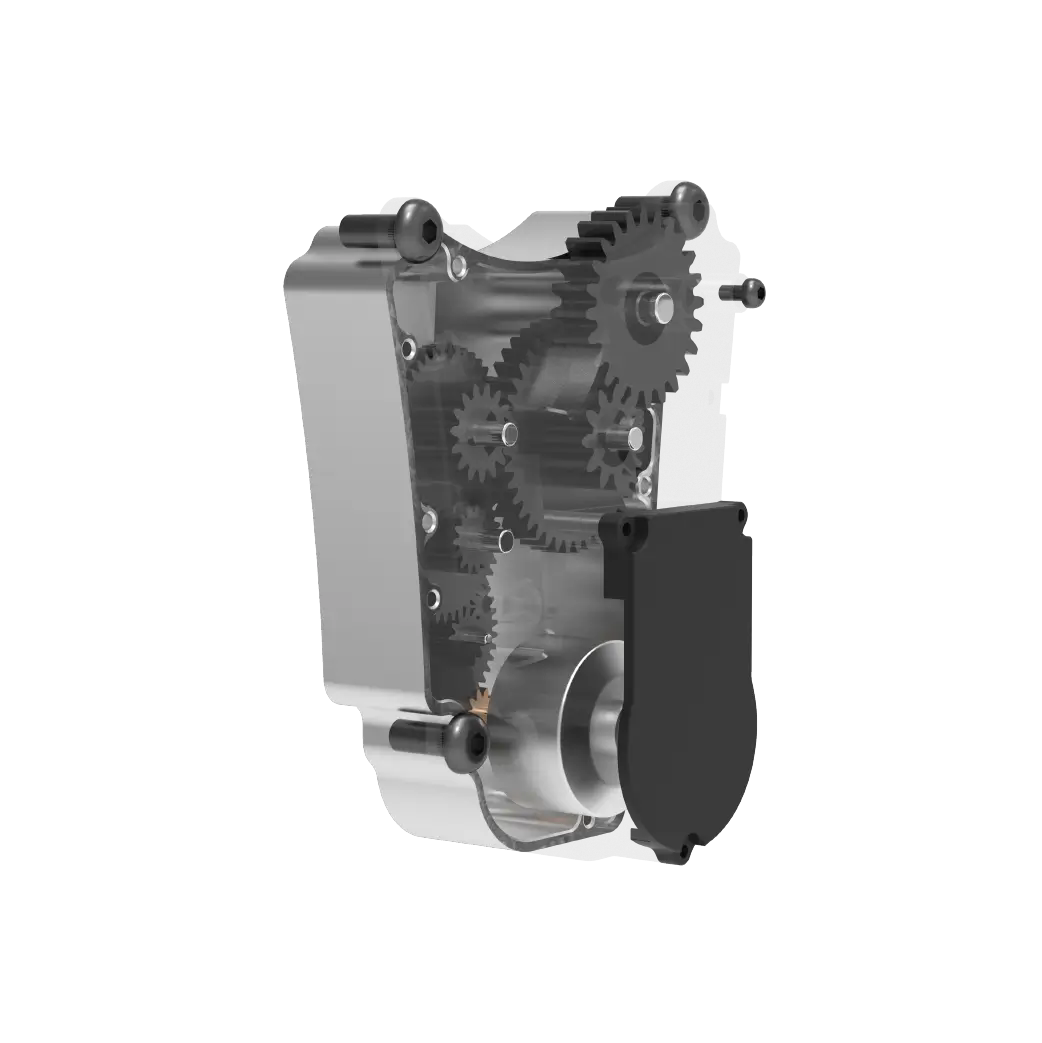
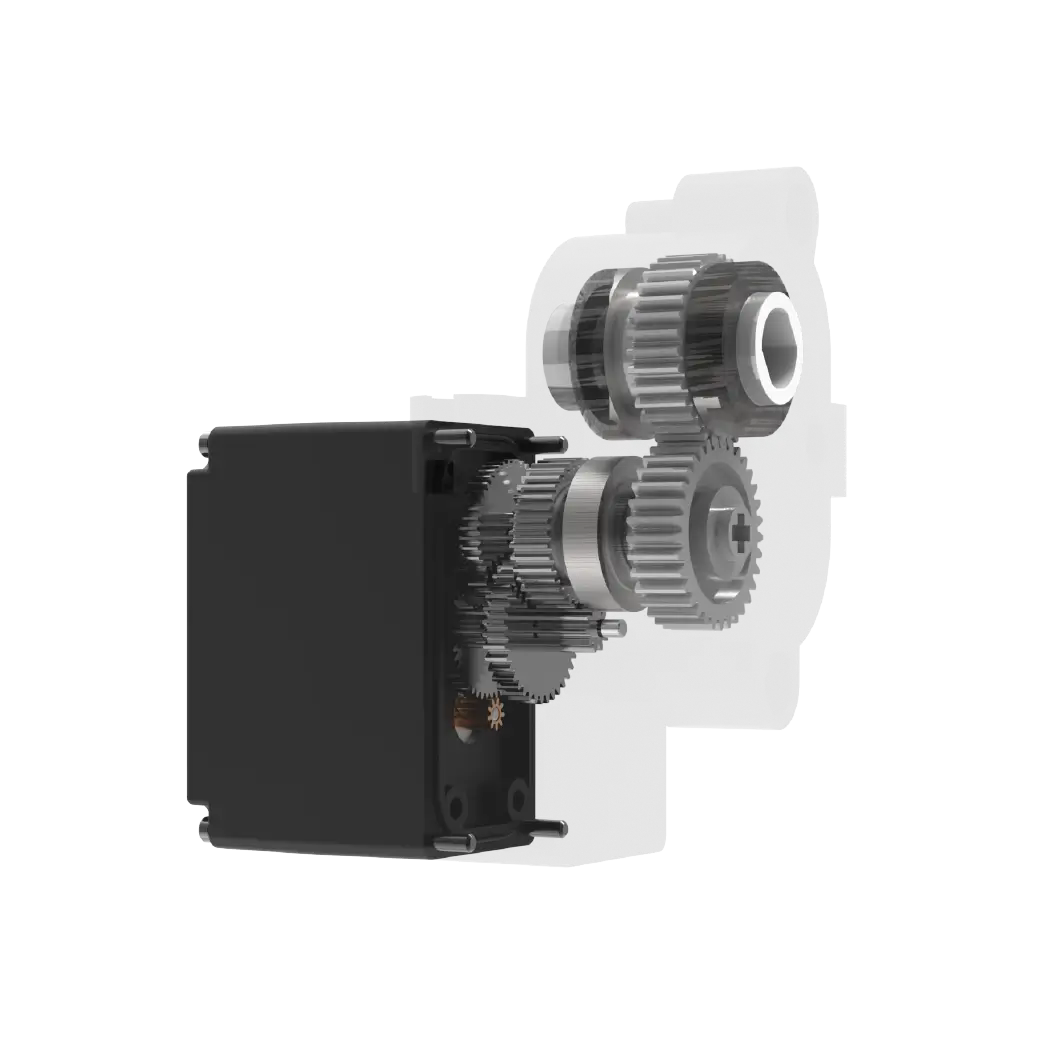
When starting to model, it is recommended to start from the inside out. Draw the core components first: the motor and gear set. You can call a miniature DC motor model from the standard parts library, or draw a simplified cylinder instead based on the dimensions. The gear set is the key to power transmission. There is a standard gear library in the SW plug-in. You can directly call and set the number of teeth, module and other parameters for assembly.
Next comes the design of the shell and structural parts. Based on the overall dimensions determined previously, draw a shell that contains all the internal parts. Special attention should be paid here to the design of wall thickness and reinforcement ribs to ensure that the shell has sufficient strength without being too bulky. The bearing seats and mounting lugs of the output shaft and other stress-bearing parts need to be partially reinforced.
The gear meshing clearance is the first detail to pay attention to. During virtual assembly, you need to check whether there is an appropriate gap between each gear. It can neither get stuck nor cause too much gap to cause serious backlash. SW's collision check function can help you find interference problems.
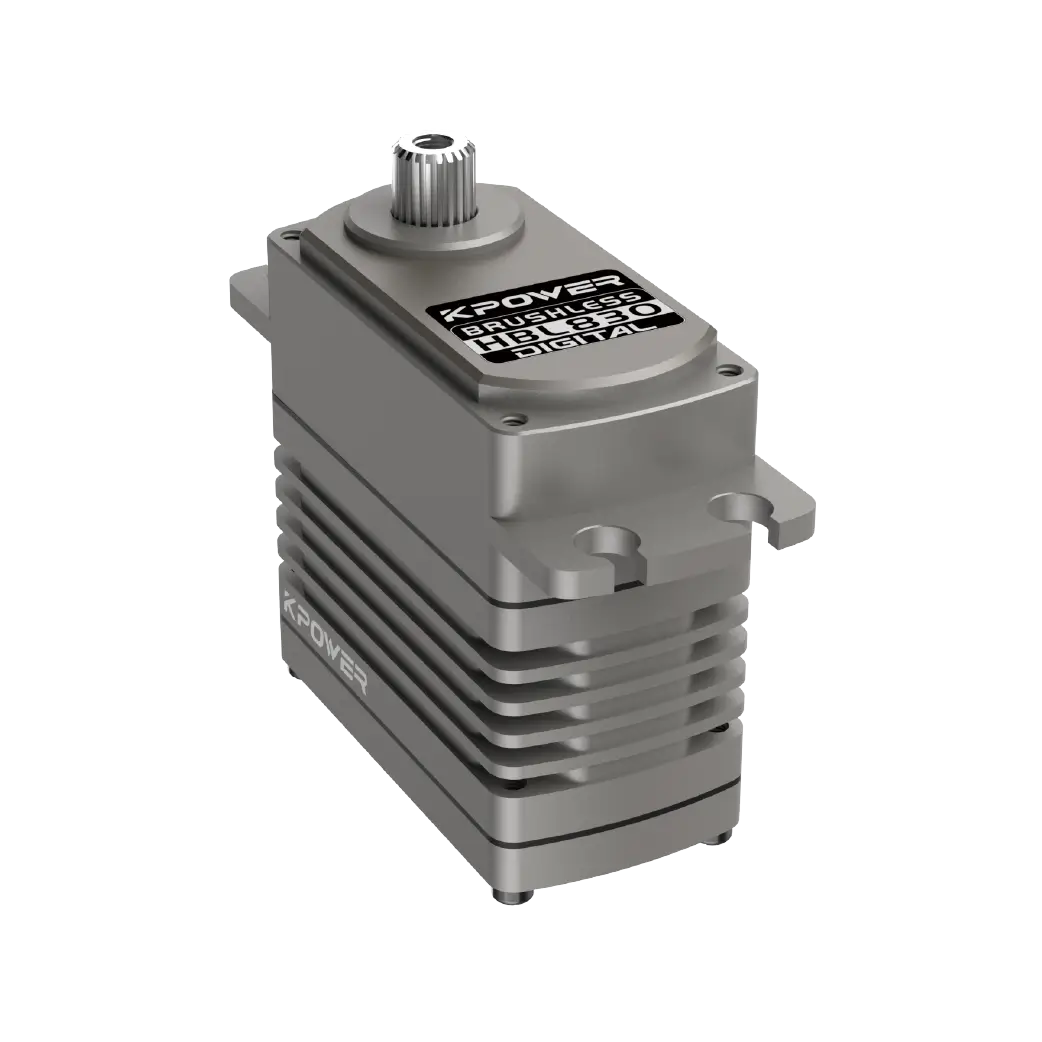
Heat dissipation and routing are two other points that are easily overlooked. The motor will generate heat when it is working, so you need to design some ventilation holes or cooling fins on the casing. How are the internal control board and motor leads arranged? Are there any wire troughs or fixing buckles reserved? These details are related to whether the steering gear can work stably and reliably in the future.
Once the model is drawn, it does not mean the design is complete. Next, we need to use the simulation function of SW to do a simple verification. For example, you can use the "Mass Properties" tool to view the center of gravity of the servo, which is important for high-speed swing applications. You can also do a simple motion calculation example to see if the motion range of the output shaft meets expectations.
After verification, the technical data required for production can be output. SW can automatically generate detailed 2D engineering drawings with all dimensions and tolerances marked. You can also export the model to common formats such as STP or IGS to facilitate sending it to processing plants for mold development or 3D printing trial production. A servo that completely matches your wishes will gradually move from the model on the screen to reality.
Have you ever been stuck in the progress of the entire project by an inappropriate standard part? If you were given the opportunity to completely customize a core component, what aspect of it would you most like to optimize? Feel free to share your thoughts in the comment area, and don’t forget to like and share it with friends who may be encountering the same problem.
Update Time:2026-02-08

Contact Kpower's product specialist to recommend suitable motor or gearbox for your product.