







TECHNICAL SUPPORT


Published 2026-02-23
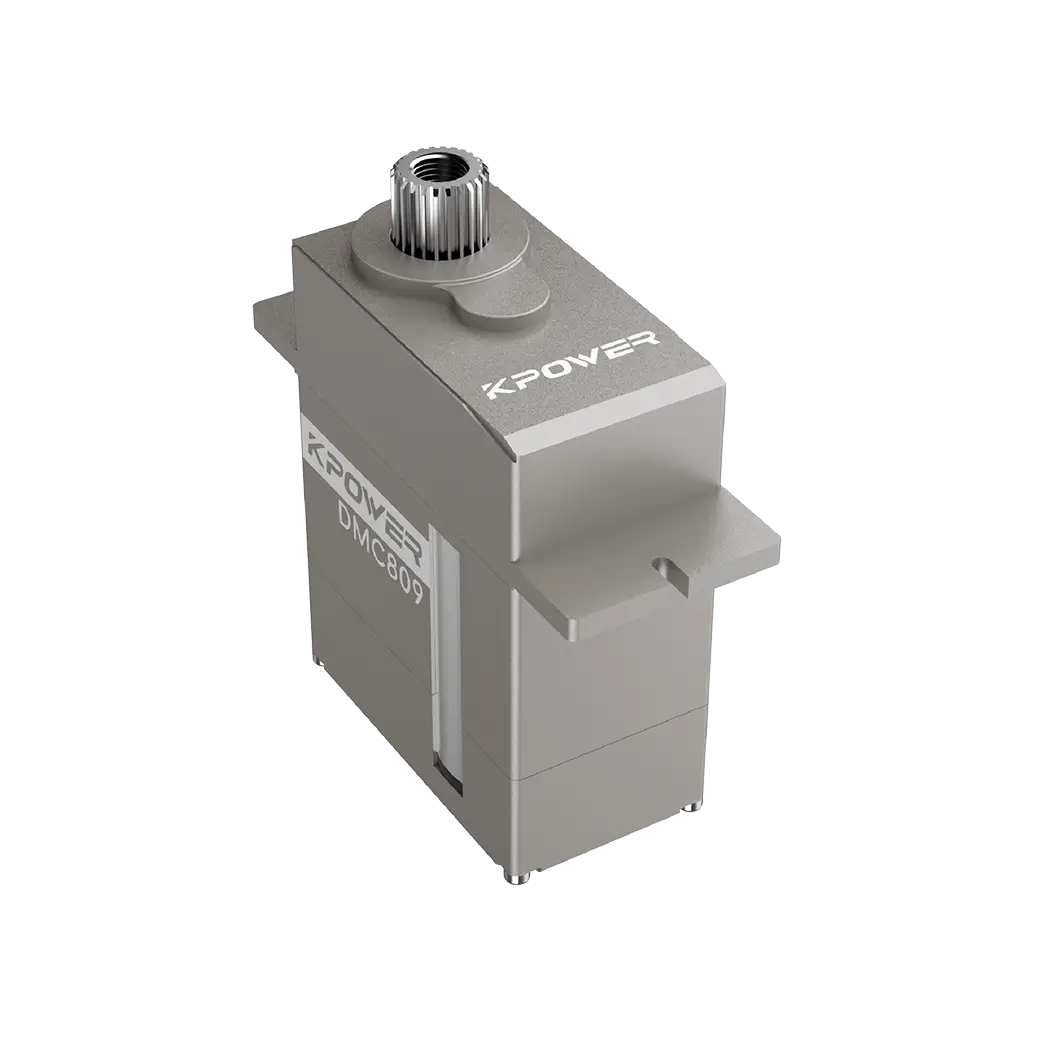
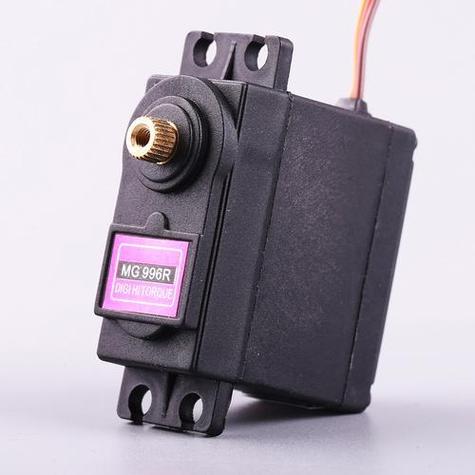
One problem we often encounter when playing withservos is insufficient power supply. Especially for high-torqueservos like the MG995, if it relies directly on a controller (for example) for power supply, it is prone to jitter, weakness or even a direct crash. Today we will talk about whether the MG995servocan be powered independently and how to operate it reliably.
Many friends who are just getting started are accustomed to plugging the power cord of the servo directly into the 5V pin of the development board. When the MG995 servo is blocked or started with a large load, the instantaneous current can surge to 2A or even higher. The output current of most voltage stabilizing chips on development boards is only about 500mA to 1A, which cannot withstand such a large current impact.
Once the current is insufficient, the voltage of the controller will be pulled down instantly. At worst, the servo will vibrate on its own and lose power; at worst, it will cause the microcontroller to restart directly. This is like a high-power air conditioner that has to be plugged into a power strip with only a few sockets. The result is that when the air conditioner is turned on, the lights in the entire room will flash.
Therefore, from the perspective of stability, setting up an independent power supply system for the MG995 servo is not an option but a necessity.
Before deciding to use a separate power supply, you must first figure out what kind of electricity it needs. MG995 is a classic high-torque metal gear servo. The working voltage is usually between 4.8V and 6.8V, and the commonly used ones are 5V or 6V.
The key depends on the current. Under no-load condition, the operating current of MG995 is about tens to one hundred milliamps. But once it is loaded, especially when frequent starts and stops are required, the peak current can easily exceed 1A. If you use more than two servos at the same time, the total current requirement may reach 3A or even higher.
This means that the power supply you choose must be able to stably output at least 2-3A of current and have small voltage fluctuations. If the voltage is slightly lower, the servo will be weak; if the current cannot keep up, the control will be inaccurate. Only after understanding this parameter can you choose a power supply.
There are several main options on the market for powering the MG995. The most common one is to use DC step-down modules, such as this type, which can steadily reduce high voltages such as 12V or 24V to 5V or 6V, and the output current can reach more than 3A.
There is also a way to use USB power directly, like a mobile phone charger plus a USB cable. There are many 5V 2A or even 3A charging heads that can fully meet the needs of a single MG995. But be aware that some inferior charging heads have large voltage ripples, which will affect the steering gear control accuracy.
The more advanced one is to use the 2S lithium battery commonly used in model aircraft to directly power the battery, with a voltage of 7.4V, and a BEC step-down module is required to output 5V. This method is suitable for mobile robot projects, but the battery voltage must be monitored in real time to prevent over-discharge.
After selecting the power supply, how to connect it to the servo and controller. The core principle is that power lines and signal lines should be run separately. Among the three wires of the servo, brown or black is the negative pole, red is the positive pole, and yellow or white is the signal wire.
When powering on, connect the positive pole of the independent power supply to the red wire of the servo and the negative pole to the brown wire. The key step is that the negative pole of the independent power supply must be connected to the GND of the controller. This can ensure that the PWM signal sent by the controller has a common reference ground with the servo, so that the signal will not be messed up.
If you forget to connect to a common ground, the voltage reference of the controller and the servo may be different, and the servo may keep shaking or not responding at all. It's like two people speaking their own words. Although they are both talking, they can't understand each other.
Once the MG995 is connected to an independent power supply, many annoying phenomena disappear. For example, if the servo suddenly freezes or twitches during movement, it is often due to insufficient voltage that causes the control chip to reset. After replacing the high-current power supply, the movement will become silky and smooth.
There is also the fact that the servo gets hot when touched by the hand when it is stationary. This is often because the power supply is unstable and the servo is constantly making small corrections inside. When the power supply is clean, this unnecessary power consumption will disappear.
In addition, the stability of the entire control system will be significantly improved. There will no longer be a situation where the sensor readings become erratic as soon as the servo moves. Because large currents flow from an independent power supply, the voltage on the control board is well protected, and the sensor will naturally work accurately.
Many friends calculate the operating current of the servo and buy a 1A power supply if they think 1A is enough. This is actually a pitfall. The locked-rotor current of MG995 is very large, and the inrush current at the moment when the motor is started is several times the rated current.
It is recommended to select a power supply based on 1.5 to 2 times the sum of the peak currents of all servos. For example, if you use a servo with a peak value of 2A, then choose a power supply with a 3A to 4A output. If two servos are working at the same time, it is best to choose a power supply of 5A or even 8A or above.
By leaving enough margin, the power supply will not always be at full load, generate less heat, have a longer life, and the voltage will be more stable. And if the servo accidentally gets stuck, the high-current power supply can provide enough energy to get it out of trouble without crashing directly.
After talking so much, I wonder if you have ever encountered strange failures caused by power supply problems when working on projects? Welcome to share your experience in the comment area. If you find the content useful, please give it a like and support it so that more friends who play servos can see it.
Update Time:2026-02-23

Contact Kpower's product specialist to recommend suitable motor or gearbox for your product.