








TECHNICAL SUPPORT


Published 2026-02-15
Have you also encountered this situation? I bought a microservowith great joy and wanted to put it into my DIY gizmo. However, when the power was turned on, it would either shake like a sieve or not move at all. After struggling for a long time, I found that the program was not written incorrectly. The problem probably lies in the "viscera" that you can't see or touch - the internal circuit. If you understand it, you can avoid many pitfalls.
Simply put, the internal circuitry of a microservois its brains and muscles. The PWM signal (a control signal) you send out from the microcontroller is like shouting to it, but this signal is too weak to push the motor at all. The core driver chip in the internal circuit is responsible for understanding your instructions and then directing the motor to rotate. At the same time, there is a precise position sensor (usually a potentiometer) in the circuit, which tells the chip where the "arm" has turned in real time, forming a closed-loop control. It is this set of circuits that allows theservoto point where to hit with high precision and fast response.
The most direct benefit of understanding the internal circuit is that you have an idea when selecting a model. For example, in order to save money, many cheap servos omit key voltage stabilizing and filtering capacitors from their internal circuits, which makes the servos particularly sensitive to voltage fluctuations during operation. You use a battery to power it, and when the voltage drops slightly, it starts to twitch. For another example, the quality of the driver chip determines how much current it can output, which directly affects the torque and response speed of the servo. So, next time you look at the servo parameters, don’t just focus on the torque. Ask the seller about the circuit design. This trick can help you eliminate a lot of pitfalls.
Although we can't take apart each servo and look at it, we can make a rough guess based on some external features. ️The first tip: look at the wire. The wires used in good servos are thicker and can withstand greater current, and the internal circuit design is generally more solid. ️Second tip: Look at the price. This does not mean that expensive ones are necessarily better, but considering the cost of a micro-servo that costs tens of dollars each, the internal circuit is basically the simplest solution. Don’t have too high expectations for its anti-interference ability and stability. ️ The third trick: listen to the sound. When the servo does not send a signal after powering on, if the servo emits a sharp "sizzling" current sound, it may be that the internal circuit is forcibly driving the motor to maintain its position. This usually means that the circuit is not efficient and consumes more power.
If you want the "little heart" of your steering gear to last longer, operating habits are very important. 1. The power supply must be stable. This is the most critical! The current at the moment when the servo is started is very large. If your power supply (such as the 3.3V output on the development board) cannot supply the voltage, the voltage will be pulled down, which may cause the servo to spin randomly or burn the internal driver chip. It is recommended that the servo be powered independently. 2. Don’t stall. When the servo is turned to the end and is still stuck by an external force, the motor is blocked, the current surges, and the internal circuit, especially the drive tube, heats up quickly and is easily burned. Limits must be set in the program. 3. Anti-static. Especially in a dry environment, before touching the servo signal line, touch the metal water pipe to discharge it. It is not uncommon for static electricity to breakdown the chip.
If there is a problem with your steering gear, don't rush to death. Follow these steps to check yourself. It's probably just a minor problem. The first step is to feel the temperature. After powering on for a short while, gently touch the servo shell with your hand. If it gets hot quickly, you can basically conclude that there is a short circuit inside. The drive tube may have broken down and needs to be replaced. The second step is to measure the voltage. Use a multimeter to check whether the signal line voltage is within the logic level range of your controller (usually 3.3V or 5V). The voltage is too low and the chip cannot recognize the command. The third step is to listen to the sound and power off. Gently turn the output shaft. If you can feel the internal gear jamming, or there is no damping feeling at all when turning, it may be that the internal potentiometer is loose or the gear is swept. This is physical damage.
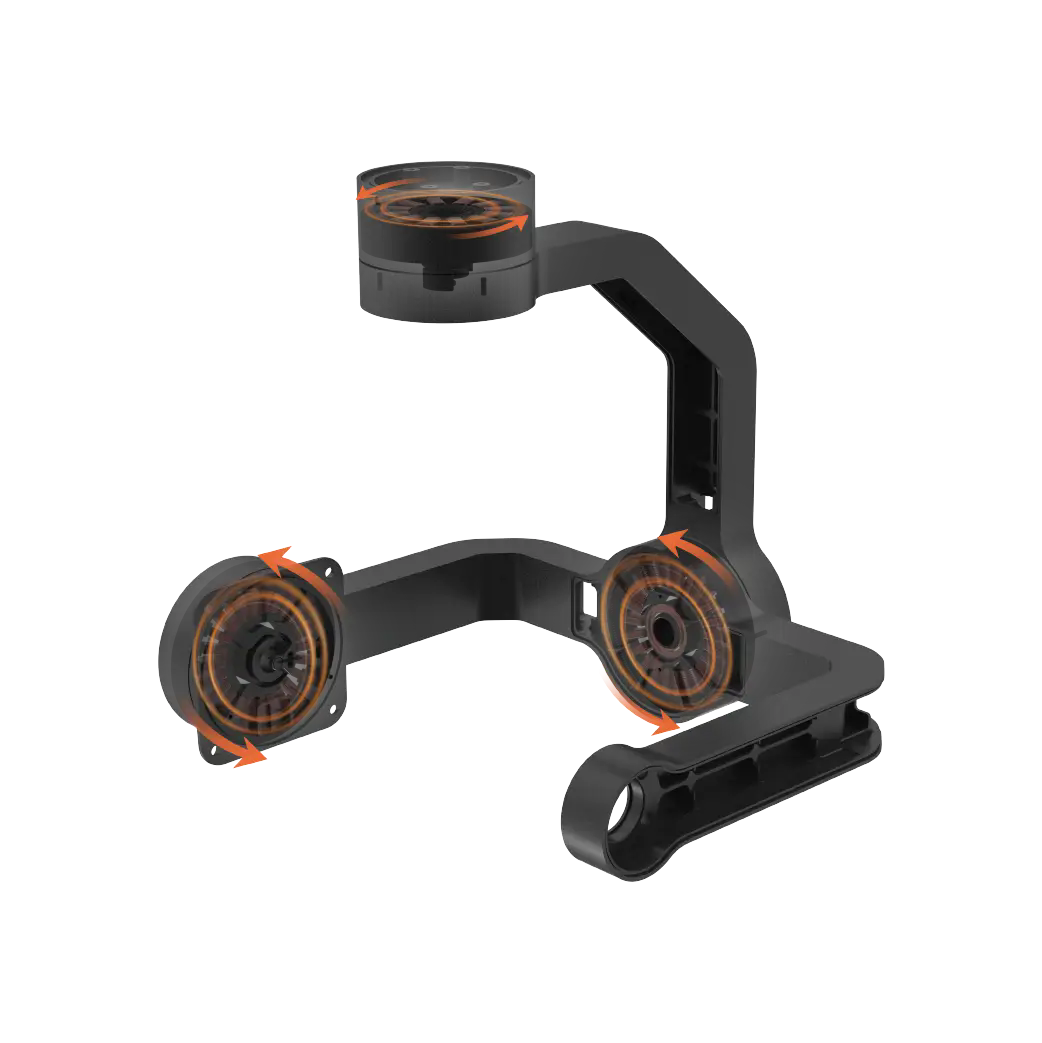
Depending on your project, the degree of pickiness about the internal circuit of the servo should also be different. When making robot joints, especially bipedal or hexapod robots that require precise angle control, the servo must respond quickly and have good linearity, which requires the processing chip of the internal circuit to operate fast enough and the PWM signal to be analyzed accurately. If you are making a camera gimbal, the smoothness of the servo is the first priority. The circuit needs to have high-frequency refresh and fine-tuning capabilities to reduce image jitter. But if you are just making a simple model car steering, then an ordinary servo is enough, and the requirements for the circuit are relatively low.
Want to quickly verify whether the servo circuit on hand is healthy? Let me teach you a simple and crude method: use a AA battery (1.5V) to directly touch the positive and negative terminals of the servo. The motor should turn smoothly in one direction and hold it. If you touch the signal line and the positive terminal, it will turn in the other direction. If there is no response or slow response, there may be a problem with the motor or drive circuit. To be more precise, use an oscilloscope to look at the signal line. The waveform should be square and square without major distortion, which means the internal chip is working normally. Spending 1 minute doing this test before each DIY can avoid a lot of trouble in subsequent debugging.
Seeing this, do you also want to take out the few servos on hand for "diagnosis"? What's the most frustrating experience you've ever had when using a servo? Is the circuit burned or the program cannot be adjusted properly? Welcome to share your story in the comment area, and let’s avoid pitfalls together. If you find this article useful, don’t forget to like and forward it so that more friends who play servos can see it!
Update Time:2026-02-15

Contact Kpower's product specialist to recommend suitable motor or gearbox for your product.