








TECHNICAL SUPPORT


Published 2026-02-17
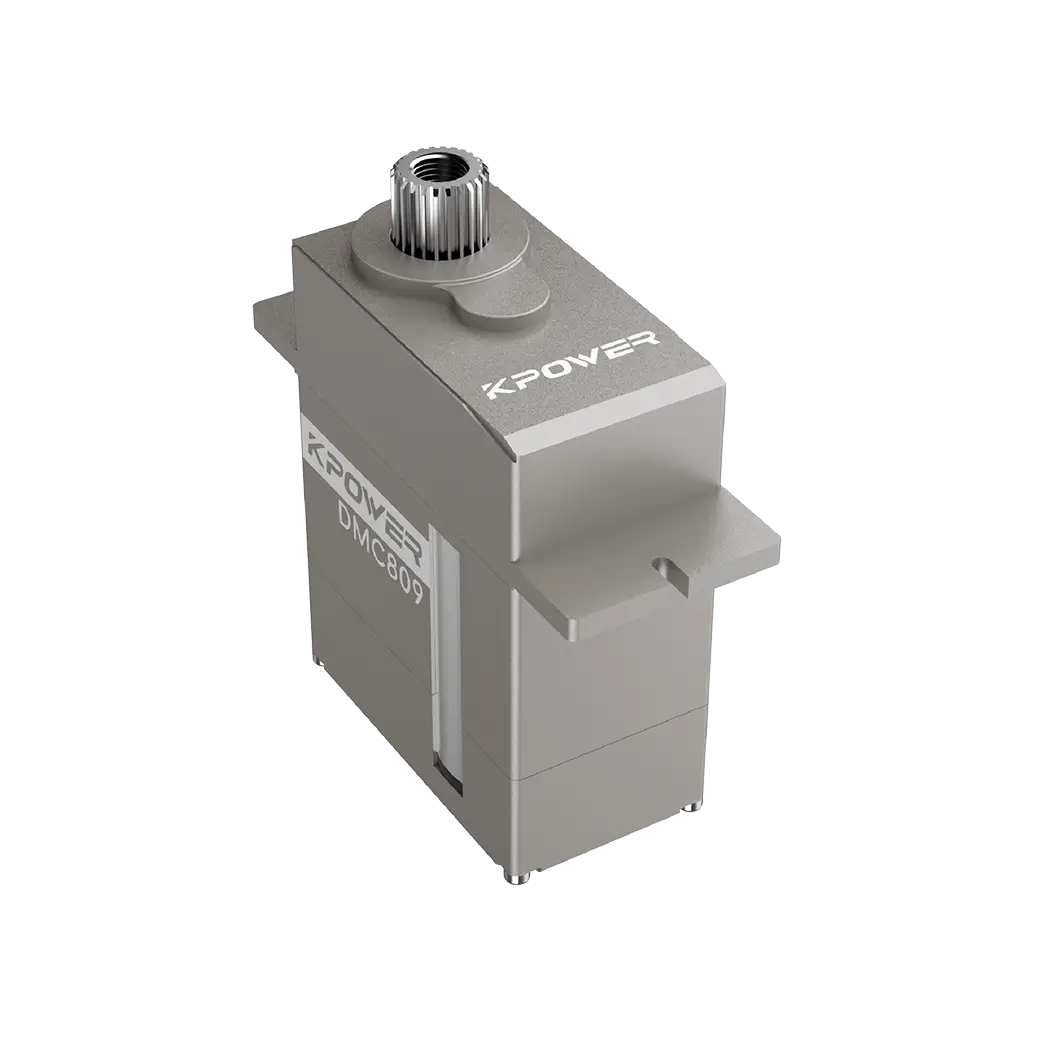
Friends who play model airplanes, have you ever encountered this situation: theservowas obviously newly purchased, but after installing it on the aircraft, you found that it was unresponsive, buzzing, or even not working at all? In fact, many times, the problem is not with the steering gear itself, but with the installation process. As the "muscle" of the model, theservois properly installed, which directly determines the accuracy and safety of flight control. Today we are going to talk about how to install the steering gear firmly and easily.
The virtual position of the steering gear is a nightmare for many model friends. It feels like the steering surface is already shaking before the rocker arm moves. To solve this problem, the key is to fix it. When installing, be sure to use the special screws that come with theservo, and make sure the screws are screwed in vertically and not at an angle. The base plate or mounting frame for fixing the servo must be flat and solid. If it is installed on balsa wood or foam, it is recommended to embed wood or plastic sheets in advance as reinforcement to prevent the screws from loosening under stress.
In addition, the combination of rocker arm and steering gear is also very important. When installing the rocker arm to the output shaft, make sure it is fully pressed to the bottom, and then tighten the set screw. Some servo output shafts have fine teeth, which can effectively prevent the rocker arm from slipping, so when installing, make sure the rocker arm meshes perfectly with these fine teeth. Finally, don’t forget to put a little screw glue on the rocker arm screw to prevent it from falling off due to vibration.
When choosing the installation location of the servo, you need to comprehensively consider the center of gravity, connecting rod direction and maintenance convenience. Generally speaking, the steering gear should be as close as possible to the rudder surface it controls, so as to shorten the length of the connecting rod and reduce the false position and delay caused by the deformation of the connecting rod. For example, the tail servo is usually installed near the tail of the fuselage.
At the same time, the layout of the steering gear should be conducive to the adjustment of the center of gravity of the entire machine. You can place the heavier servos closer to the center of gravity to avoid unnecessary weight burden on the aircraft. When installing, you should also reserve enough space to facilitate future inspection, adjustment or replacement of the servo. Don't wait until it breaks down to find that you can't even reach in, which would be embarrassing.
The common connections between the steering gear and the steering surface are wire connecting rods and push-pull connecting rods. Threaded wire connecting rods are an affordable and reliable option for most small and medium-sized model aircraft. When installing, make sure that the connectors at both ends of the connecting rod (such as quick-adjusting buckles and ball-head buckles) move smoothly and are not stuck. The length of the connecting rod must be measured accurately to ensure that when the rudder surface is at the neutral point, the servo rocker arm is also in the neutral position.
If space permits, using a closed push-pull link (such as a carbon fiber tube with a steel wire head) can provide higher rigidity and response speed, and is suitable for occasions with extremely high precision requirements such as 3D fancy flying. No matter which one is used, check whether the connecting rod will interfere with the fuselage structure at its maximum stroke. It is recommended to use a ball joint buckle with bearings, which can significantly reduce friction and make the steering gear move lighter.
Messy steering gear wires not only affect the appearance, but may also be damaged by the propeller or worn by sharp corners in the equipment compartment, causing a short circuit. Before wiring, plan the route of the line first, and try to let the wiring harness run along the side wall or partition of the fuselage. You can use hot melt glue, cable ties or special Velcro to fix the wiring harness on the structural parts, fixing it at intervals to prevent it from loosening due to vibration.
For lines that are too long, do not roll them into a ball and stuff them in. Instead, they should be neatly folded or coiled, and then fixed with a tie. Note that the wiring harness should be kept away from heat sources such as motors and ESCs, as well as all moving parts. When passing through the partition hole, it is best to install a rubber protective coil or wrap a layer of fiber tape to prevent vibration from wearing the wire skin. The organized wiring is not only comfortable to look at, but also convenient for troubleshooting.
The initial installation angle of the steering gear arm directly affects the stroke and mechanical efficiency of the rudder surface. The standard approach is to keep the servo arm at a 90-degree angle with the connecting rod as much as possible while the servo and receiver are powered on and centered. The advantage of this is that the torque output of the servo in both forward and reverse directions is the most balanced, the linearity is the best, and the control feel is more delicate.
If it is impossible to achieve 90 degrees due to the installation location, try to ensure that the connecting rod angles of the left and right servos are symmetrical. This is especially important for rudder surfaces that use dual servos to drive them (such as ailerons). Before installation, you can power on the servo and return it to the center, then install the rocker arm and select the spline hole position closest to 90 degrees. Then fine-tune the length of the connecting rod to bring the rudder surface to the neutral point.
Once you get a new servo, don't rush to install it on the airplane. Doing a few simple tests first can help you avoid a lot of trouble. The first step is to gently turn the output shaft with your hand to feel whether the gear is smooth and whether there is any obvious jamming. The second step is to connect the receiver and power on, check whether the servo is centered accurately and whether there is any abnormal noise or jitter during operation.
If the servo supports it, you can also simply test whether its working current is normal. Check the casing and wires of the servo to see if there is any damage. Especially for servos that are second-hand or have been stored for a long time, you should pay more attention. These "one minute before installation" can often detect potential faults in advance, which is much better than having problems after installation.
After reading this, is there room for improvement in the installation method of the servo of the aircraft you have? I wonder if you have ever encountered a tragedy of "explosion" caused by improper installation of the servo in the past installation process? Welcome to share your experiences and lessons learned in the comment area, and let’s communicate together to make flying safer and more fun. If you find the content useful, don’t forget to like and share it with your fellow models!
Update Time:2026-02-17

Contact Kpower's product specialist to recommend suitable motor or gearbox for your product.