







TECHNICAL SUPPORT


Published 2026-02-27
Playing with microservos: wiring is no longer a big problem, you will understand after reading this article
Many novice friends who are new toservos may see the rows of densely packed pins and their first reaction may be "How on earth should I connect this thing?" Especially the miniatureservos at home are small in size but powerful in function. If you connect a wrong wire, it will not turn at least, or it will burn out, which is really a headache. In fact, as long as you clarify the most basic logic, wiring is much simpler than you think. Today we will put aside those complicated circuit diagrams and explain this matter thoroughly in plain language.
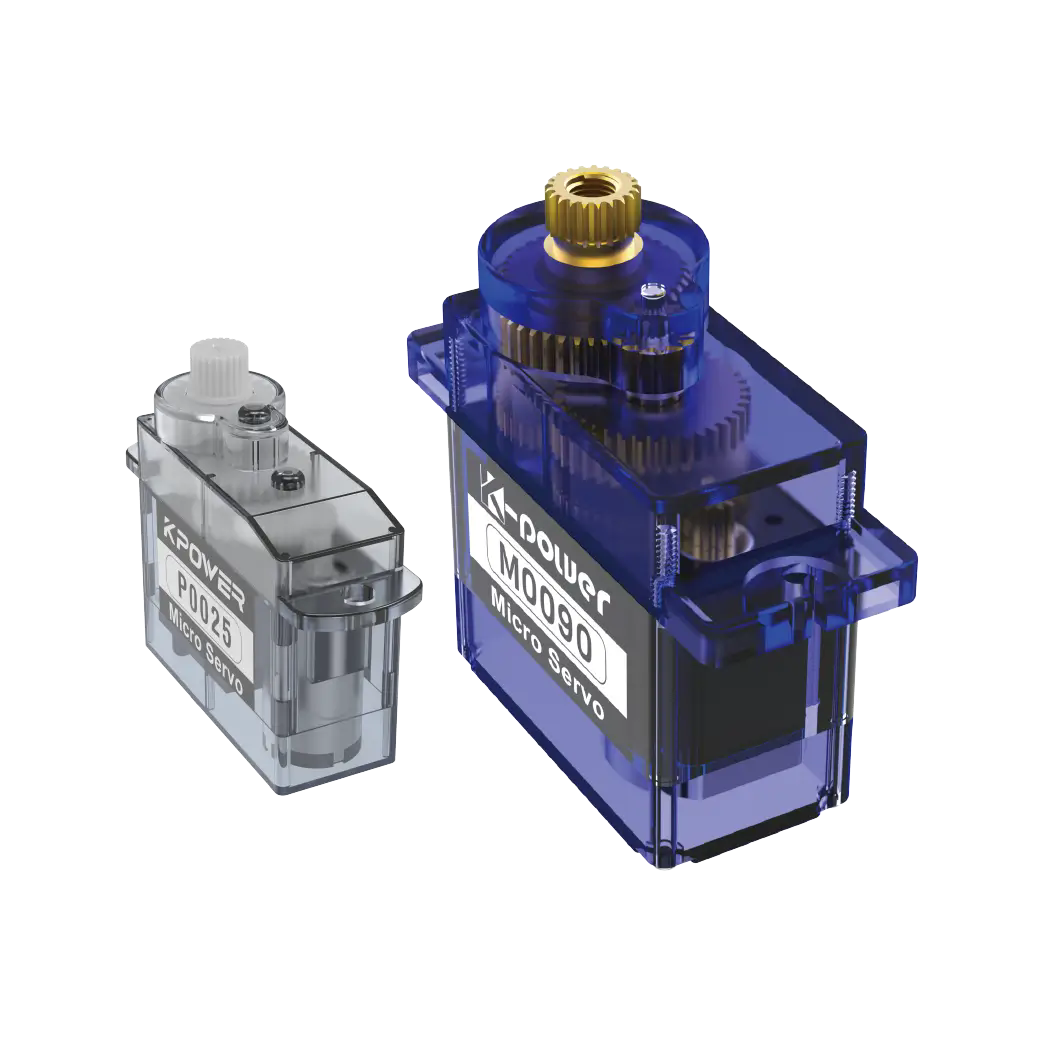
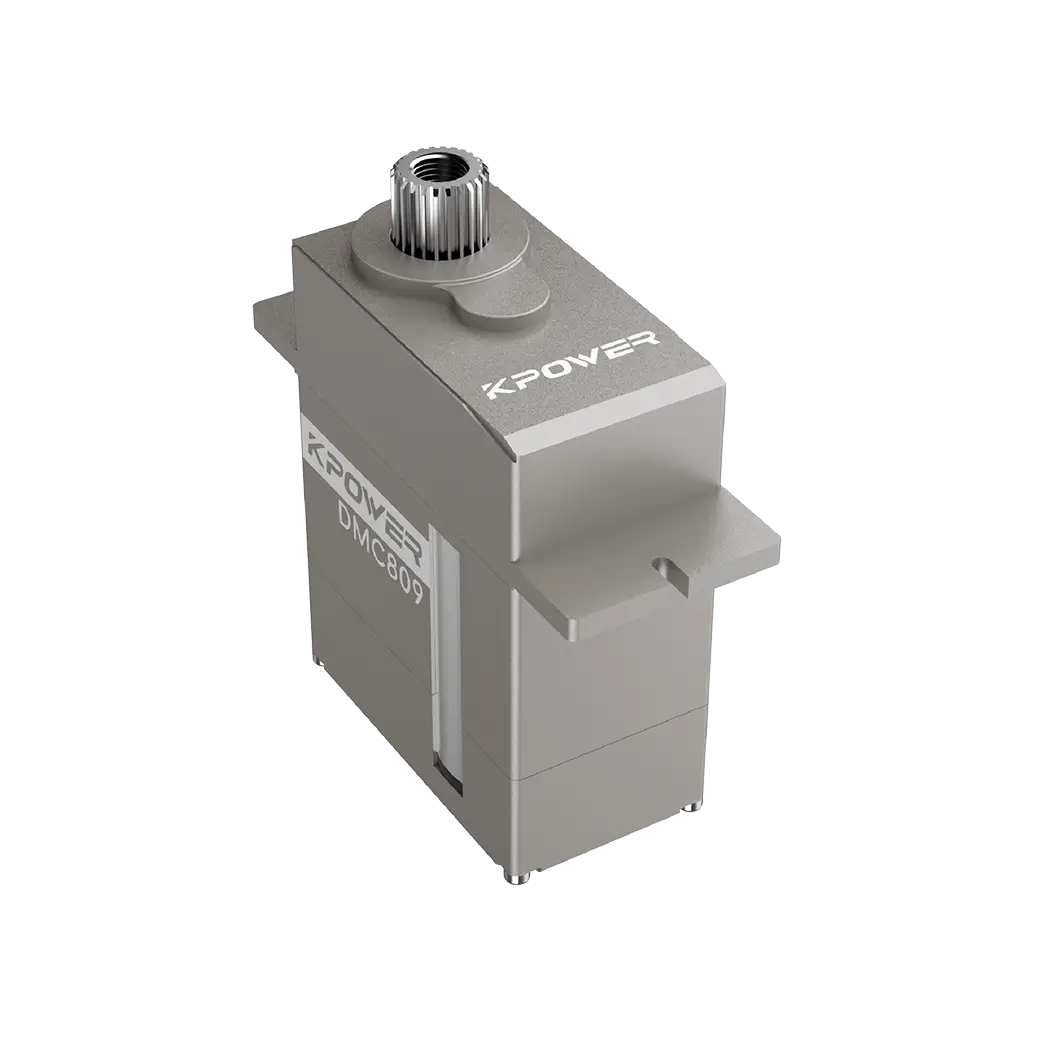
When you get a micro servo, the most conspicuous thing is the three wires sticking out of it, which are usually brown, red and orange (or black, red and white). Each of these three brothers has its own mission, and we must first understand them. Usually, the dark one, such as brown or black, is what we often call the negative electrode (GND), which is the ground wire of the power supply and needs to be connected to the GND pin of the control board.
The red one in the middle, needless to say, is the positive pole of the power supply. It is responsible for providing power to the steering gear. The last remaining orange or white wire is the signal wire, which is responsible for receiving instructions from the main control board (for example) and telling the servo where to turn. Remembering this color correspondence is as important as remembering traffic lights. It is the first step in all our operations.
Sometimes, even though the wires are connected correctly, the servo doesn't move at all, or shakes like a sieve. This is most likely due to "hypoglycemia", which means insufficient power supply. Although the micro servo is small, it requires a lot of current when turning, especially at the start-up moment. If your main control board directly supplies power to the servo through its own 5V pin, it can easily be "squeezed dry".
In this case, the most reliable way is to open a separate small stove for the servo. You can find an external power supply, such as a battery box composed of several dry cells, or an independent voltage stabilizing module. Connect the red wire (positive pole) and brown wire (negative pole) of the servo to the positive and negative poles of the external power supply respectively, and then connect the GNDs of all devices (including external power supply and main control board) together to ensure that they are "common ground". In this way, the signals and power go their own way without interfering with each other, so the steering gear can be fully fed and work efficiently.
Now that you know the three wires and have solved the power supply problem, it’s time to actually connect them to your circuit board. If you are using a board like UNO, there are many methods. The simplest and crudest one is to use a female-to-female DuPont wire, plug one end into the three-pin socket of the servo, and the other end directly into the digital pin (such as pin 9) and power pin (5V and GND).
️Tips for wiring sequence:
1. Connect the signal wire first: connect the orange (signal) wire of the servo to pin 9.
2. Then connect the power supply: connect the red (positive) wire of the servo to the 5V pin.
3. Finally connect the ground wire: connect the brown (negative) wire of the servo to the GND pin.
This step-by-step approach can effectively avoid accidentally causing a short circuit during the connection process. After plugging it in, check again whether the colors match. Once confirmed, you can power on and test.
This is a very critical question. The answer is: almost must. PWM, the full name is pulse width modulation. To understand it simply, it is like a special language. The main control board uses this signal line to use electrical pulses of different widths to tell the servo to "turn to 90 degrees", "turn to 0 degrees" or "turn to 180 degrees".
Ordinary digital output pins can only output high level (5V) or low level (0V), just like they can only say "on" and "off", while the servo needs more precise instructions. Therefore, we must connect the signal line of the servo to the pin on the main control board marked with a "~" tilde or clearly stated to support PWM output. For example, UNO's pins 3, 5, 6, 9, 10, and 11. If you connect it to the wrong place, the servo will not understand your words.
The hardware is all connected, and it’s just a matter of injecting soul into it—the code. It is very convenient to control the servo, because there is a ready-made "servo library" that can save us a lot of low-level work. First, you need to "invite" this library file in through the# line at the very beginning of the code.
You need to create a servo object, for example, call it. Insetup()function, use.(9)to bind the servo object to the pin 9 you just connected. Finally, in theloop()function, just write.write(90);and the servo will obediently turn to the 90-degree position. You can make it go from 0 degrees to 180 degrees and back again, like a tireless robot arm.
If your project requires more than one servo, for example, if you want to make a six-legged robot, you need to pay more attention to the wiring. First, the power problem will be further amplified. Multiple servos work at the same time, which consumes an astonishing amount of power. At this time, it is almost necessary to connect an external high-power power supply, otherwise your main control board will definitely "crash".
In terms of signal connection, each servo requires an independent PWM pin to control. In other words, if you have several servos, you need to occupy several pins that support the PWM function. At the same time, the negative pole (GND) of all servos still needs to be connected to the GND of the main control board to maintain "common ground". Imagine that it is like a big river (main power supply) branching out into many small ditches (each servo), but they all eventually merge into the same ground (GND), so that a complete and stable loop can be formed.
After seeing this, I believe you already have a clear understanding of the wiring of the micro servo. In fact, it's like building Lego. You just need to figure out the function and connection rules of each part, and the rest is patience and care. What other "weird" problems have you encountered in the actual wiring process? Welcome to share it in the comment area, and everyone can help you come up with ideas! If you think this article is helpful to you, don’t forget to like and share it with your friends who are also tinkering with servos!
Update Time:2026-02-27

Contact Kpower's product specialist to recommend suitable motor or gearbox for your product.