







TECHNICAL SUPPORT


Published 2026-02-28
In the process of product innovation, how to achieve a firm connection between the output shaft of the steering gear and other parts, such as connecting rods, wheels, rocker arms, etc., is really a headache. When the connection method is correctly selected, the entire structure will become stable and the transmission can be accurate; however, once the wrong connection method is selected, slippage and looseness are very likely to occur, and even the entire mechanism will be scrapped.
Don’t worry about this. Today we will discuss the mainstream connection methods of theservooutput shaft to help you easily overcome this problem.
Directly inserting theservooutput shaft into the part to be driven is the first method that many people think of. The output shaft of the steering gear is usually made into a cylindrical shape with teeth. This is not for good looks, but to increase friction and prevent slipping. Correspondingly, you need to cut a hole in the connector that matches the exact shape.
The operation is quite simple: first, you need to accurately measure the tooth shape size of theservooutput shaft, and then use 3D printing technology or mechanical processing to create the corresponding internal tooth hole based on the measured size. During assembly work, the shaft is pressed into the hole with force, and the power can be transmitted by means of the interlocking action of the teeth. This method has the advantages of simple structure and no extra parts. However, its disadvantage is that after repeated disassembly and assembly, the teeth are prone to wear, which in turn leads to loosening.
The steering wheel, also called the steering arm or rocker arm, is an accessory specially designed by steering gear manufacturers to solve connection problems. One end of it has an internal toothed hole that exactly matches the servo output shaft, and the other end provides various mounting holes for you to connect other parts. This is like putting a pair of "shoes" on the steering gear shaft, allowing it to steadily drive the "body" to move.
The benefits brought by using the steering wheel are extremely significant: it successfully transforms the original single-point contact mode of "axis to hole" into the multi-point surface contact form of "rudder plate to connecting rod". In this way, the force situation becomes more uniform and the transmission process becomes smoother. Moreover, the steering wheel is generally made of nylon or metal and has high strength.
In terms of installation, the operation is very simple. You only need to use the jackscrew to securely lock the steering wheel to the output shaft, and then use screws to fix the connecting rod to the steering wheel. The entire installation process is simple and reliable.
There are usually one or more small screw holes on the steering wheel, which contain jackscrews. After you put the steering wheel on the output shaft and tighten the jackscrew, its tip will tightly press against the flat surface or tooth groove on the output shaft, thereby fixing the steering wheel. This is currently the most commonly used and convenient locking method.
However, there are a few things you need to pay special attention to when using the top screw. First of all, be sure not to tighten it too much, especially for small servos, otherwise it is very likely to damage the output shaft or cause the wire to slip. Secondly, you can apply a little screw glue on the thread of the top screw to prevent the top screw from loosening itself during the vibration of the machine. Finally, regular inspections must be carried out to ensure that the top screw is not loose, which is especially critical for long-term operation of equipment.
In addition, for equipment that has been running for a long time, it is essential to regularly check whether the top screw is loose. During the inspection process, carefully check the condition of the top screw to ensure its stability. Moreover, you must develop the habit of regular inspections and do not be careless, because once the top screw becomes loose, it may cause a series of problems and affect the normal operation of the equipment. Therefore, you must always pay attention to the condition of the top screw to ensure the long-term stable operation of the equipment.
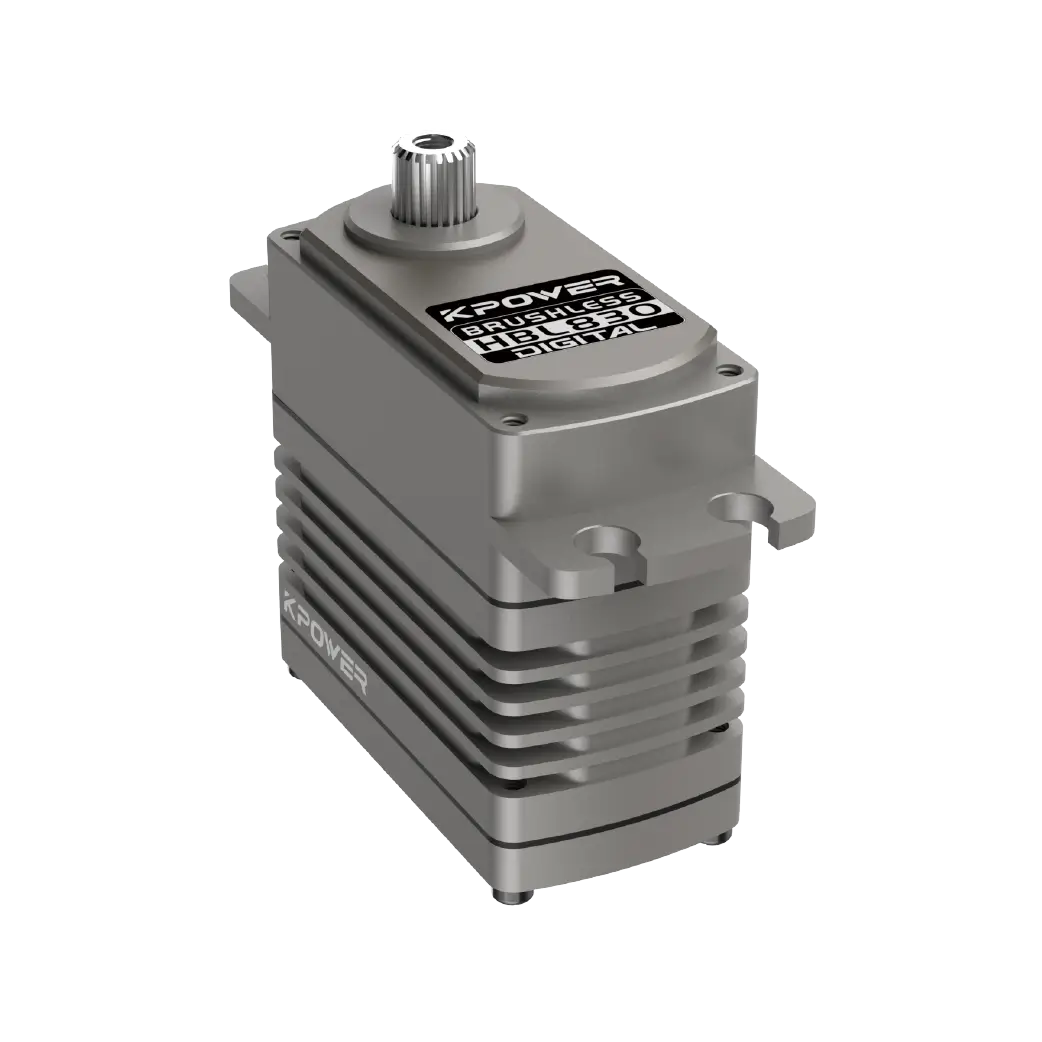
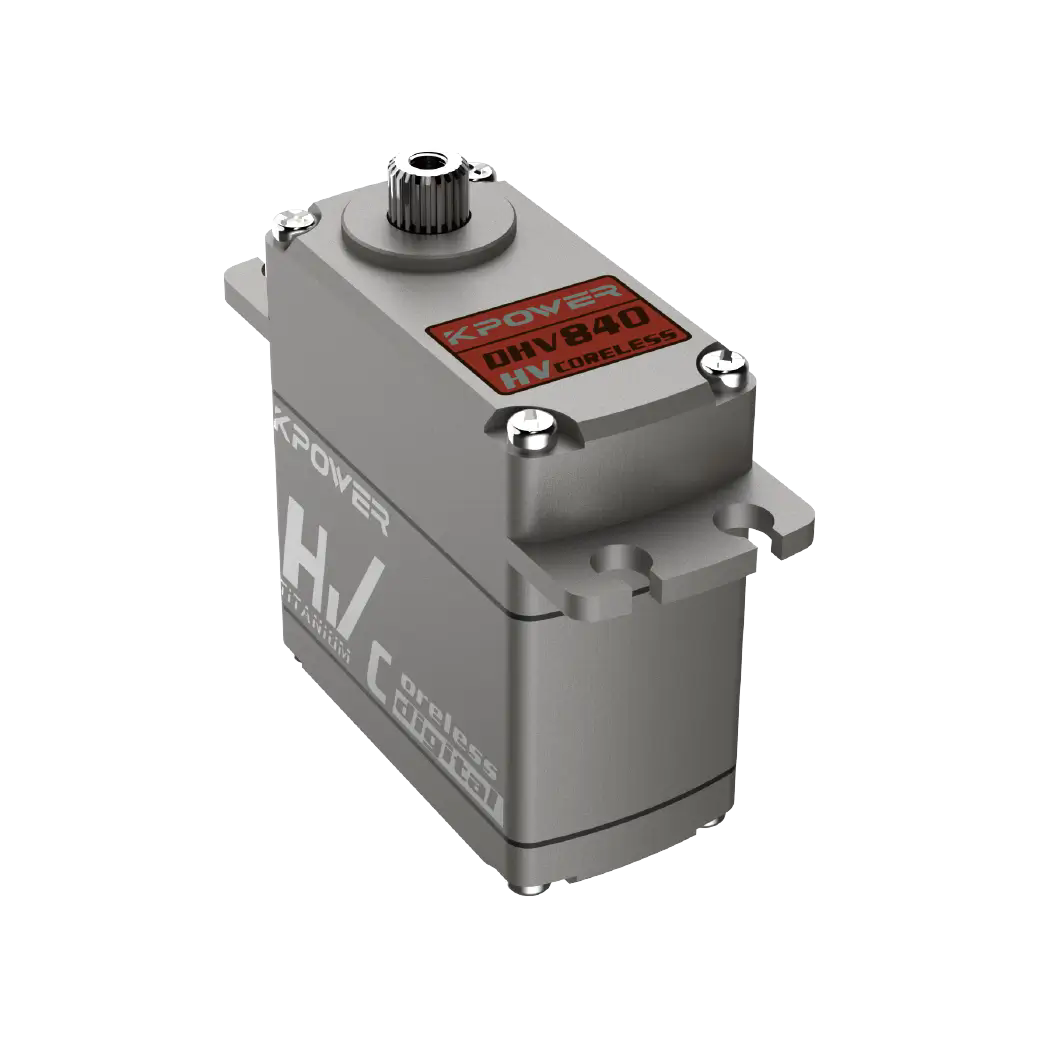
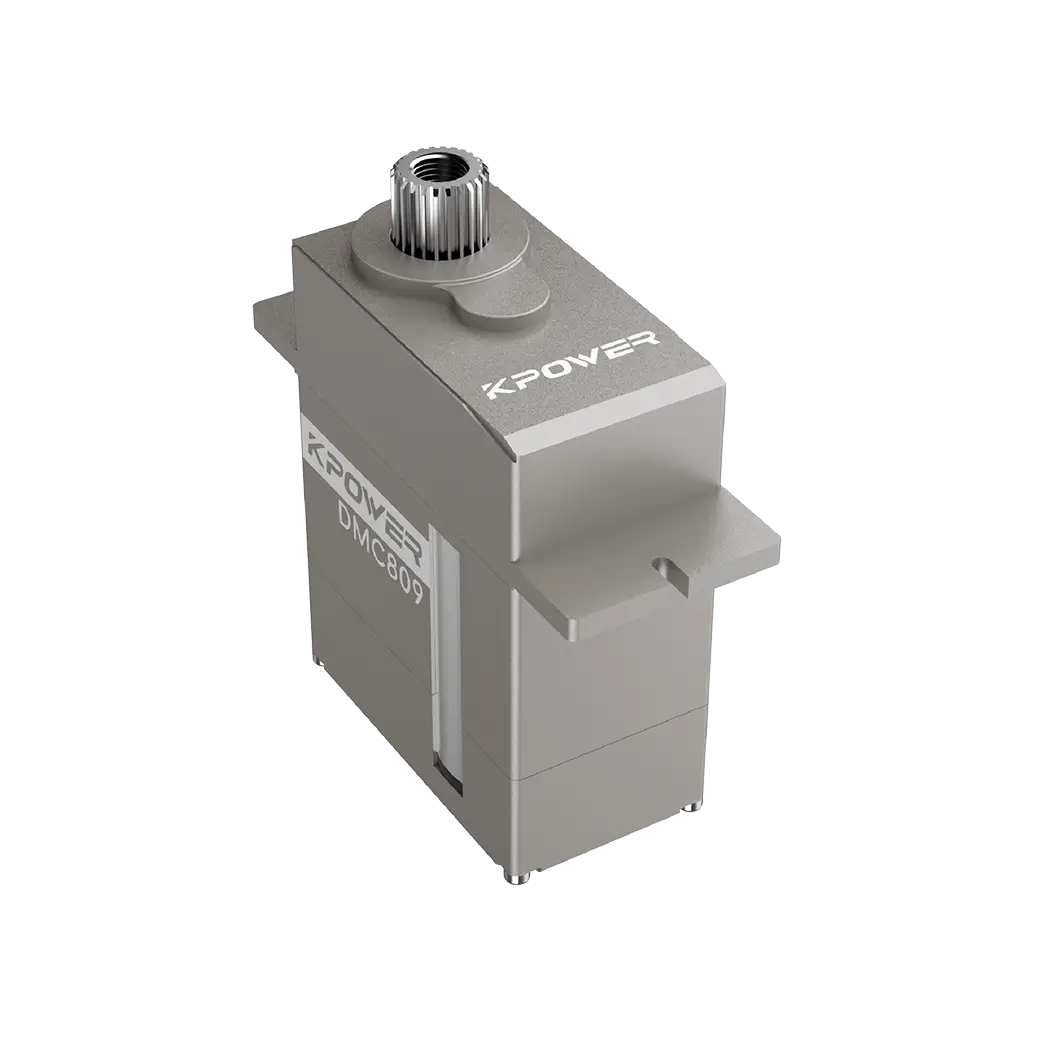
If you carefully observe the servo output shaft, you will find that there are many longitudinal teeth and grooves on it, which are splines. The spline connection uses these teeth and grooves to engage with the corresponding internal splines on the steering wheel. Its contact area is much larger than simply using a top screw, and it can withstand greater torque and impact.
Therefore, spline connections are particularly suitable for use in scenarios with large forces, impacts, and high precision requirements, such as the leg joints of robots and the shoulder joints of robotic arms. If you want your product to be strong and durable, give priority to splined connections. However, this requires that both the servo output shaft and the steering wheel have splines, so pay attention to matching when purchasing.
In some very small and low-stress micro-servo applications, such as the rudder control of micro-model aircraft, bonding is sometimes used. This method uses high-strength structural glue to directly glue the output shaft and connecting parts. Its advantage is that it is extremely lightweight and does not have any additional structures.
But you must be careful when choosing bonding. It is a permanent fixation and once stuck it is difficult to remove without damage. Moreover, the selection, cleanliness, and curing conditions of the glue are all very particular, and it may fall off if you are not careful. Unless you are particularly sensitive to weight and ensure that you do not need to disassemble and repair it in the future, it is not recommended as the first choice.
In some homemade, non-standard large servo connections, if the torque is particularly large, you may think of using key pins. Its principle is to machine key grooves on the shaft and hub respectively, and then put a square "key" in them to achieve circumferential fixation. This is like putting a "wedge" between the shaft and the part.
This method has extremely high load-bearing capacity, but its processing process is relatively complicated. Specifically, it is necessary to create a keyway on the output shaft of the servo. This operation will damage the strength of the shaft and is difficult to achieve for micro servos. Therefore, in standard servo application scenarios, you rarely see key-pin connections. It appears more in the field of industrial transmission. If your product is not particularly large, it is better to give priority to the first few methods.
After reading so many methods, have you roughly thought about which connection method is most suitable for the project at hand? Should it be directly inserted, using a steering wheel, or a more reliable spline? Welcome to share your choices and problems encountered in the comment area, and let us communicate and make progress together. If you find the article useful, don’t forget to like it and share it with more friends who need it!
Update Time:2026-02-28

Contact Kpower's product specialist to recommend suitable motor or gearbox for your product.