







TECHNICAL SUPPORT


Published 2026-03-02
Not sure how to wire the microservo? The most common mistake that novices make, the solution is actually very simple
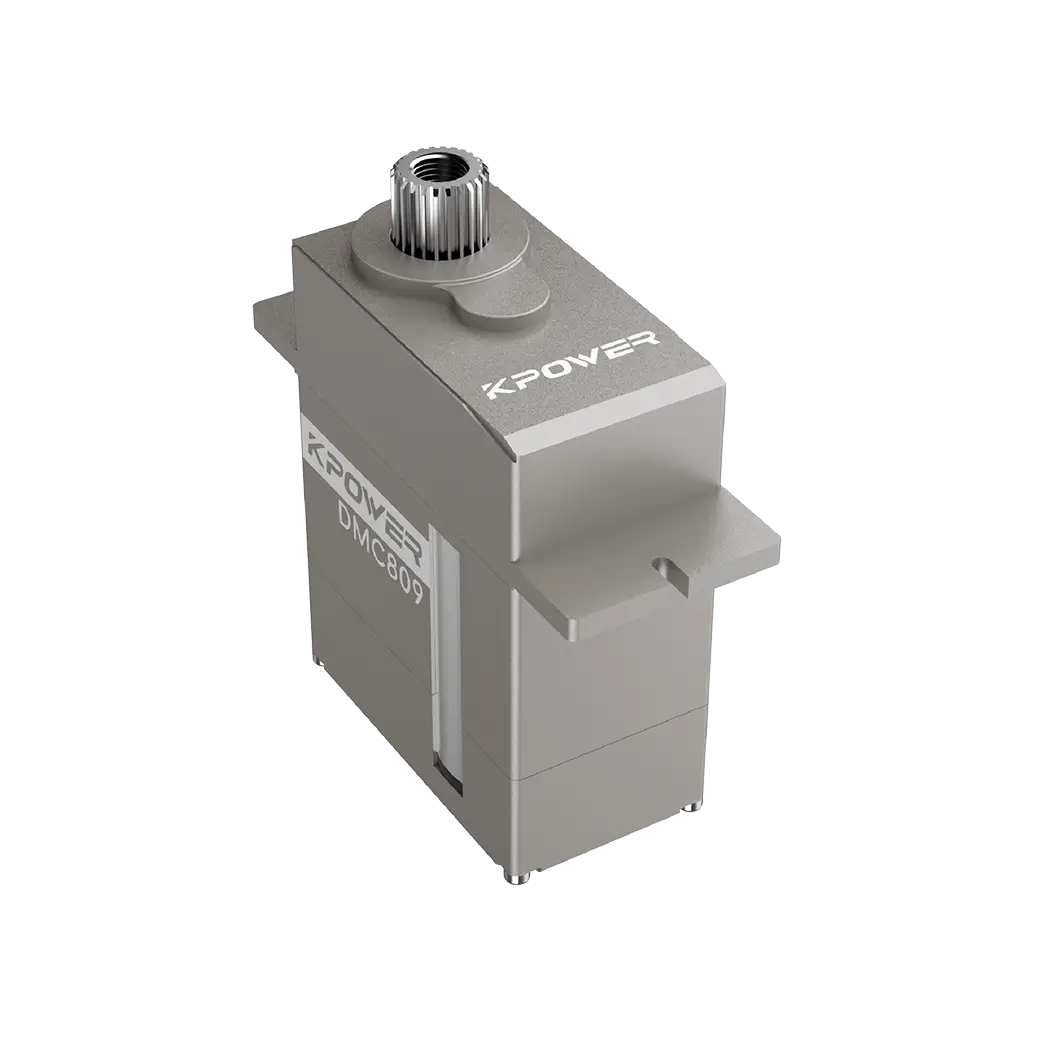
Many friends who are new to the application ofservos, when they hold a shiny microservo, their first reaction is often "How do you connect this thing to electricity to make it move?" Especially when you are confident and ready to install it on your robot or model, you will indeed be a little confused when you see those three thin wires. If you get the wiring sequence wrong, the servo will not turn at least, or it will burn out directly. That would be a pity. Don't worry, this problem is actually very easy to solve. As long as you understand the basic principles, you can play with it as easily as inserting building blocks.
The three wires sticking out of the micro servo in your hand are almost international standards. The most common color arrangement is: the brown (or black) wire is the negative pole, which is the ground wire of the power supply; the red wire is the positive pole, connected to a power supply of about 5V; the yellow wire (sometimes orange or white) is the signal wire, used to receive angle instructions from your controller. Memorizing this color rule is like knowing the traffic lights correctly, and you will never make the wrong turn wherever you go.
However, you have to be careful. Occasionally there are some particularly cheap servos on the market, and their wiring sequence may not follow the routine. At this time, don’t rely on experience. Be sure to take a look at the label on the servo or flip through the product manual. If the connection is reversed, the burning smell will be unpleasant, so "find it correctly before doing it" is a good habit that can help you save a lot of money.
Connecting the servo to your control panel is as intuitive as building blocks. You only need to find three female-to-female DuPont wires, connect the brown wire on the servo to the GND pin, the red wire to the 5V pin, and the yellow wire to the digital pin you use to send commands, such as pin 9. In this way, the power supply and signal paths are ready. Isn't it very simple?
Here is a small reminder. If your servo is slightly larger, or you bring several servos at the same time, the power drawn directly from the 5V port may not be enough, causing voltage instability. A safe approach is to prepare a separate external power supply for the servo, such as several batteries, and then connect the power line and ground wire of the servo to the same ground as GND. This will not only ensure the strength of the servo, but also protect your control board.
You may encounter this situation: the program is clearly written, but the servo does not move, or it just trembles, as if nodding to you. This is usually not a program error, but a typical symptom of "not having enough to eat", that is, insufficient power supply. When the servo needs to rotate, the instantaneous current required is very large. If the power supply cannot keep up, it will stop working.
Another obvious symptom is that the servo can turn when it is unloaded, but as soon as a load is attached, such as a wheel or a swing arm, it cannot turn or even restarts. This is probably a power supply issue. The solution is also very straightforward, which is to equip it with a power supply with a large enough current, or use an independent battery pack to specifically power it to ensure that it is "fed and drunk" so that it has the strength to work.
Connecting the wires is only the first step. To activate the servo, you still have to rely on the program to "give commands" to it. In the environment, this has become very stupid. You only need to include a library file named "Servo.h" at the beginning of the code, then create a servo object, then use "servo name. (pin number)" to specify which pin it is connected to, and finally use "servo name. write (angle value)" to make it go to the position you want it to go. The angle range is usually 0 to 180 degrees.
️ You can try this: first turn it to 0 degrees, wait for one second, then turn it to 90 degrees, wait another second, and finally turn it to 180 degrees. Watching it turn exactly according to your instructions step by step, the feeling of "everything can be programmed" suddenly comes over. You can combine different angles to achieve various movements of shaking your head and swinging, and the gameplay will suddenly open up.
Sometimes you will encounter a headache problem. The servo has been turned to 90 degrees according to the instruction, but it is buzzing and the arm is shaking slightly. This is usually a sign that the signal is not stable or the load is too heavy, and the servo is trying to maintain the position but does not have enough strength. Just like if you keep holding a glass of water, your hands will shake involuntarily.
In this case, first check whether the power supply is powerful enough to eliminate power supply problems. If there is no problem with the power supply, it may be that there is noise mixed into your control signal. Try adding a small capacitor between the signal line and GND to filter, or let the servo reach the position in the code and relax the torque a little, so as not to let it compete all the time. Many times, making the wiring stronger can also improve this problem.
There are all kinds of micro servos on the market. It would be frustrating if you choose the wrong model and find out that it is not suitable halfway through the project. First of all, you need to look at "torque", which is the amount of force. The unit is usually kg·cm. If your project is to lift a small camera, choose one with a larger torque; if you just flip a small switch, an ordinary 9g servo is enough.
Secondly, we need to look at the "speed", which is how many seconds it takes to turn 60 degrees. Faster speeds are more responsive, but are also generally more power-hungry. Finally, don’t forget to look at the “size” and “weight”. Especially when making a drone or a small insect robot, every gram of weight must be carefully calculated. Choosing a servo is like buying shoes. Only your project will know whether they fit well.
After reading this, do you think the steering gear is not so mysterious anymore? What interesting problems or weird failures related to servos have you encountered while working on projects? Welcome to share your experience in the comment area, and don’t forget to forward this article to your friend who is new to playing robots!
Update Time:2026-03-02

Contact Kpower's product specialist to recommend suitable motor or gearbox for your product.