







TECHNICAL SUPPORT


Published 2026-03-07
It is really a headache when theservois stuck in a certain direction, or can only turn in one direction. I originally wanted it to swing its arms flexibly, but it turned out to be a "stick", which is a big problem in the product. Don't worry, this problem is actually very common. As long as you follow the steps to troubleshoot, you can basically find the cause and solve it.
When you find that theservocan only turn in one direction, or is stuck in a certain position, the first thing to think about is that there is something wrong with the control signal. The rotation of theservois determined by the internal circuit board based on the received PWM signal. If the signal line is in poor contact or broken, or the duty cycle of the sent signal is always fixed at a certain value, the servo will naturally not obey the command.
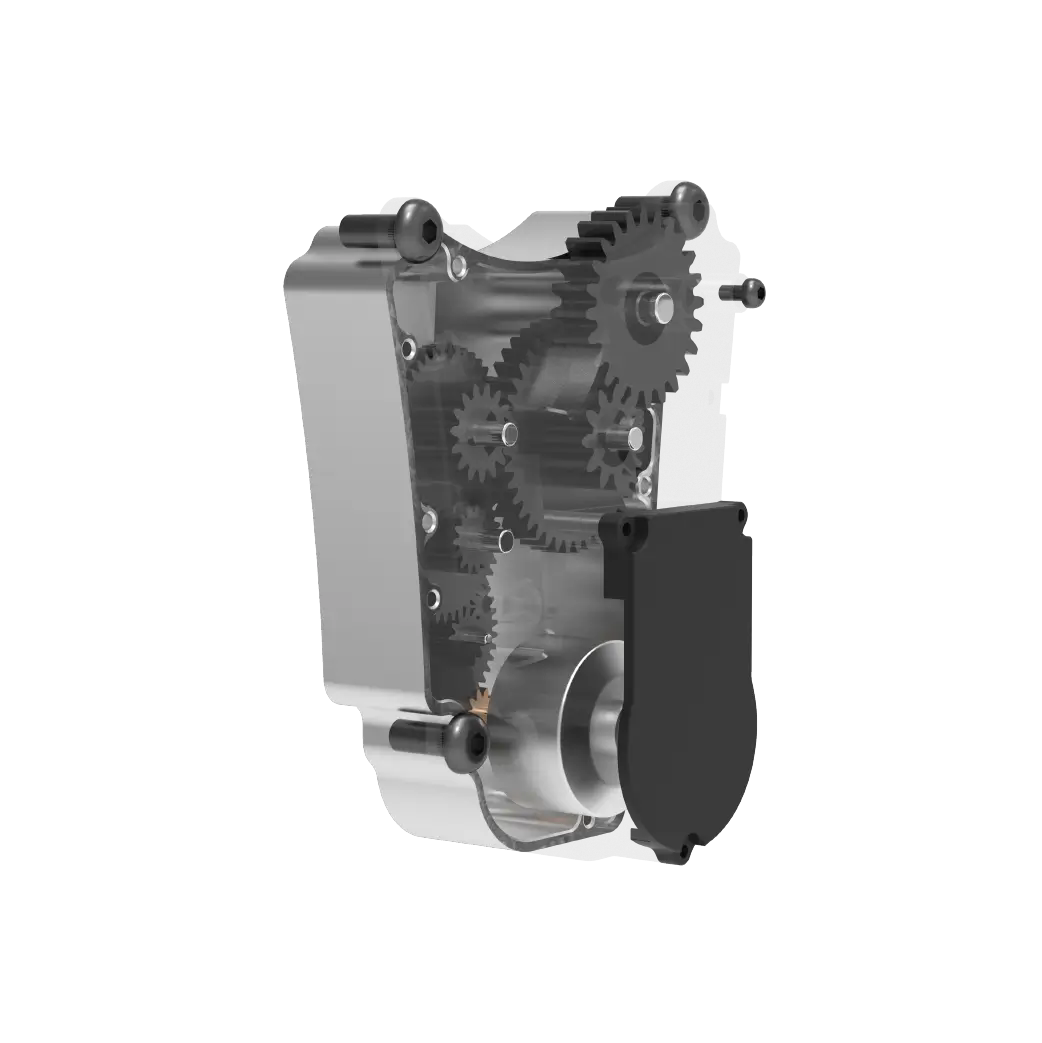
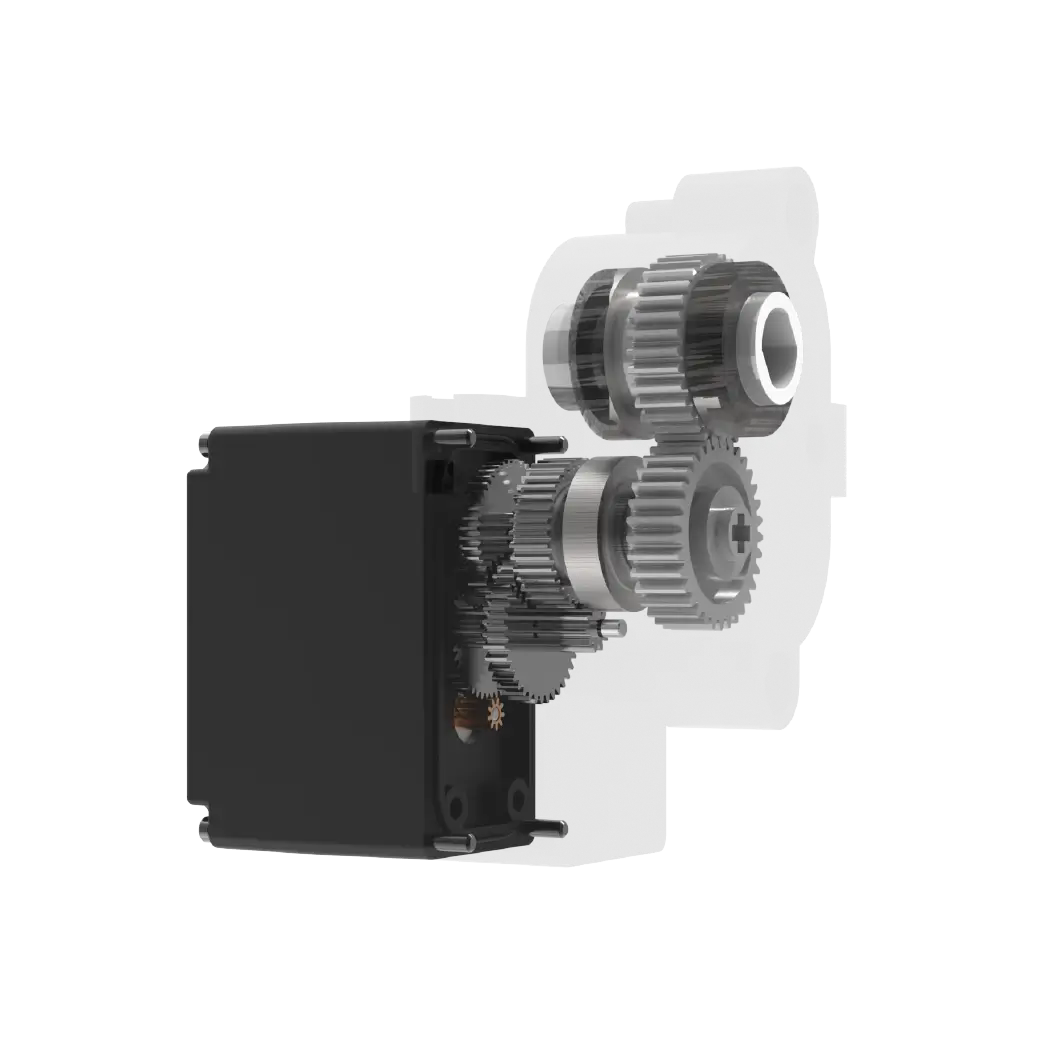
In addition to signal problems, physical jamming inside the servo is also an important reason. For example, if a foreign object is stuck in the gear set, or the teeth of the gear are broken, the servo will not be able to rotate smoothly in both directions. Even if the right signal is given at this time, it will not be able to turn around and can only work hard in one direction.
When you get a one-way steering servo, the first step is to "feel the pulse" of it. You can first gently move the output shaft of the servo with your hand to feel if there is any obvious stuck feeling. If it can be manually turned smoothly, it means that the mechanical part of the gear set is most likely good, and the problem may lie in the control board.
️ Next, do a small test: connect the servo signal line to a PWM signal source that you are sure is normal, such as a known good receiver or servo tester. If it still turns in one direction after switching to a normal signal source, it can basically be concluded that the problem is with the servo itself; on the other hand, if it works normally, you have to go back and check your original control circuit and program.
The potentiometer can be said to be the "sensory organ" of the steering gear. It is responsible for feeding back the position of the output shaft to the control chip. If this feedback is inaccurate, the servo will go haywire. A common symptom is that the servo can only turn in one direction, accompanied by trembling or noise. This is because it does not know where it is turning now and has been looking for the target position incorrectly.
You can try to power on the servo again and listen to the sound it makes during self-test. If it squeaks and rushes to the bottom in one direction, and then gets stuck there, and you can't feel any resistance when you break the output shaft with your hands (that is, there is no strength), it is very likely that the carbon film inside the potentiometer is worn or has poor contact, causing the position feedback signal to be interrupted.
It depends on "who" is sick. There are two core parts on the circuit board inside the servo: one is the control chip responsible for logic operations, and the other is the driver chip responsible for power supply and drive. If the servo is powerless or completely motionless, the driver chip is most likely to have a problem; but if it only turns in one direction, the control chip or potentiometer is more likely to be suspected.
️So, if you are an electronics enthusiast and want to do some repairs, you can first use a multimeter to measure the voltage of the three pins of the potentiometer to see if the voltage changes linearly when turning. If the voltage changes normally, then consider whether there is something wrong with the output pin of the control chip. If even the voltage is not normal, then changing the driver chip will not solve the problem. You must deal with the potentiometer first.
If a worker wants to do his job well, he must first sharpen his tools. To fix this problem, you don't need any specialized equipment, but you still need to have a few handy gadgets. A good quality Phillips or slotted screwdriver for removing the case, and a small pair of tweezers for picking out wires and handling small parts are all easy to find.
️ The most important thing is to need a multimeter and a small screwdriver set. A multimeter is used to measure voltage and continuity, and can help you quickly locate whether the wire is broken or the chip is broken. It is best to have a hexagonal bit in the small screwdriver set, because the rocker arm on the output shaft of many servos is fixed with hexagonal screws. Of course, if you plan to replace parts, a soldering iron with suitable power is also indispensable.
Prevention is always cheaper than repair. First of all, when installing the servo, be sure to check the stroke of the connecting rod and rocker arm to ensure that the mechanical structure does not jam the servo. If the servo is pushed hard by an external force every time it reaches the limit position, over time it will either break the gears or burn the drive, and it will only be a matter of time before the servo runs in one direction.
The power supply must be stable. The steering gear has a large current when starting and stalling. If the power supply is not supplied, the voltage will be pulled down, causing the logic of the control chip to be confused and various strange faults to occur. One-way operation is one of them. Choosing a reliable power supply with sufficient current margin for your project can solve most of the inexplicable problems.
Seeing this, you are aware of the problem of "one muscle" in the servo, right? You might as well check the steering gear you have on hand and see which of the above conditions is more consistent with its "disease"? Welcome to chat about the malfunctions you encountered in the comment area, or share your repair experience. Like it and save it. You can just follow it to troubleshoot next time you encounter it.
Update Time:2026-03-07

Contact Kpower's product specialist to recommend suitable motor or gearbox for your product.