







TECHNICAL SUPPORT


Published 2026-03-18
You excitedly bought aservo, hoping to equip the robot with a flexible head, but when you plugged it in, it either didn't move or spun around, completely disobedient. How does this thing work? If you don’t understand the principle, the project will get stuck. Don't worry, today we will explain it clearly so that you can start using it after reading it.
You may have heard that a steering gear is also called aservomotor, and the word "servo" is the key. Simply put, it doesn't just turn stupidly like an ordinary motor. It can understand the instructions and accurately turn to any angle you want. Behind this is a closed-loop control system.
What is a closed loop? You can think of it like touching your nose with your hands with your eyes closed. It's easy to miss the touch, but if you open your eyes and look, your hand will adjust at any time according to the deviation seen by your eyes, and finally touch it accurately. The same goes for the steering gear, which has "eyes" inside it that are always watching its position.
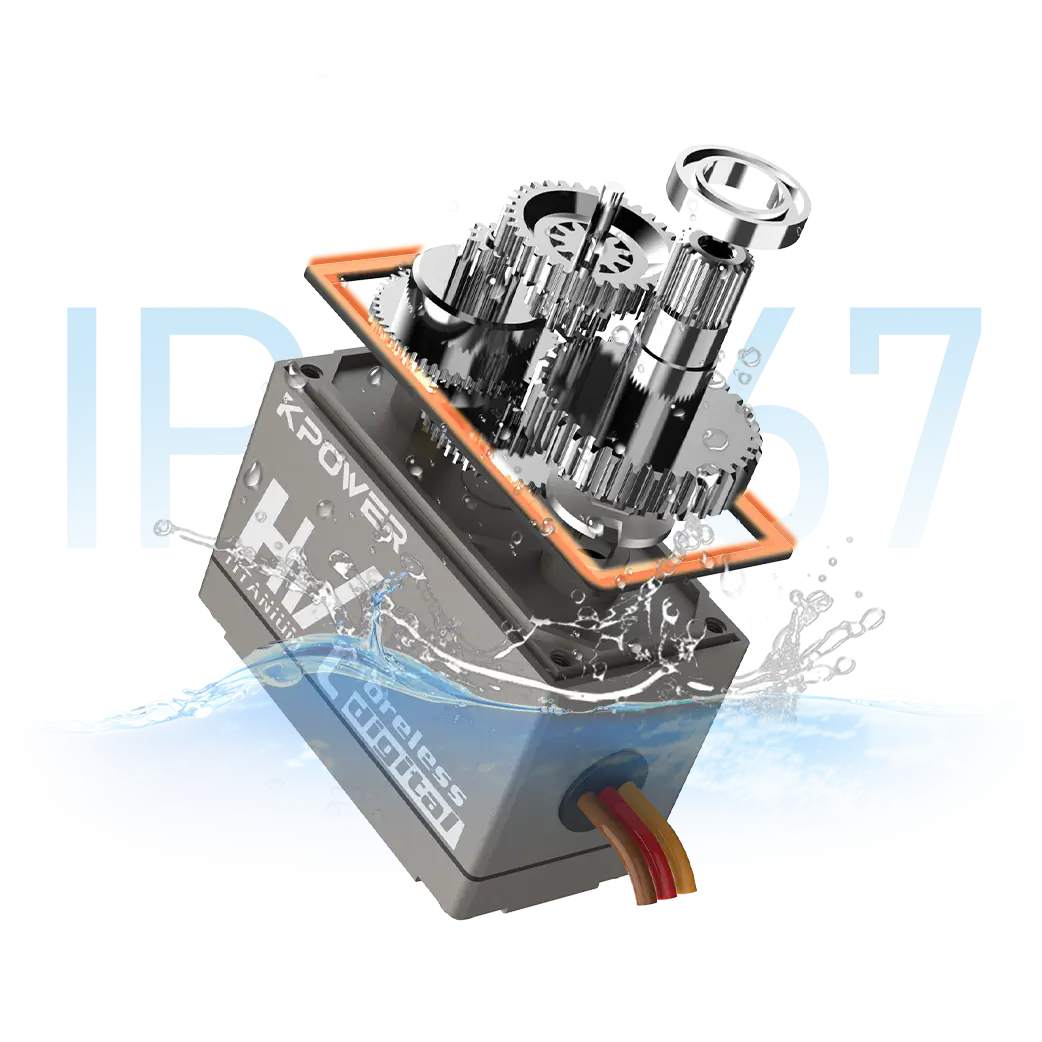
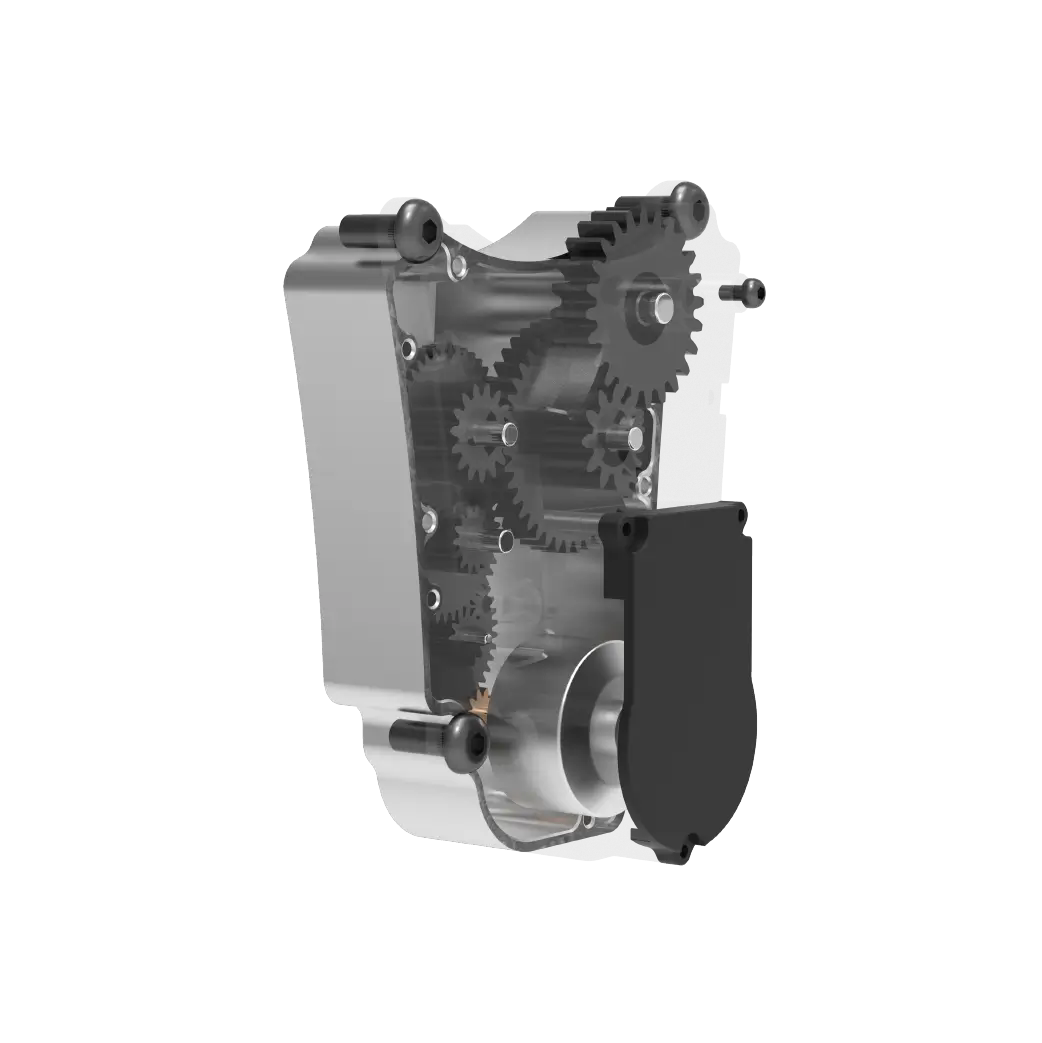
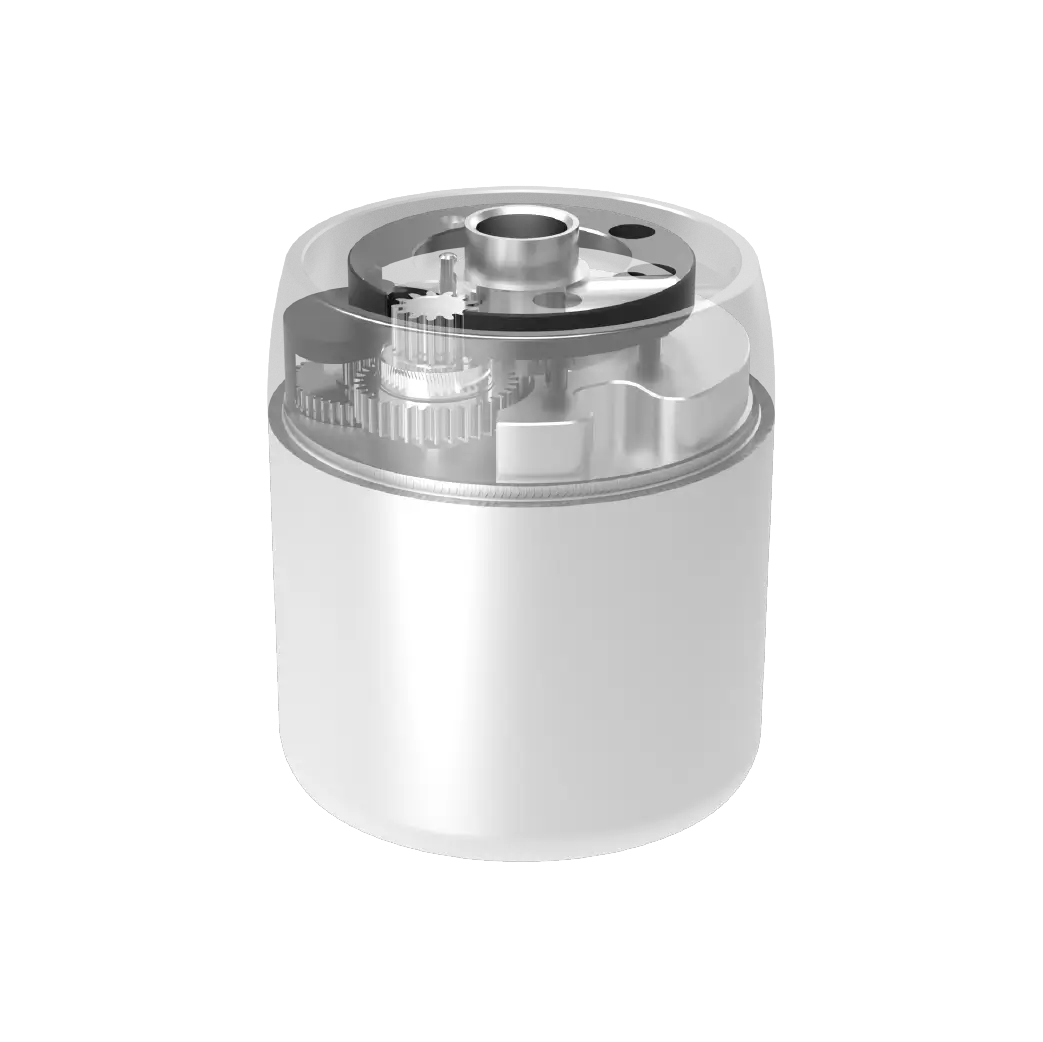
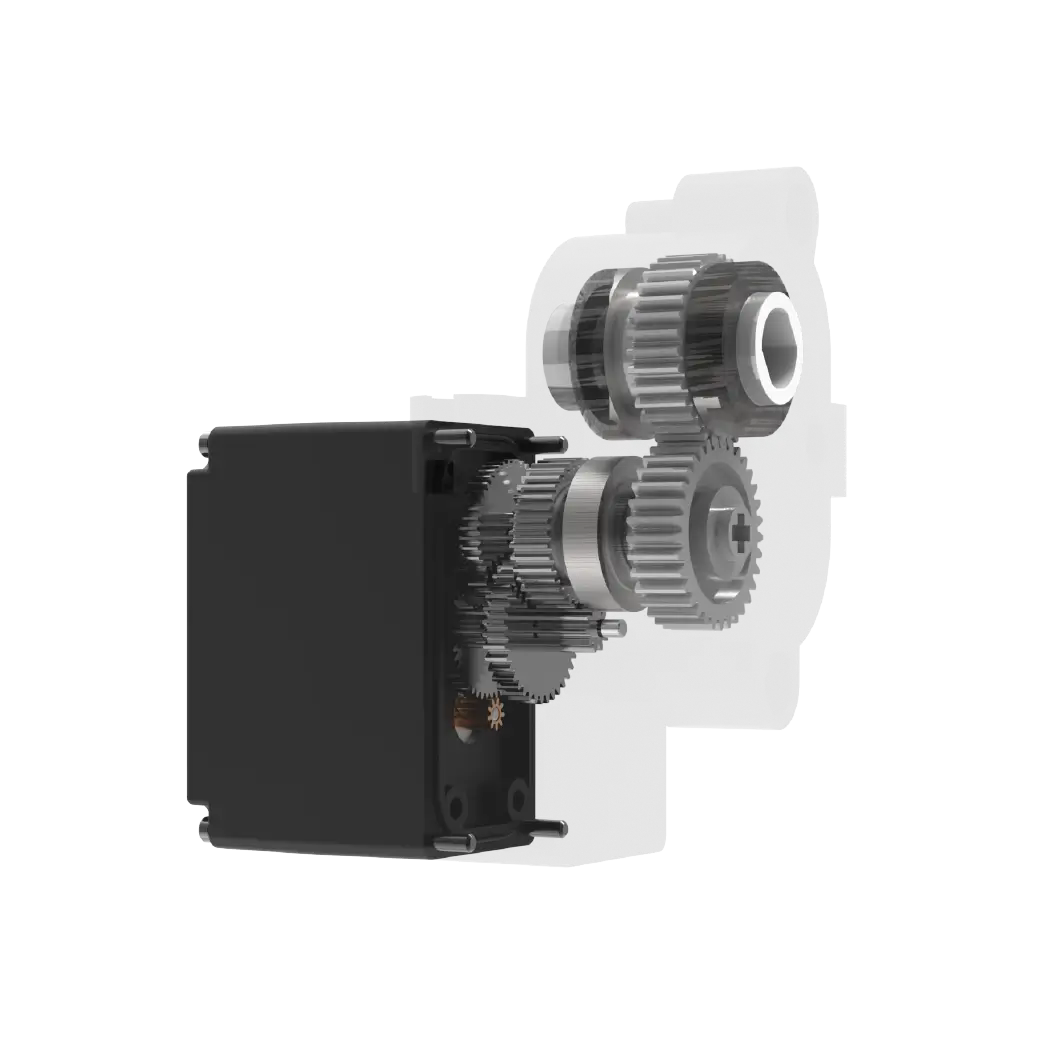
Open the casing of the servo, and you will see a small and exquisite world in front of you. Its core components include three things: a DC motor, a set of reduction gears, and a position sensor, usually a potentiometer. The motor is responsible for generating power. However, its speed is too fast but its power is small, so it needs a gear set to decelerate and increase torque. Only then will the servo output shaft have enough power to rotate your robot joints.
The internal structure of the steering gear is very delicate, and all parts work together. The DC motor serves as a power source and continuously outputs power. That set of reduction gears plays a key role, effectively reducing the motor speed while increasing torque, ensuring that the output shaft has sufficient power. The position sensor, also known as the potentiometer, accurately senses and feeds back the position information of the steering gear output shaft, thereby achieving precise control. These three core components cooperate with each other to build the exquisite little world of the steering gear, so that it can stably and accurately provide power support for the robot joints.
That potentiometer is the "eye" of the servo. It is connected to the output shaft. Wherever the shaft turns, its resistance changes, so that the control circuit knows the current actual angle. The cooperation of the motor, gear, and potentiometer forms the basis for precise control of the steering gear.
If you want the servo to move, you have to send it a command. This command is a PWM signal, which is a pulse width modulation signal. Generally, there are three wires on the servo, power, ground, and signal. You connect the signal line to the PWM pin of the control board (for example), and then write the pulse width in the program.
The control principle is actually not complicated. Its period is set to a fixed 20 milliseconds, and the duration of the high level, that is, the pulse width, determines the final angle. Specifically, a pulse width of 1 millisecond corresponds to 0 degrees, a pulse width of 1.5 milliseconds corresponds to 90 degrees, and a pulse width of 2 milliseconds corresponds to 180 degrees. The control board will send such pulse signals 50 times per second. The circuit inside the servo will interpret these pulses and use them to drive the motor. The motor will not stop until the angle fed back by the potentiometer reaches the target angle.
There are two types of servos on the market: analog and digital, which have an impact on your project choice. The analog servo is an honest person. After it receives the PWM signal, it supplies power to the motor at a frequency of 50 times per second according to the position command in the signal. If the command doesn't change, it will hold, but the holding force (torque) will fluctuate a bit.
Digital servos are much smarter. They have a microprocessor inside. After it receives the PWM signal, it does not simply forward it, but uses a higher frequency signal (such as 300 times per second) to drive the motor. This means it responds faster to deviations, provides smoother, greater holding torque, and more precise positioning. Of course, digital servos are also slightly more expensive.
When choosing a servo for the product you want to make, it’s not enough to just look at the size. The first key parameter is torque, usually in kg·cm, which means the weight that can be driven 1 cm away from the rotating axis. You have to estimate how much weight your robotic arm will lift and how much force it will require, and then leave some margin to choose a servo.
The second is speed and size. The speed is expressed in seconds/60 degrees. See how long it takes for it to turn 60 degrees. For projects such as quadruped robots that require quick response, speed is very important. In addition, it also depends on the size and weight. Especially when making micro drones or small robots, space is at a premium and must be able to fit in.
Once you understand the principles and parameters, the servo will be able to show its talents in your hands. The most common one is to make robot joints. From simple robotic arms, humanoid robots, to complex robot dogs, every degree of freedom of movement depends on it. You can use it to control fine movements such as grabbing and lifting your legs.
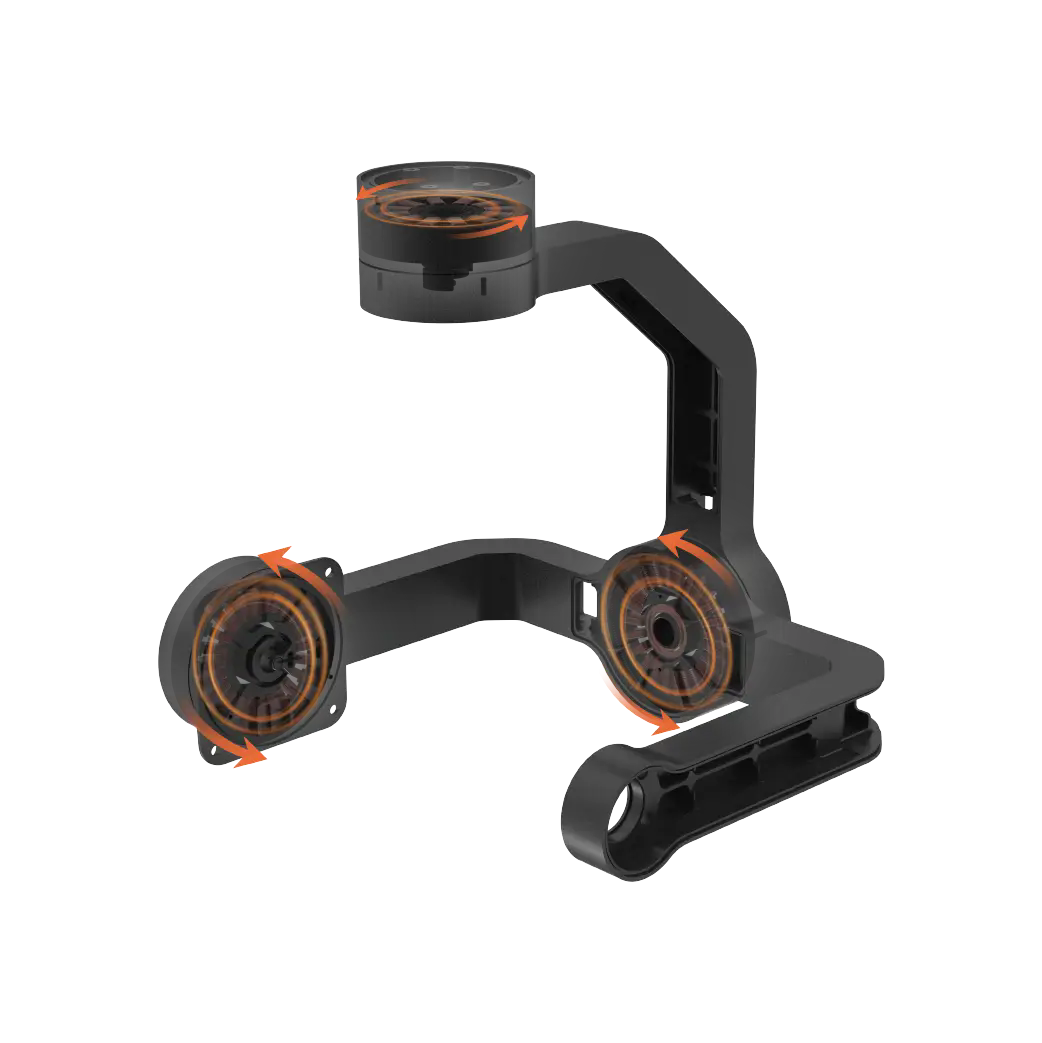
In addition to being widely used in the field of robotics, servos are also very common on smart car models. Their main function is to accurately control steering. In some creative projects, steering gear also plays an important role. For example, an automatic pan/tilt head can effectively stabilize the camera with the help of a servo to ensure the smoothness of the shot; or it can make an automatic page turner and use the servo to achieve precise page turning movements; it can even create a bionic fish tail and use the servo to simulate the flexible swinging effect of a fish tail. In short, as long as you have precise angle control requirements, a servo is basically the best choice.
If you want to get more specific steering gear selection suggestions, you may wish to search the official website of the brand you are interested in, such as "" or "", carefully check their rich product lines and practical application cases, and learn from experience so that you can more accurately select the steering gear products that meet your project needs.
After reading so much, what projects do you have on hand now that you plan to use servos on? Are you planning to build a robotic arm that can pour coffee, or add a remote control steering to your son’s toy car? Chat about your thoughts in the comment area and let everyone open their eyes. By the way, give it a like and share it so that more maker friends can see this article.
Update Time:2026-03-18

Contact Kpower's product specialist to recommend suitable motor or gearbox for your product.