







TECHNICAL SUPPORT


Published 2026-02-24
Have you ever thought about how many "joints" are needed to make a robotic arm that can grasp, hold, and rotate? Many people come into contact withservos for the first time. When watching cool videos of robotic arms on the Internet, the most confusing thing in their minds is: How manyservos should I buy for my project? If you buy too little, you're afraid of not having enough functionality; if you buy too much, you're afraid that you won't be able to control it. Today we are going to explain this matter clearly and let you understand how to choose the number ofservos at once.
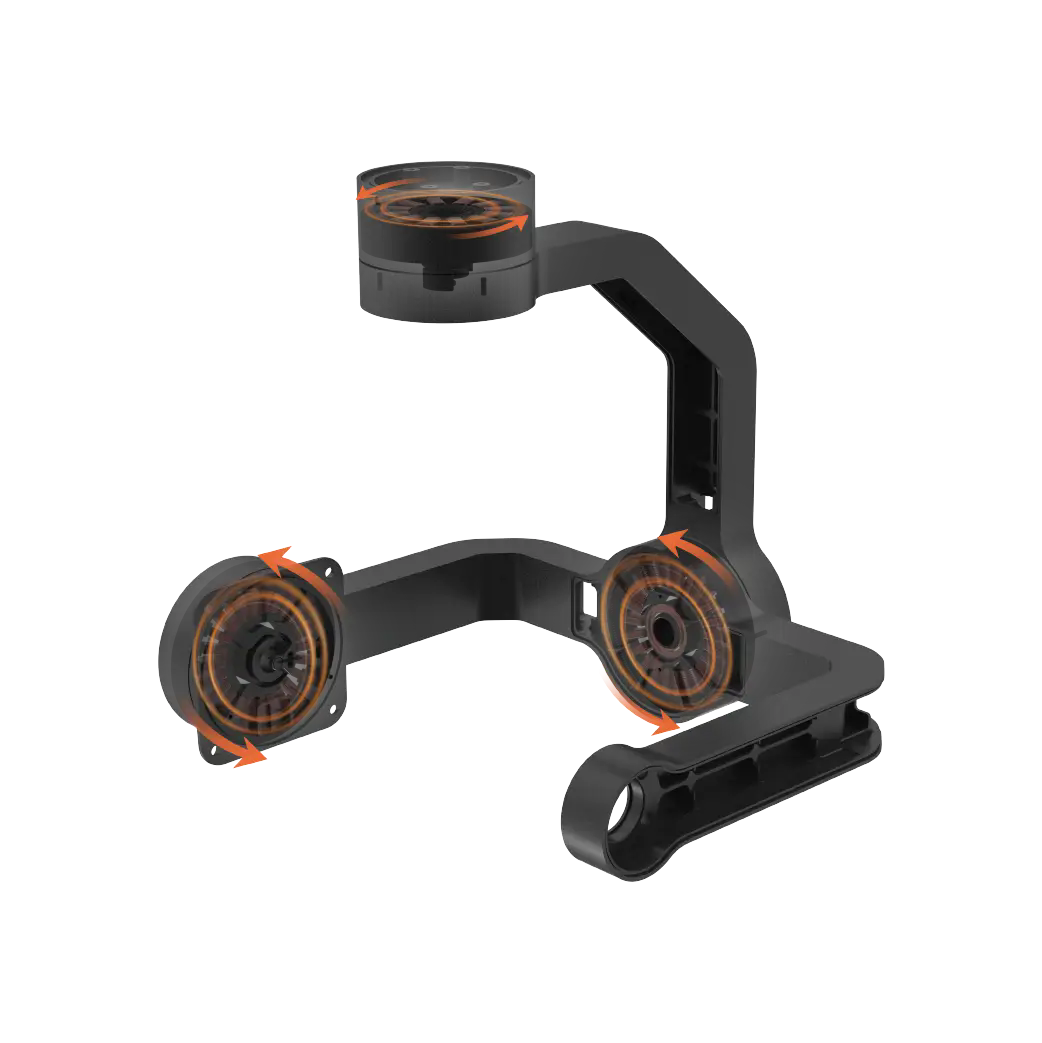
The key to deciding how many servos a robotic arm needs to use, first depends on how "free" your robotic arm wants to be. The degree of freedom here is simply the number of directions in which the robotic arm can move independently. A basic gripping action requires at least three degrees of freedom: one is responsible for left and right rotation, one is responsible for lifting the arm up and down, and one is responsible for opening and closing the claws. This is like the basic cooperation of the human arm from the shoulder to the wrist. If you want it to be more flexible, able to reach under a table or around obstacles, you have to increase the degrees of freedom, and each degree of freedom usually requires a servo to drive. So, don’t rush to place an order, pick up a pen and draw on the paper, and think about what actions your robotic arm needs to do. This is the first step to determine the number of servos.
If you just want to make an entry-level toy or demonstration model, the simplest structure is a two-axis robotic arm. This type of robotic arm generally consists of two servos: one servo serves as the base, responsible for rotating in the horizontal direction, allowing the entire arm to rotate left and right; the other servo is installed on the arm, responsible for swinging the arm up and down. Where are the claws? Usually the simplest version of this is without claws, or with a small fixed shovel instead. Its function is very limited and can only move in a two-dimensional plane. It is suitable for demonstrating basic principles of motion, or for doing some simple "push" and "dial" movements. For those who are just getting started and want to experience servo control, starting with two servos is a good choice.
Most of the most common small desktop robotic arms on the market today are composed of four servos. This is a relatively balanced configuration that can complete most simple crawling tasks. The four servos are usually assigned like this: one on the base controls rotation, one on the big arm controls forward and backward movement, one on the small arm controls up and down adjustment, and finally one on the claw controls opening and closing. This is like the four key nodes of a human arm from shoulder to wrist. With these four servos, your robotic arm can reach a designated position in three-dimensional space, and then accurately grab a small square. For student maker competitions, simple automation experiments, or home DIY, a four-axis robotic arm is basically sufficient and has the highest cost performance.
If your budget and controller channels allow it, then I have to say that the six-axis robot arm is the real "all-rounder". The extra two axes are usually added to the wrist part, allowing the claw to "pitch" and "rotate" flexibly like a human wrist. Don't underestimate these two actions, there is a huge difference between having them and not having them. Imagine you want to pick out a screw from a pile of parts. Not only do you have to reach over, but your claws also have to be at the right angle to pick it up. This is the advantage of six axes. Collaborative robots used in industry are basically six-axis in order to be able to handle various complex postures. If the product you are making needs to handle objects at different angles, or simulate more precise human hand movements, then directly using six axes can save you a lot of trouble in later modifications.
We have been talking about several servos just now, but the servo used for the claw is actually a bit special. Ordinary rotary servos are used to control the opening and closing of the claws. Although it is simple and direct, the clamping force is not easy to control, and it is easy to damage or fail to clamp things. If you want to be more sophisticated, you can consider equipping the claw with a separate linear servo, or convert the rotational motion into a linear clamping motion through a connecting rod structure. Another way to play is to use two servos as claws. One controls the positioning of the claws, and the other is responsible for clamping. This design can simulate a more stable grasping method, such as pinching something with two fingers. So when you count the number of servos, don’t think too simply about the claw part, it may hide one or two servos.
After deciding how many servos you want to buy, there is another pitfall you need to pay attention to: can your controller drive so many servos? An ordinary board can control more than a dozen servos through software simulation, but once the servos act at the same time, the demand for current will rise sharply. For example, if six servos of a six-axis robotic arm rotate at full strength at the same time, the instantaneous current may exceed 10A. Ordinary USB power supply cannot be used at all, causing a crash or reset. Therefore, when planning the number of servos, you must consider using a high-power external power supply and choose a servo driver board that can output sufficient current. Don't let the robotic arm do it halfway, and it will be paralyzed because of insufficient power supply. It would be a pity.
After reading so much, do you have your own ideas about which servos to choose? I'm curious, if you were to make one, what would be the first thing you'd want to grab? Is it the pen on the table or the box of unopened chocolates? Welcome to chat about your creative ideas in the comment area. If you find the article useful, remember to give it a like and share it with your friends who play with hardware together!
Update Time:2026-02-24

Contact Kpower's product specialist to recommend suitable motor or gearbox for your product.