







TECHNICAL SUPPORT


Published 2026-02-25
Have you ever encountered this situation: you bought aservobut don’t know how to turn it into a moving model? There are a bunch of parts in front of me, and I get a headache just looking at the circuit diagram. I'm afraid that I might burn the thing by connecting the wrong wire. Don't worry, today as an old player, I will take you through the completeservomodel making processstep by step, ensuring that you can get started after reading it.
The steering gear is what we often refer to as the "small motor", but it is much smarter than ordinary motors. It has extremely precise control capabilities and can accurately rotate to any angle you desire. Whether it is from 0 degrees to 180 degrees, you can control it as you like. You can think of it as an extremely obedient joint. As long as you give an instruction to let it rotate a certain angle, it will rotate the corresponding angle exactly, no more, no less, extremely precise.
Among many mechanical devices, the steering gear plays a key role. For example, the flexible arms of a robot can achieve various movement postures, and the remote control car can turn accurately. The achievement of these functions all relies on the small component of the steering gear. Although it is small in size, it plays an irreplaceable and important role, giving various mechanical devices flexible controllability.
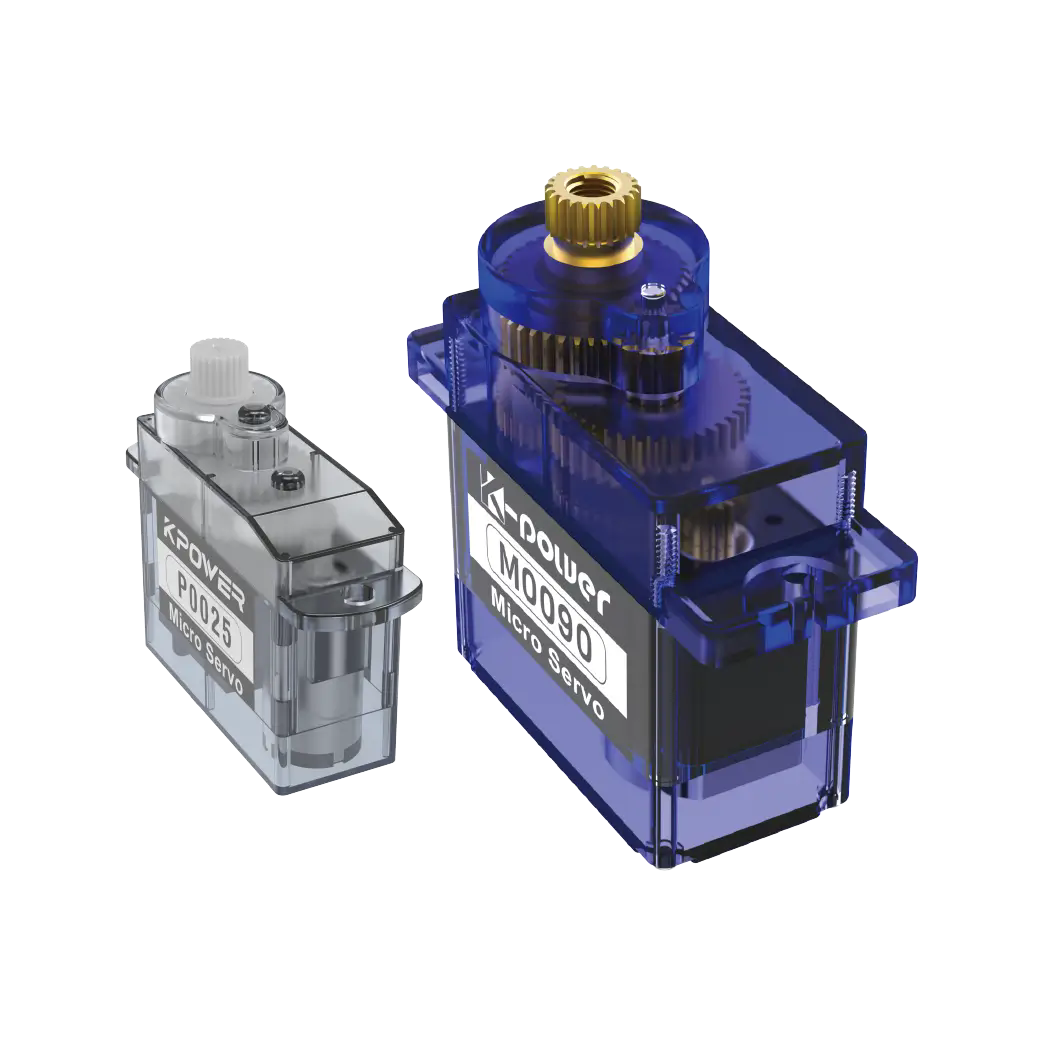
Making a steering gear model does not require too many high-end and complicated equipment. First, you have to prepare aservo. For novices, it is recommended to choose a small 9g servo like SG90, which is affordable and durable. Secondly, you also need a control board. Uno is the most ideal choice because it has rich information and is easy to operate. In addition, DuPont wire, breadboards, small wooden boards or 3D printed parts must also be prepared. In terms of tools, a soldering iron, screwdriver, and hot melt glue gun are enough to meet production needs.
The equipment required to make a servo model is not complicated. In addition to the servos, control boards and other items mentioned above, auxiliary materials such as Dupont wire, breadboards, small wooden boards or 3D printed parts are also essential. As for tools, a soldering iron, screwdriver, and hot melt glue gun can handle the entire production process. It is more suitable for novices to choose a 9g small servo like SG90. It is not only cheap but also durable. Uno is a good choice for the control board. It has a lot of information and is easy to get started. In short, after preparing these, you can start the journey of making a servo model.
️ First get to know the three wires of the servo: the red one is the power supply, the brown or black one is the ground wire, and the orange or yellow one is the signal wire. Connect the red wire to the 5V pin of the control board, the brown wire to GND, and the signal wire to a digital pin, such as number 9. The wiring sequence must not be wrong, otherwise the servo may burn out.
️ It is recommended to use a breadboard when wiring, as the connection can be completed without soldering. Plug the servo's plug into the breadboard, and then use Dupont wire to lead from the breadboard to the control board. The advantage of this is that if you connect it wrongly, it is very convenient to unplug it and try again without damaging any parts. A breadboard is the safest choice for newbies to start with.
To control the servo, you need to install the IDE software on your computer first. When you open the software, the first thing you need to do is to add the "Servo" library to the menu. This library is like a manual for the servo, which can tell the control board how to communicate with the servo.
The code is actually quite simple, with only a few lines: first create a servo object, then bind it to the pin in the settings, and finally use the write function to tell it to rotate to the specified angle.
Here's a little trick: If you want the rudder to move smoothly, you can add a small delay between the two angles. For example, when turning from 0 degrees to 180 degrees, don't jump over all at once, but stop for 15 milliseconds every 1 degree, so that it looks like it is really turning slowly. I wrote this code and saved it, so that I can use it directly when doing other projects in the future.
If the servo doesn't move, don't immediately suspect that it's broken. Eighty percent of the problem is the power supply. The servo requires a relatively large current when starting up. If it is only powered by USB, it will shake or not move if the current is not enough. The solution is to connect a separate external power supply to the control board, such as using four AA batteries to make a battery box.
If it makes a clicking sound when turning or the angle is inaccurate, there is something wrong with the angle value setting in the program. Check to see if you are using a 180 degree servo and then turning it to 200 degrees, otherwise it will get stuck or make strange noises. Changing the angle range to between 0 and 180 usually solves the problem.
After the hardware and software are completed, you can consider how to install the servo on your work. The simplest method is to use hot melt glue to directly stick the servo on a small wooden board, and then stick the part you want to move, such as a small flag or cardboard, on the rocker arm of the servo. Once the glue dries, your model will start to move as soon as you turn on the electricity.
If you want to be more professional, you can learn to use 3D software to draw a simple servo bracket, and then find an online 3D printing service to print it out. Nowadays, many Taobao stores accept 3D printing orders. The price is not expensive, and the products made look just like those produced in the factory. It is very satisfying to give them to friends or use them yourself.
Seeing this, are you itchy and want to try it? What fun things are you going to use the servo to make? Tell me in the comment area. You are also welcome to post your own works. If you like it more, I will send you a set of steering gear materials!
Update Time:2026-02-25

Contact Kpower's product specialist to recommend suitable motor or gearbox for your product.