







TECHNICAL SUPPORT


Published 2026-03-01
Hey, have you ever encountered this kind of situation when you were playing with the steering gear? The program is clearly written correctly, but theservois working against you, going left instead of right, which is confusing. This problem of "reversed steering gear" actually means that the control signal is in the opposite direction to the actual action. To put it bluntly, the steering gear is "reversed." Don’t worry, this is very common, almost every friend who plays with steering gear will encounter it, and the solution is not that complicated.
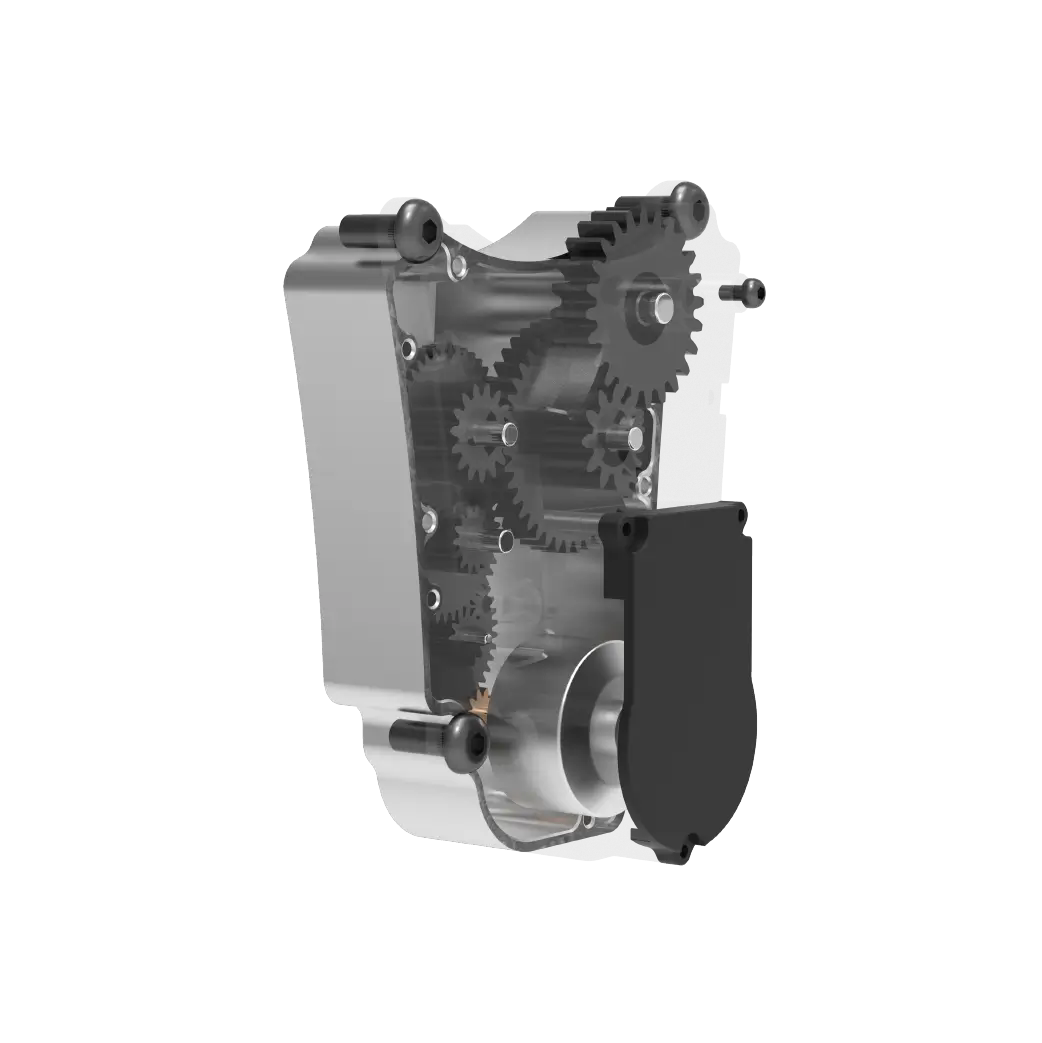
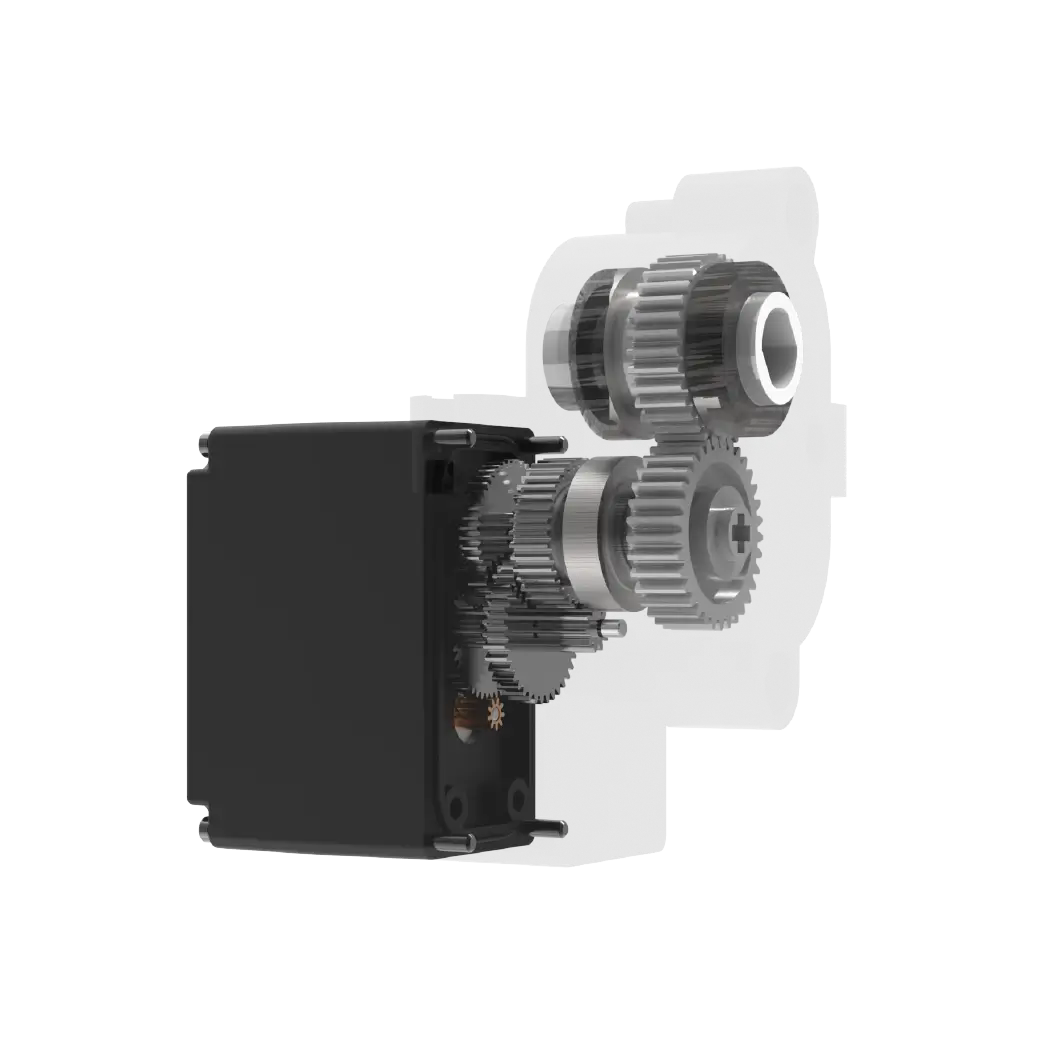
This is actually a very basic physics problem. Imagine that the motor inside theservodrives the output shaft to rotate through the gear set, and the feedback potentiometer is responsible for "telling" the control board the current position. When you give the servo a signal to turn it to 90 degrees, if the motor rotates in the opposite direction, or the gear is installed misaligned, causing the position information fed back by the potentiometer to be "twisted" with the actual position, the servo will run in the wrong direction.
It's like when you drive a car and the steering wheel turns to the right but the wheels turn to the left, it must be that the steering rod is installed backwards or there is a problem with the sensor signal. The same goes for the steering gear. Its internal mechanical structure and electronic components must work together seamlessly. Once a link goes wrong, the direction will be reversed. To solve this problem, we usually start from two levels: software and hardware.
If your servo is only in the opposite direction, but it rotates smoothly without any lag or abnormal noise, then the easiest way is to modify the program. Most servo control libraries, such as Servo.h, provide very convenient functions. You can directly write a mapping function to convert the input angle value.
For example, if you want it to turn to 0 degrees, actually give it a 180-degree signal. This can be achieved with a simple code:angle = 180 - angle;. It's like looking in a mirror, you're going east, but in the mirror you're going west. Add this line to the program to "mirror" the input value, and the response of the servo will be "correct" immediately. This method is fast, accurate and economical.
Many times, the "reverse" of the servo is not that it is really reversed, but that you did not set the zero point correctly when installing it. Before installing the servo arm, you need to return the servo to the neutral position (such as 90 degrees), and then install the servo arm. If you don't find the right center position and forcefully install the servo arm at a certain angle, all subsequent movements will be "crooked".
This is like the hands of your watch. If the minute hand is not aligned with 12 o'clock when it is installed, all the times displayed later will be wrong. Check the installation position of your servo arm. Adjust the servo to the neutral position first, then loosen the fixing screw of the servo arm, reposition it and tighten it again. This simple physical calibration can solve most of the "illusory" orientation problems caused by installation.
Some old servos or special models of servos have an internal structure that allows you to adjust them manually. Open the servo housing (this will void the warranty, be careful) and you will see a small potentiometer, usually connected to the output shaft. In theory, you can change the positive or negative feedback signal by changing the way the potentiometer is connected.
But in reality, this is too risky for newbies. The potentiometer is very precise, and the high temperature during welding can easily damage it, and the disassembly and assembly of the gear set are also very particular. Even a little bit of dust may cause the servo to be scrapped. Unless you are a hardware enthusiast, rather than messing with hardware, I suggest you use software to solve the problem first, or choose the right model when purchasing.
This question is on point. The signals of mainstream servos on the market, such as JR and Hitec, are basically standard PWM (pulse width modulation) waves with a period of 20ms and a high level time of 0.5ms to 2.5ms corresponding to 0 degrees to 180 degrees, which is usually universal. But the "reverse" problem arises precisely with this standard.
For some brands or special-purpose servos, their signal protocols may be exactly the opposite, or their control ranges may be different. For example, 0.5ms represents 180 degrees, and 2.5ms represents 0 degrees. This is occasionally encountered in digital servos or some industrial-grade servos. Therefore, when you replace a new servo and find that the direction is reversed, don't immediately suspect that it is broken. Check its data manual to confirm its signal definition, and the truth may be revealed.
If you are playing with model cars or airplanes, and the servo is connected to the receiver, it will be easier to solve the reverse problem without using a soldering iron or code at all. Nowadays, slightly better remote controls, whether entry-level or high-end devices, have built-in "servo reverse" function.
You only need to find "" or similar setting item in the menu of the remote control, find the corresponding channel, and set "NOR" (forward rotation) to "REV" (reverse rotation). This operation is like flipping a switch, and the remote control will automatically help you reverse the transmitted signal. This is the most intuitive and least brain-consuming way to solve the physical layer, and is highly recommended to all model players.
After all, the problem of reverse steering is like accidentally stumbling while walking. The solution is often at your fingertips. Whether to change a line of code, tighten a screw, or flip a switch depends on your current usage scenario. I hope that next time you encounter this "little temper", you can handle it with a smile.
What other weird "supernatural events" have you encountered when solving steering gear problems? Come to the comment area to share so that everyone can learn more. By the way, give it a like and share it to help more friends avoid pitfalls!
Update Time:2026-03-01

Contact Kpower's product specialist to recommend suitable motor or gearbox for your product.