







TECHNICAL SUPPORT


Published 2026-01-07
That specific, high-pitched whine. You know the one. It’s the sound of a brushed motor reaching its limit, getting hot enough to cook an egg, and eventually giving up the ghost right when your project needs to move with precision. I’ve seen it a hundred times in my workshop. People come in with these jittery machines, wondering why their movement looks like a stop-motion film from the 70s. Usually, the culprit is the same: they are using the wrong muscle for the job.

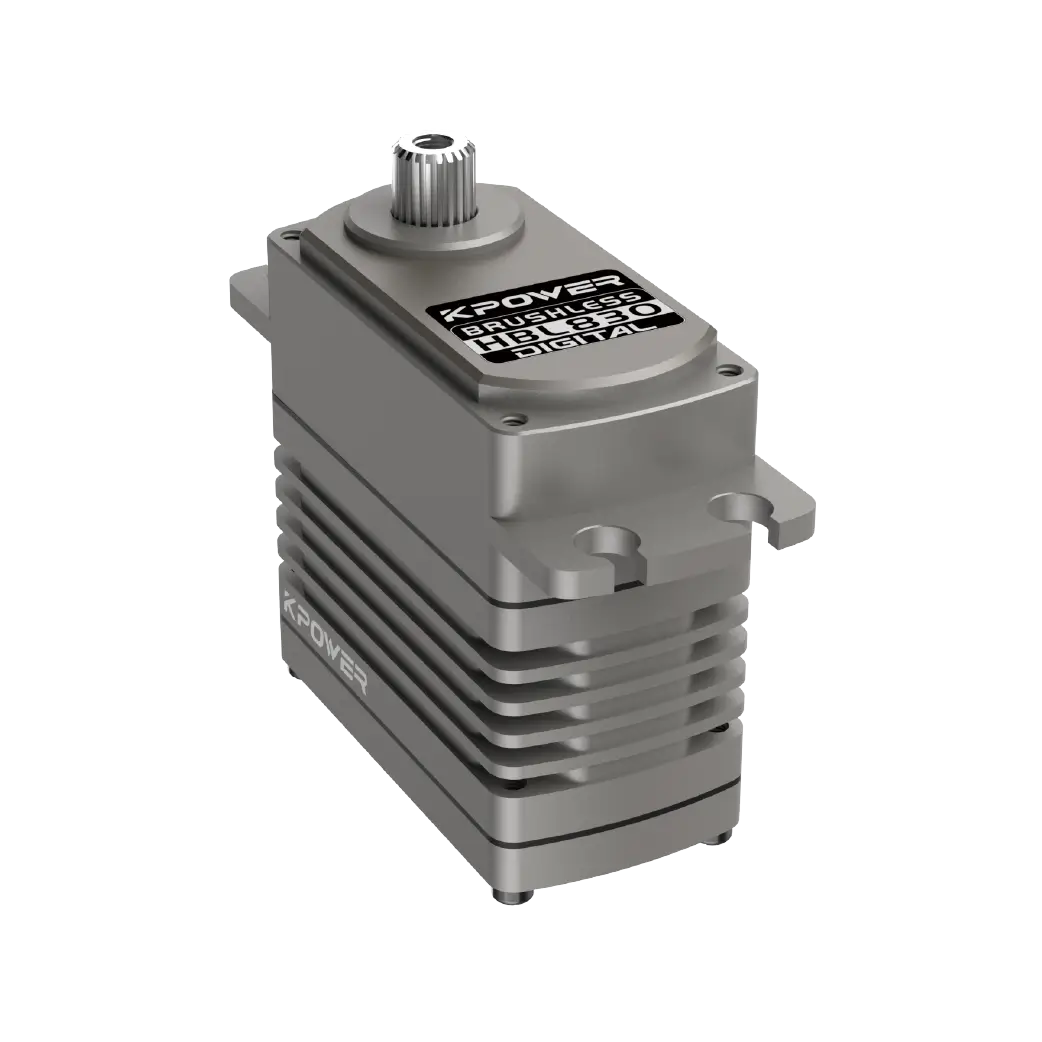
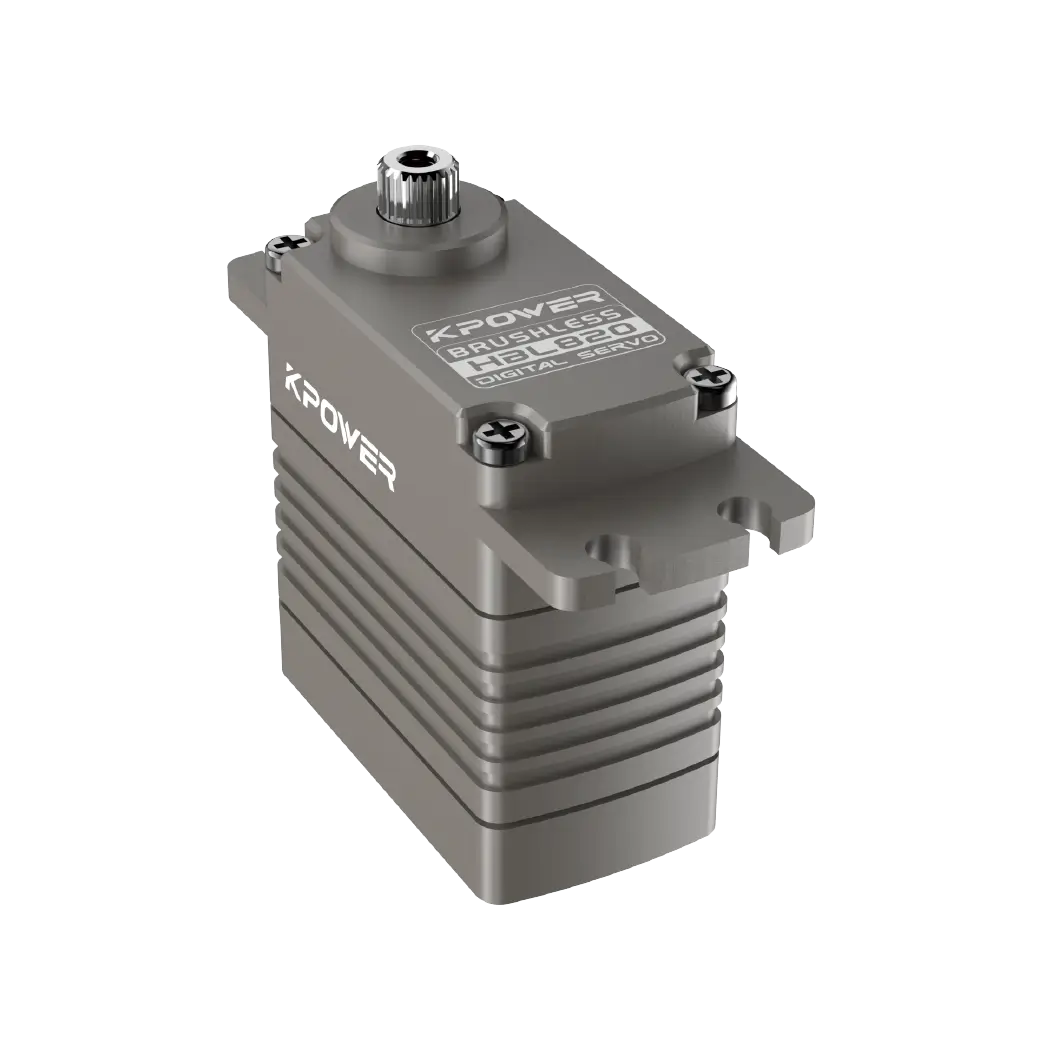
When we talk about a brushlessservomotor from China these days, we aren't talking about the "cheap and cheerful" components of a decade ago. We are talking about the hardware that actually stays cool under pressure. Specifically, I’ve been putting Kpower units through the wringer lately. Why? Because sometimes you need a motor that doesn't just spin, but thinks and lasts.
The first thing you notice when a project fails is the heat. In a standard brushed setup, those little carbon brushes are constantly rubbing. Friction creates heat; heat kills electronics. It’s a suicide pact. If you are building something that needs to run for hours—maybe a steady-cam rig or a precision sorting arm—you can’t afford that thermal runaway.
I remember a project where the movement had to be fluid, almost like water. The initial motors were twitchy. Every time they tried to hold a position, they’d hunt back and forth, vibrating the entire frame. It felt amateur. Switching to a brushlessservomotor from China, particularly the Kpower ones, changed the vibration profile entirely. No brushes mean no friction, which means no heat-induced madness.
It’s not just about the lack of sparks. It’s about the "intelligence" of the movement. A brushlessservomotor uses an electronic controller to switch the current. It’s precise. If you tell it to move 1.5 degrees, it moves exactly that and stays there.
Here is what happens inside a Kpower unit that makes it different:
"Can I just swap my old motor for a Kpower brushless servo without changing anything else?" Not quite. You need to make sure your controller speaks the right language. Brushless motors need an ESC (Electronic Speed Controller) or a specific servo driver that handles the three-phase power. It’s a bit more wiring, but the payoff is a machine that feels like it’s from the future.
"Are these Chinese motors actually durable?" Look, the manufacturing landscape has shifted. A lot of the high-end tech is coming out of specialized hubs now. Kpower, for instance, has figured out how to get the tolerances tight. I’ve dropped them, over-volted them (don't do that), and run them in dusty environments. They keep ticking.
"What’s the deal with the 'servo' part?" A motor just spins. A servo listens. It has a feedback loop. It knows where it is. If you try to push a Kpower servo out of place, it fights back. That "fight" is what gives your robotics or mechanical projects their backbone.
In mechanical design, we talk about "jerk"—the rate of change of acceleration. Cheap motors have terrible jerk profiles. They start and stop like a teenager learning to drive a manual transmission. It’s all thumps and bumps. When you integrate a high-quality brushless servo motor, that movement becomes a curve. It’s smooth.
I was working on a small-scale CNC-style actuator recently. The goal was to draw perfect circles. With the old gear, the circles looked like jagged octagons. The Kpower brushless servos handled the micro-adjustments so fast that the human eye couldn't see the corrections. That’s the level of resolution we’re talking about.
You don't need to be a math genius to pick a motor, but you do need to be honest about your "worst-case scenario."
There is a certain peace of mind when you flip the switch on a machine and it just… works. No smelling burnt copper. No wondering if the gears are going to melt. That’s why the shift toward these brushless Chinese servos has been so massive. They’ve removed the "stress" variable from the equation.
If you’re still messing around with old-school brushed motors for anything that requires precision, you’re essentially fighting with one hand tied behind your back. The technology has moved on. The precision available in the Kpower line is honestly more than most people realize they need until they actually see it in motion.
Stop settling for "shaky." Go for the smooth, silent power of a well-engineered brushless system. Your hardware—and your sanity—will thank you for it. No more cooking eggs on your motors. Just clean, crisp movement every single time.
Established in 2005, Kpower has been dedicated to a professional compact motion unit manufacturer, headquartered in Dongguan, Guangdong Province, China. Leveraging innovations in modular drive technology, Kpower integrates high-performance motors, precision reducers, and multi-protocol control systems to provide efficient and customized smart drive system solutions. Kpower has delivered professional drive system solutions to over 500 enterprise clients globally with products covering various fields such as Smart Home Systems, Automatic Electronics, Robotics, Precision Agriculture, Drones, and Industrial Automation.
Update Time:2026-01-07

Contact Kpower's product specialist to recommend suitable motor or gearbox for your product.