







TECHNICAL SUPPORT


Published 2026-01-19
Ever felt that moment? You’ve sketched out this sleek, modular system in your head—each service humming along, talking smoothly, everything just…clicking. Then you start building. Maybe in Java. And slowly, reality creeps in. One service depends on another’s timing. A tiny delay in communication cascades into a lag. The data flow feels jerky, not fluid. It’s like designing a precise dance, but the dancers aren’t quite in sync. You’re left with a clever architecture that feels fragile when it meets the physical world.
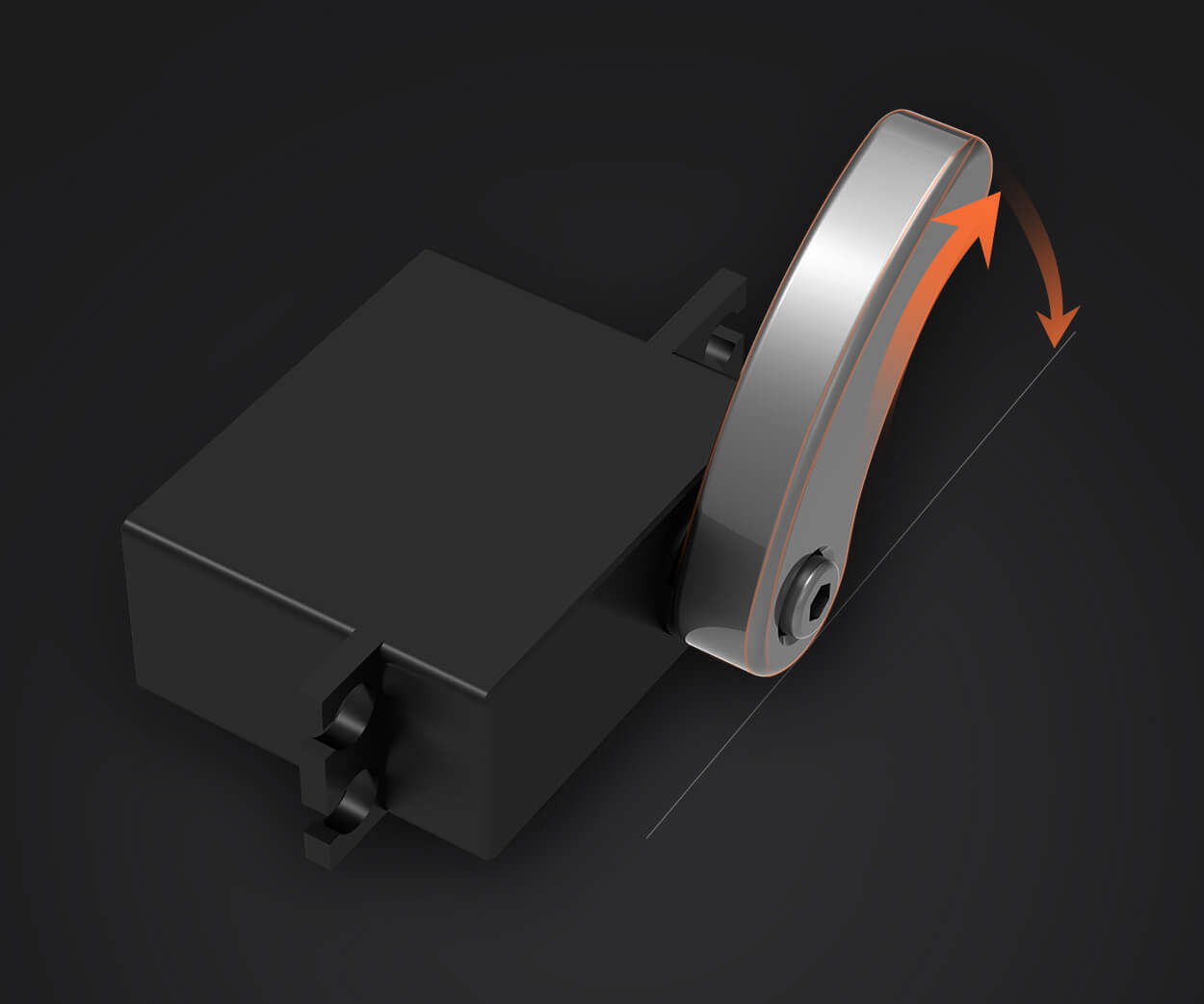
Why does this happen? Often, it’s because we think in pure code. We forget that our applications, especially ones controlling or interacting with hardware—think automated guides, smart displays, or responsive control panels—don’t live in a vacuum. They live in a world of movement, timing, and physical response. Your software logic might be flawless, but if it can’t reliably act in the real world, the user experience stumbles.
That’s where the conversation shifts from just “microservices” to “microservices that can move.”
So, how do you bridge that gap? The secret isn’t just in the service design—it’s in what those services command. Imagine your “order processing” service doesn’t just update a database; it needs to signal a small motor to rotate a display, or adjust a panel’s angle. The “user notification” service might need to trigger a gentle physical nudge or a precise LED indicator. This is where the logic of your software meets the physics of motion.
You need a reliable translator. Something that takes the crisp, digital commands from your Java services and turns them into equally crisp, accurate physical movements. This is less about complex robotics and more about precision and trust. Can you send a command and know, without a doubt, that it will be executed exactly as intended, time after time? When your service says “turn 45 degrees,” does the mechanism listen perfectly, or does it drift or jitter?
Think of it like the difference between sending a text message and having a face-to-face conversation. The text is the software command. The smooth, understanding response—that’s the quality of the physical actuator on the other end. If the response is sloppy, the whole conversation falls apart.
This is the core of what we focus on. The goal is to make the physical response so dependable, so seamless, that developers can almost forget about it. You shouldn’t have to write mountains of error-correction code just to get a simple, repeatable movement. Your mental energy should stay on your application logic, your user experience, your business rules—not on worrying about hardware hiccups.
How is this done? It starts with an obsessive focus on consistency. Every unit is built to respond to a signal with the same action, every single time. The movement is smooth, not jumpy. The stop is exact, not approximate. It’s about eliminating the “maybe” from the equation. When your “Shipping Status” service triggers a flag to rise, it should rise to the same height, at the same speed, whether it’s the first or the thousandth time.
We often hear a question: “But my project isn’t a giant factory robot. Do I really need this level of precision?” Consider a self-service kiosk. A small tray extends, a card reader adjusts its angle, a tiny camera pans. These are all small movements. But if the tray jerks, the angle is wrong, or the camera hunt is jittery, the customer feels the product is cheap or broken. The precision isn’t for the machine’s sake; it’s for the human’s perception of quality and reliability. It’s what makes a product feel solid and well-made.
Let’s walk through making this work for your “sample microservices application java” project.
First, define the touchpoints. Where does your software need to manifest in the physical world? List those moments: “rotate here,” “lift there,” “indicate this.” Keep it simple.
Next, think about the conversation. Your Java service will send a command—often a simple pulse or a PWM signal. The receiving component needs to interpret that signal identically each time. This is the critical link. Choosing components that prioritize signal fidelity over fancy features is key. You want a predictable partner, not one that tries to be overly clever.
Then, integrate for simplicity. The best hardware feels like a natural extension of your code. The integration shouldn’t require complex drivers or constant calibration. It should be as close to plug-and-play as a physical component can be. You configure it once, map it to your service endpoint, and then you can mentally move on. It just works, freeing you to focus on the next service, the next feature, the next innovation.
It’s a shift in perspective. Instead of your microservices architecture ending at the edge of the server, you extend its principles of clean interfaces and reliable contracts into the physical layer. The movement becomes just another service output—one that’s as dependable as writing to a log file or updating a database record.
In the end, the magic happens when the technology disappears. The user doesn’t see the microservices or the motors. They just experience an application that feels responsive, solid, and intelligently connected to their world. They get a product that doesn’t just compute, but acts—and acts well. That’s the quiet confidence you can build into your project, from the code all the way to the final, satisfying click and whirr of a job perfectly done.
Established in 2005,kpowerhas been dedicated to a professional compact motion unit manufacturer, headquartered in Dongguan, Guangdong Province, China. Leveraging innovations in modular drive technology,kpowerintegrates high-performance motors, precision reducers, and multi-protocol control systems to provide efficient and customized smart drive system solutions. Kpower has delivered professional drive system solutions to over 500 enterprise clients globally with products covering various fields such as Smart Home Systems, Automatic Electronics, Robotics, Precision Agriculture, Drones, and Industrial Automation.
Update Time:2026-01-19

Contact Kpower's product specialist to recommend suitable motor or gearbox for your product.