TECHNICAL SUPPORT


Published 2026-01-19
Have you ever encountered such a situation? The robotic arm in the workshop suddenly becomes sluggish, and the response of the servo on the production line is always half a beat slow, as if the entire system is at odds with you. This is not an isolated phenomenon - in the world of industrial automation, the disconnect between hardware and software is like an old radio that cannot adjust the channel correctly, it is always just a little bit off.
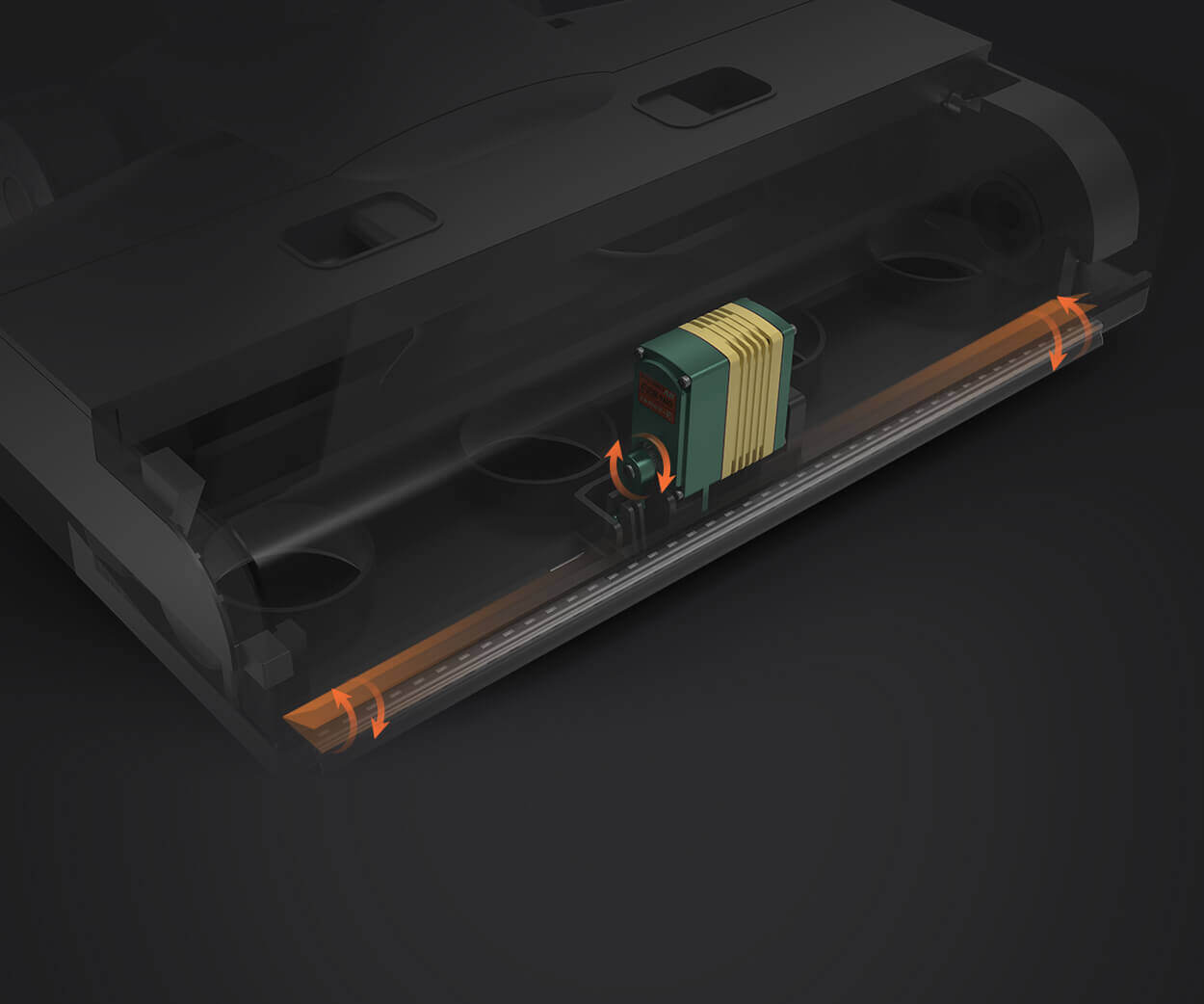
We often think of servo motors as precision dancers, and every movement should be accurate and elegant. But the reality is that when control signals need to pass through layers of system architecture, the dance can easily get out of rhythm. The traditional control method is like using a long string to manipulate a puppet, and delays and errors are always inevitable.
"Isn't there a smarter way?" someone asked.
some. The answer is hidden in the clouds.
Imagine what would happen if each servo unit could receive instructions, process data, and respond independently? This is the possibility brought by microservice architecture. It disassembles the huge control system into small functional modules, just like classifying and storing Lego bricks - which one is needed, which one is called.
kpowerI discovered some interesting things while exploring this trail. When we moved the control logic to the Google Cloud Platform, the latency issues that once troubled us began to ease. It's not that the network is getting faster, it's that the path of instruction delivery is getting straighter. Cloud microservices allow control signals to be on a direct train without having to stop at every station.
A technician who participated in the test gave an analogy: "In the past, it was like using a walkie-talkie to command a remote team, but now it is like everyone has a real-time communicator in their pocket."
How accurate can a servo motor be? 0.1 degrees? 0.01 degrees? The number itself is not important; what is important is whether this accuracy remains stable in a complex system. Under traditional architecture, motor performance is often limited by system bottlenecks, just like a racing car that cannot run fast on congested city streets.
Cloud microservices change the game.kpowerThe test data shows that under the same hardware conditions, the response time of the servo system using cloud distributed control is shortened by an average of 23%. What's behind this number? It is the reduction of production line failure rate, the improvement of product consistency, and the maintenance personnel no longer need to be woken up by alarm calls in the middle of the night.
But this isn't magic. Cloud platforms offer not a panacea, but a new way of organizing. It allows control logic to be reorganized at will like a loose-leaf notebook—one day requires fast response mode, tomorrow may require energy-saving priority mode, and switching is as easy as turning a page.
"What to do with our old equipment?" This is the most common concern.
In fact, one of the charms of microservice architecture is its inclusiveness.kpowerThere is no requirement to tear down the entire workshop and start over. Instead, it's more like adding a nervous system to the original system. The old-fashioned servo motor was connected to the cloud through an adaptation interface, and suddenly found that it could do more things - data collection, status prediction, and collaborative work. These functions that once required expensive upgrades can now be achieved through the software layer.
One factory supervisor described this transformation: "It's like giving old employees smartphones. Suddenly they can do a lot of things they couldn't do before."
In the cloud, every rotation of every motor generates data. These data are no longer dead numbers lying in log files, but become talking clues. Temperature curves tell you when it’s time for preventive maintenance; torque fluctuations remind you of possible mechanical wear; energy consumption patterns reflect the efficiency bottlenecks of the entire production line.
Kpower's team discovered that when this data flows freely in the microservice architecture, wonderful chemical reactions will occur. Abnormal data of a steering gear can trigger the adjustment plan of the entire work section; load changes of the servo motor can automatically adjust the upstream feed speed. The system begins to have some kind of intuition—not something mysterious like artificial intelligence, but a conditioned reflex based on rules and data.
“It has learned to take care of itself,” one operator said of the modified system.
Moving to microservices in the cloud sounds great, but there are always challenges in implementation. Network stability, data security, personnel training – every hurdle needs to be taken seriously. Kpower encountered signal loss in early deployments and experienced data synchronization delays.
But what’s interesting is that the microservices architecture itself provides the tools to solve the problem. When a service fails, it doesn't bring down the entire system. You can repair, test, and redeploy individually, just like repairing a car without having to take the whole thing apart. This modular resilience makes trial and error less scary.
Some users have shared this experience: They discovered a control logic flaw on Friday afternoon, and completed the repair and deployment on Monday morning, with the production line barely affected. In industry, this kind of agility, once a luxury, is now increasingly possible.
We don’t have to predict what the future of industrial automation will be like because the future is unfolding in concrete form. The servo motor is no longer a part that passively executes commands, but has become an active node in the intelligent network; the steering gear control no longer relies on a fixed program loop, but is dynamically adjusted based on real-time data; the mechanical system begins to have a certain degree of adaptive capability.
All of this does not depend on the birth of a revolutionary piece of hardware, but rather on a change in the way we think about systems. Kpower has seen in practice that when the hardware concentrates on doing what the hardware is good at, and the software provides flexible policy support in the cloud, the combination of the two will produce the effect of one plus one greater than two.
An old master in the workshop said it honestly: "I don't care what the name of the technology is, I only care whether it can make the machine run more smoothly." The answer given by the cloud microservice architecture is: yes, and it is smoother than you think.
The precision of servo motors, the response of steering gears, and the reliability of mechanical systems—these eternally pursued goals in the industrial field are finding new paths to achieve through new architectures. It's not perfect, but it's evolving; it's not the end, but it's a direction worth exploring.
When machines meet the cloud, the story has just begun to turn.
Established in 2005, Kpower has been dedicated to a professional compact motion unit manufacturer, headquartered in Dongguan, Guangdong Province, China. Leveraging innovations in modular drive technology, Kpower integrates high-performance motors, precision reducers, and multi-protocol control systems to provide efficient and customized smart drive system solutions. Kpower has delivered professional drive system solutions to over 500 enterprise clients globally with products covering various fields such as Smart Home Systems, Automatic Electronics, Robotics, Precision Agriculture, Drones, and Industrial Automation.
Update Time:2026-01-19

Contact Kpower's product specialist to recommend suitable motor or gearbox for your product.