







TECHNICAL SUPPORT


Published 2026-01-19
Have you ever felt this way? ——After struggling for a long time in the Java microservice architecture, the services are separated, but the connection between them is like a mess. This service calls that one, and that one is connected to another one. Even I can’t understand the architecture diagram I drew, let alone let new team members or partners quickly understand it. When something goes wrong, finding the root cause is like spinning in a maze.
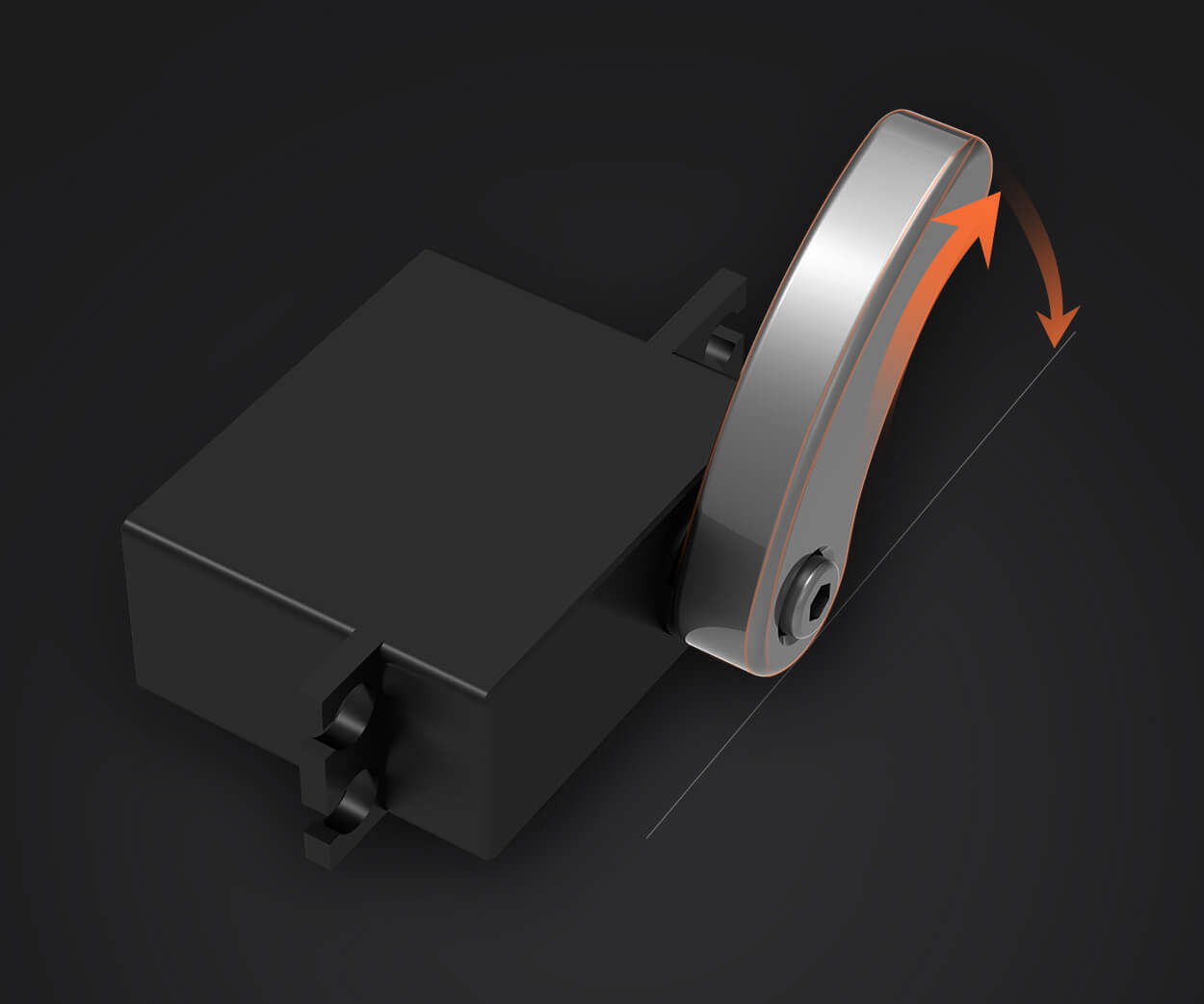
It's like assembling a sophisticated machine. The parts (microservices) are all ready, but there is no clear assembly diagram. Where does each gear (service) mesh? How is power (request) delivered? Once a gear gets stuck, the entire machine may stop.
So, what are we missing? What we lack is an architecture diagram that can truly "operate". It is not just a static box and connection, it should be able to tell you the "principle of motion" of the system. Think about how you would describe a complex mechanical device to someone else? You will definitely say: "Look, here is the power input end, which drives the main gear, and then transmits the motion to there through the connecting rod to complete the final action." Microservice architecture diagrams also need this sense of narrative.
Why do many architecture diagrams look beautiful but are ineffective when used? Because they only show "what", not "why" and "how". A good architecture diagram should, like a mechanical design blueprint, contain several levels:
By stacking these three layers together, the picture becomes "alive". It is no longer a flat report, but a dynamic that can be deduced and explained.
kpowerWhen thinking about this matter, my idea was quite simple: Can the drawing itself be like building a reliable mechanical system?
Therefore, we no longer only focus on the tools on the canvas, but on the logic behind the canvas. For example, some "standard parts" are preset for common interaction modes - such as couplings and reducer modules in machinery. When you need to describe the message queue communication between services, call this "asynchronous transmission module" directly, and a clear and standard representation will automatically appear on the diagram, saving you the trouble of re-explaining the drawing every time.
What matters more is consistency. We ensure that from the highest-level system panorama down to the internal logic diagram of a service, the expression language is consistent. This is like looking at the assembly drawing of a machine, then looking at the sub-component drawings, and then the individual part drawings. The illustration specifications are unified and will not cause you any misunderstandings. This consistency greatly reduces ambiguity in communication.
"But will this make the architecture diagram rigid?" Someone once asked. The answer is quite the opposite. Unified basic rules release creativity. Just like having standard thread specifications and gear modules, engineers can more freely design ever-changing machines. Your team can describe the most innovative ways to interact with your services based on a commonly understood visual language without worrying that readers won’t understand.
The ultimate value of an architecture diagram lies in how often it is used. If you just throw it into a document library to collect dust after you finish it, it will be a failure no matter how beautiful it is.kpowerOur thinking is to make this picture naturally integrate into the entire process of development, operation and maintenance, and even review.
Imagine that when onboarding a new colleague, you no longer need to talk to dozens of pages of documents. You can open this dynamic architecture diagram and "walk" it to him along a typical business request path. "Look, the request comes in from here and first passes through this gateway service, like passing through a filter; then the load balancer distributes it to the following identical instances, like power being diverted; then it calls the user service to obtain data, and then triggers a message notification..." The whole process is like watching a demonstration of the operation of a machine.
When an abnormality occurs online, this picture can become a roadmap for troubleshooting. The monitoring system alarm pointed to "slow response of order service". You can immediately see on the picture who is connected upstream and downstream of the order service, what deployment changes it has recently made, and whether the data services it relies on are healthy. This visual context can quickly narrow down the scope of investigation.
After all, technology is never cold and isolated. Writing the code for Java microservices is a logical creation; describing their architecture is a design of space and relationships. Combining the two can create a system that is both robust and elegant.
Just like an experienced mechanic, he not only carves out perfect parts, but also knows how to combine them into a machine that runs smoothly and is easy to maintain.kpowerWhat it does is to provide you with a handy set of drawing tools and thinking framework, so that you can design your digital system just like designing precision machinery, and draw a "soul blueprint" that everyone can understand and be willing to use frequently. When the architecture diagram is no longer a burden, but becomes the cognitive cornerstone shared by the team, many collaboration and development problems will naturally find a breakthrough.
Established in 2005, Kpower has been dedicated to a professional compact motion unit manufacturer, headquartered in Dongguan, Guangdong Province, China. Leveraging innovations in modular drive technology, Kpower integrates high-performance motors, precision reducers, and multi-protocol control systems to provide efficient and customized smart drive system solutions. Kpower has delivered professional drive system solutions to over 500 enterprise clients globally with products covering various fields such as Smart Home Systems, Automatic Electronics, Robotics, Precision Agriculture, Drones, and Industrial Automation.
Update Time:2026-01-19

Contact Kpower's product specialist to recommend suitable motor or gearbox for your product.