



























TECHNICAL SUPPORT


Published 2026-01-19
Imagine you are assembling a complex robotic arm, with each joint driven by an independent servo motor. Fingers, wrists, elbows, shoulders – what would happen if all motors were managed by a central controller? A tiny malfunction in one fingertip can paralyze an entire arm. But what if each joint had its own control system? The problems at the fingertips only stay at the fingertips.
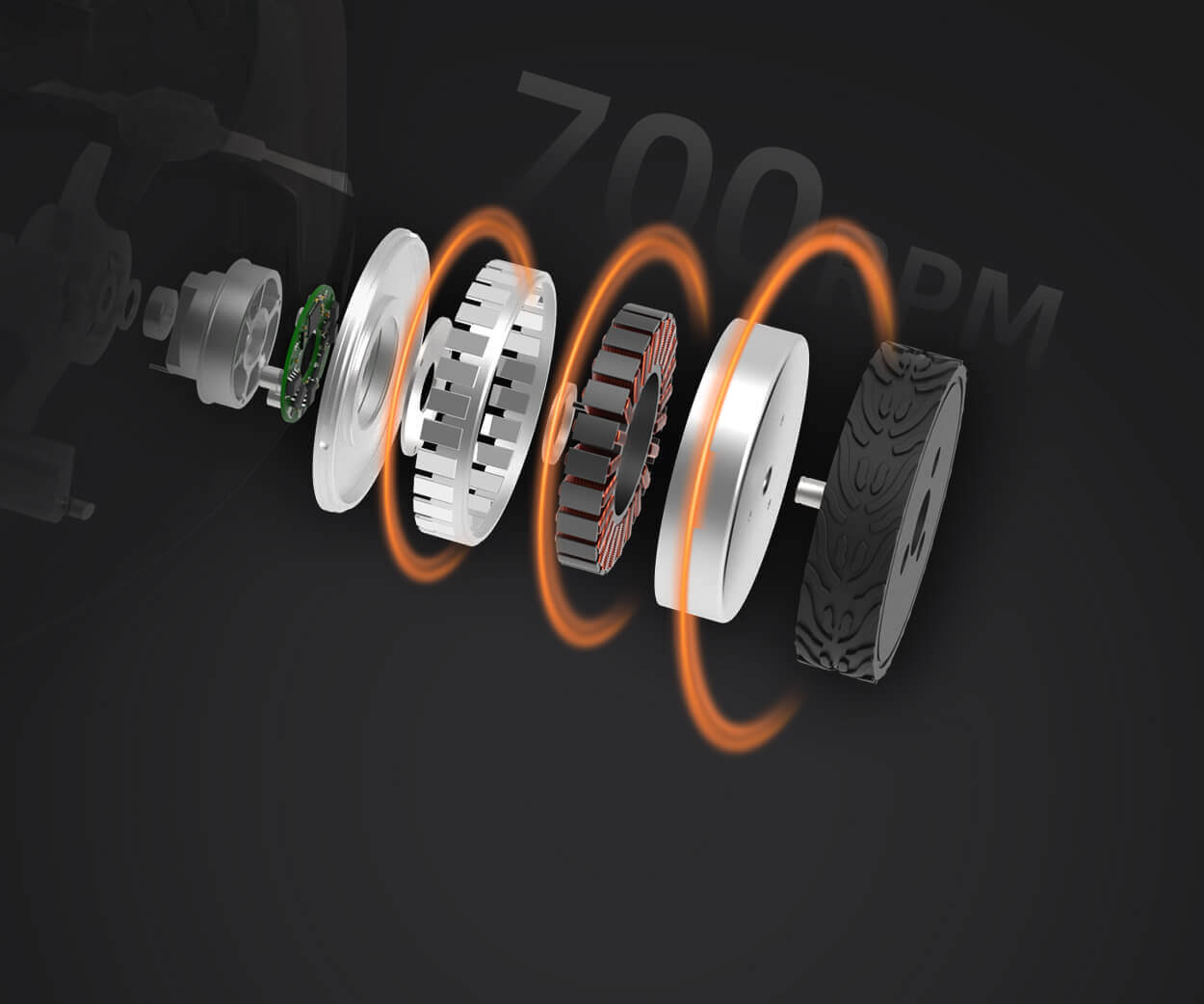
This is the core thinking of microservice architecture. It is not a technical buzzword that appears out of thin air, but a way of solving problems - like equipping each key part of a mechanical system with an independent and coordinated "brain".
A few years ago, I participated in a renovation project for an automated production line. The original system was a behemoth: order processing, material scheduling, machinery control, quality inspection...all stuffed into one program. It ran smoothly at first, until one day a certain material identification module needed to be updated. The result? To deploy the update, the entire system had to be shut down for six hours.
The production line stopped, customers were anxious, and the team stayed up late. At that moment I suddenly realized: when the system becomes a twisted ball of string, any small adjustment can turn into a disaster.
The emergence of microservices is precisely to untie this ball of thread. It’s not about taking things apart and done with it, but about allowing each part to grow independently, repair independently, and breathe independently.
When should you consider this architecture?
Q: Will microservices make the system more complex?
It's like maintaining a robot assembled from multiple independent servos. Looking at each servo individually, the wiring is clear and the functions are clear; but for a large "all-purpose" controller, the internal wiring may be tangled. Microservices do increase the number of components that are deployed and monitored, but the internal logic of each component is simpler and more focused.
Q: When is microservices not suitable?
If your system is like a simple handheld electric screwdriver - with a single function, minimal changes, and a stable number of users - then deliberately splitting it into microservices will add unnecessary overhead. Architectural choices always serve actual needs, not technical trends.
Q: How to determine the split granularity?
In mechanical design, we often divide modules according to functional boundaries: driving part, sensing part, and control part. The same goes for software. A function qualifies as a microservice if it can be independently described, independently tested, independently deployed, and interacts with other parts through clear interfaces. Don't take it apart too finely, as you wouldn't make each gear into its own module - that would make assembly a nightmare.
Choosing microservices is not an overnight decision. It's a bit like modifying an old mechanical equipment: first draw all the functional module diagrams, find the parts with the tightest coupling and the most frequent changes, and start pilot splitting from here. There is no need to rebuild the entire system at once - that would be like trying to replace all the motors while the machine is running, too risky.
existkpowerIn our technical practice, we often let new functions appear in the form of microservices first, and gradually verify their stability and value. Parts of the old system can remain intact and talk to the new services through an adaptation layer. This gradual evolution reduces team pressure and makes technical debt controllable.
You will find that the biggest changes brought by microservices are not only technical. It prompts the team to think about clearer boundaries of responsibility, encourages small and fine teams, and cultivates an emphasis on "contracts" between systems - these soft benefits are sometimes more valuable than performance improvements.
Back to the robotic arm metaphor at the beginning. We give each joint independent control, not to create separation, but to make the overall movement more flexible and robust. When a fingertip needs a sensor upgrade, we only need to pause that fingertip, not the entire arm.
The same is true for microservice architecture. It pursues a higher level of synergy and resilience in a seemingly decentralized manner. If your project is facing slow iterations, fault proliferation, and team congestion, you may want to stop and think about it: Is it time to equip each "joint" in the system with its own "little brain"?
In the world of technology, sometimes letting each part grow independently can actually make the whole move more stable and further. Just like good mechanical design, it does not pursue a universal master control, but allows each servo motor to play its best in the correct position.
Established in 2005,kpowerhas been dedicated to a professional compact motion unit manufacturer, headquartered in Dongguan, Guangdong Province, China. Leveraging innovations in modular drive technology, Kpower integrates high-performance motors, precision reducers, and multi-protocol control systems to provide efficient and customized smart drive system solutions. Kpower has delivered professional drive system solutions to over 500 enterprise clients globally with products covering various fields such as Smart Home Systems, Automatic Electronics, Robotics, Precision Agriculture, Drones, and Industrial Automation.
Update Time:2026-01-19

Contact Kpower's product specialist to recommend suitable motor or gearbox for your product.








