TECHNICAL SUPPORT


Published 2026-01-19
Let’s be honest. When your project hits a snag—a robotic arm that jerks instead of gliding, an automated line that stutters—the first suspect is often the hardware. Aservoseems sluggish. A motor feels weak. You might spend days tweaking code, swapping parts, chasing a ghost in the machine. But what if the problem isn’t in the gearbox or the circuit board? What if it’s in the very architecture that ties everything together?
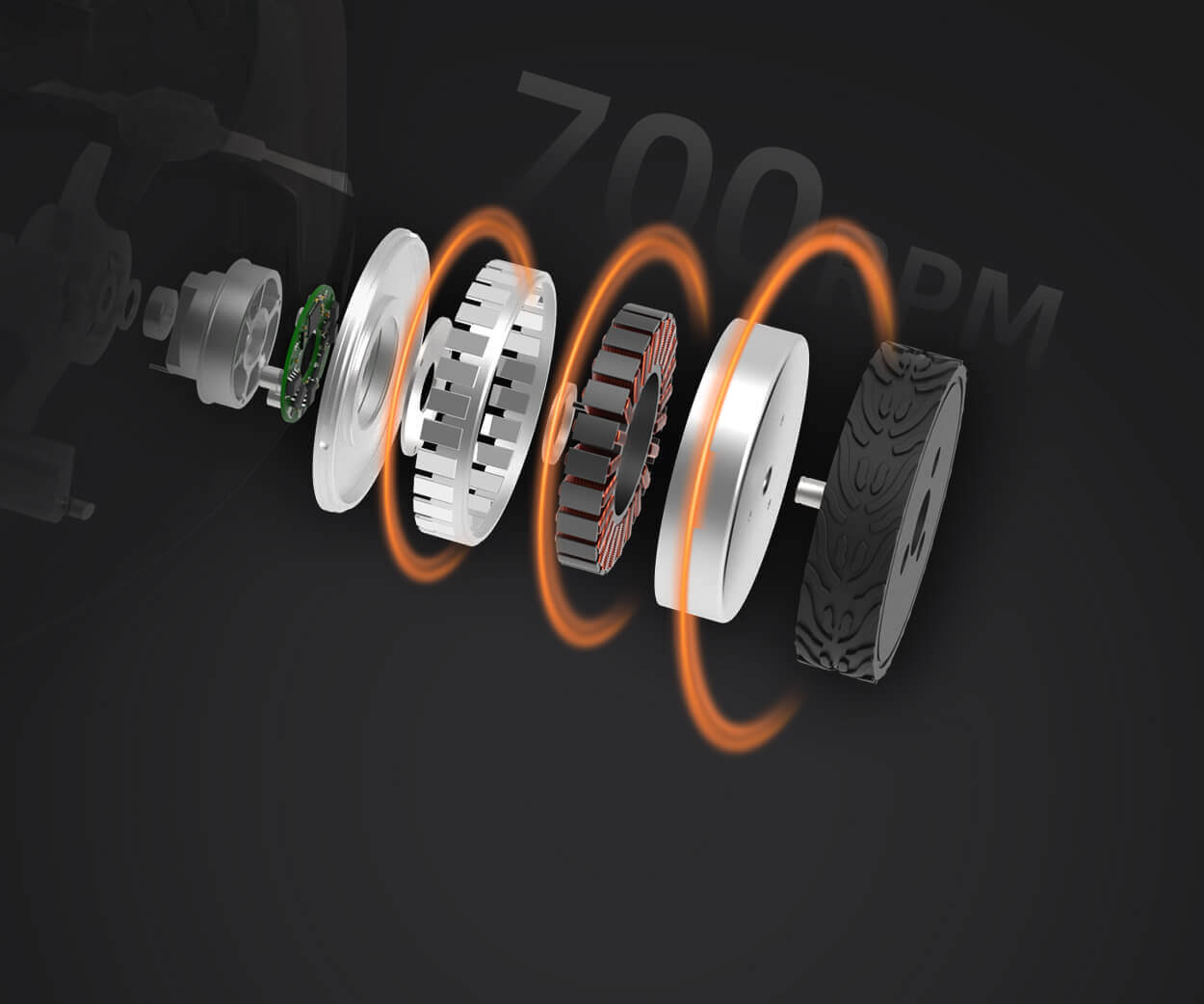
Think about the old way. You have one big, monolithic control system. It’s like a single, massive brain trying to command every limb, sense every sensor, and process every command all at once. One function crashes, and the whole system grinds to a halt. Upgrading one feature means risking a meltdown in another. It’s rigid, fragile, and frankly, a headache.
So, what’s the way out?
Imagine, instead of one overworked brain, you have a team of specialized experts. A compact, brilliant module dedicated solely to interpreting positional feedback. Another, hyper-efficient unit that manages torque control. A third that handles communication, speaking flawlessly to other devices. Each is a self-contained “microservice”—a small, powerful piece of software with one job it does exceptionally well.
They don’t crowd each other. They talk. They collaborate. Need to update the communication protocol? Just upgrade that one specialist without touching the motion-control expert. One service has an issue? The others keep working. The system becomes resilient, almost… alive in its adaptability.
This isn’t just theory. It’s the secret behind systems that feel responsive and robust. It transforms your machine from a brittle assembly of code into a flexible, cooperative network.
You might ask, “I’m dealing with physical gears and shafts. Why should I care about software architecture?” The connection is profound.
Yourservomotor is a marvel of precision. It expects clear, timely commands. A monolithic system can get bogged down, causing delays—latency. That tiny lag is what turns a smooth arc into a jerky movement. Microservices cut through that noise. The dedicated “motion command” service delivers instructions crisply, allowing the hardware to perform at its true potential. The hardware finally gets the brain it deserves.
Furthermore, development isn’t a nightmare anymore. Adding a new sensor? Just build or plug in a new microservice for it. No need to unravel a million lines of intertwined code. It’s like adding a new member to a well-coordinated team, rather than rewiring someone’s entire nervous system.
Adopting this architecture is a strategic move. It’s about choosing a foundation that grows with you. When evaluating a solution, look beyond the spec sheet.
Does it feel integrated? The best implementations make the architecture feel invisible—you just experience the reliability and speed. Is it documented for humans, not just robots? You should be able to understand how to interact with it, not fight it. Most importantly, does the provider understand your world? The synergy between smart architecture and physical machinery is a specialized kind of wisdom.
Atkpower, we’ve seen this from both sides of the lens. Our journey in precision motion control taught us that the brilliance of aservocan be dimmed by a clumsy controller. That’s why our approach embeds this agile, microservices-style thinking into how our systems operate. It’s about creating an environment where every component, physical and digital, can do its best work.
It leads to machines that aren’t just functional, but remarkably dependable and easy to evolve. The kind that saves you from those late-night debugging marathons, turning complexity into quiet confidence.
The next time you plan a project, look at the unseen framework. Ask what’s orchestrating the dance between your components. Because the right architecture doesn’t just connect parts—it unleashes them. And that makes all the difference between a machine that works and one that excels.
Established in 2005,kpowerhas been dedicated to a professional compact motion unit manufacturer, headquartered in Dongguan, Guangdong Province, China. Leveraging innovations in modular drive technology,kpowerintegrates high-performance motors, precision reducers, and multi-protocol control systems to provide efficient and customized smart drive system solutions. Kpower has delivered professional drive system solutions to over 500 enterprise clients globally with products covering various fields such as Smart Home Systems, Automatic Electronics, Robotics, Precision Agriculture, Drones, and Industrial Automation.
Update Time:2026-01-19

Contact Kpower's product specialist to recommend suitable motor or gearbox for your product.