







TECHNICAL SUPPORT


Published 2026-01-19
Imagine you are assembling a delicate robotic arm. Each joint is controlled by a servo, and they all have to listen to the instructions of the same "brain" - the main controller. Everything seemed to be in order until something went wrong. Maybe the response of a servo is half a beat too slow, or maybe the data sent back by the sensor makes the whole process stuck. The result? The whole line stops and you have to start over, like looking for a key in a complicated maze.
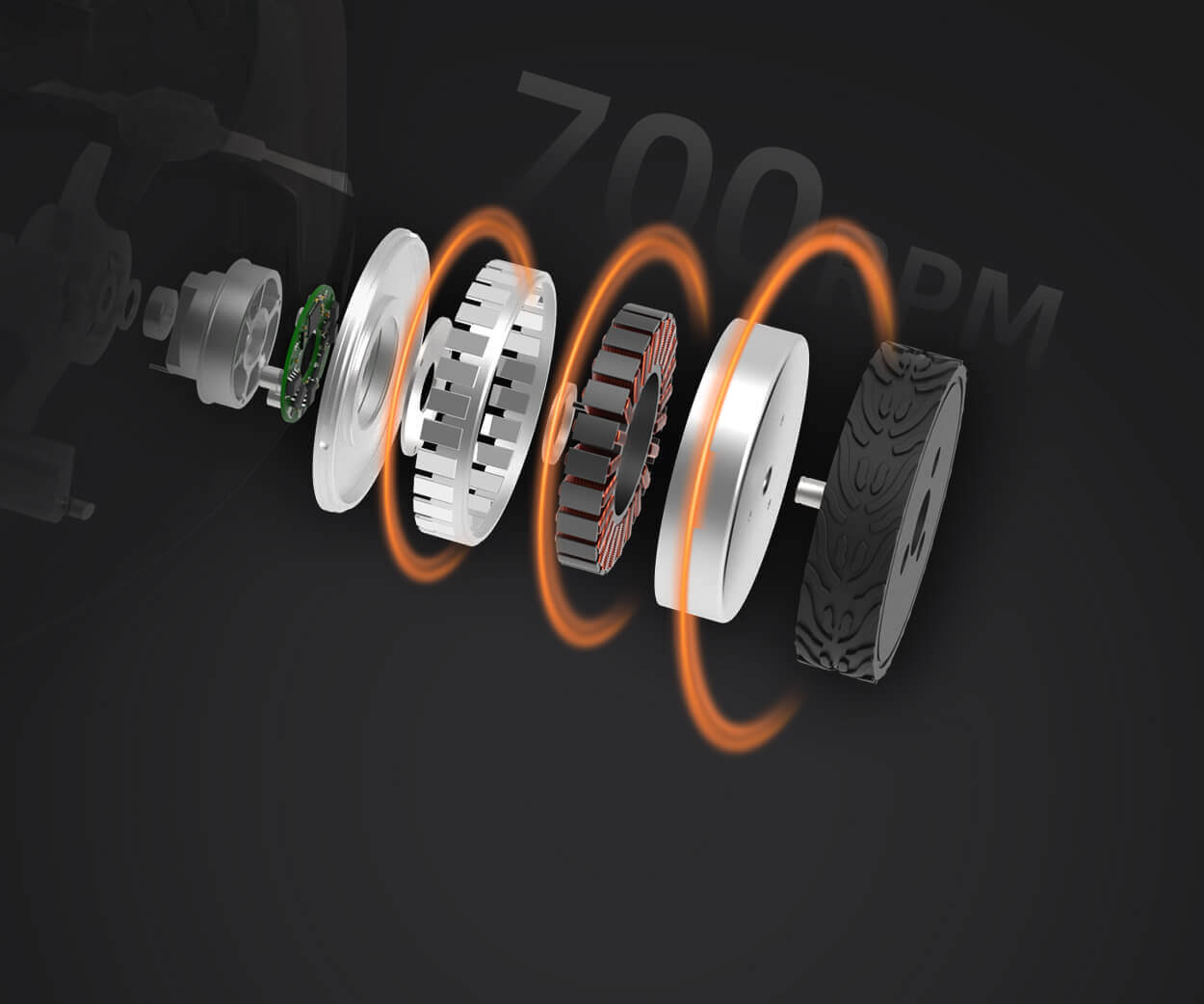
Is this scene familiar? In the world of servo motors and mechanical systems, we often cram too much functionality into a centralized control system. It's like an engineer who knows everything but gets tired easily. If one part of the system catches a cold, the whole system will have a fever.
Therefore, some people began to think: Can each key part - such as the steering gear responsible for grabbing, or the servo motor for precise positioning - have its own independent, smart "little brain"? Let them manage their own tasks and only communicate with other parts of the system through clear and simple language? This is the story of how the concept of "microservices" took root in the field of hardware and mechanical control.
It's not magic, but a smarter way of dividing labor.
The traditional control system is like a chorus. With a gesture from the command (main controller), all members (motors, sensors) follow suit synchronously. The rhythm is rigorous but lacks flexibility. If one part is wrong, the whole song may be messed up.
The microservice architecture is more like a group of chamber musicians who work well together. The violinist (servo motor A) focuses on his own melody, the cellist (servo motor B) is responsible for the bass, and the piano (logic processor) provides the harmonic background. They practiced separately and mastered each other. They only exchanged a look when necessary to confirm the rhythm. Even if the piano temporarily adjusts a chord, the violin and cello can continue their parts without interruption.
What does this mean specifically for your project?
This may be the question in your mind at the moment. Let's bypass those thick theoretical books and get down to business.
Revisit your system. Don't look at it as a whole, try to break it down into "capability units" with independent functions. Which part is responsible for movement? Which part is responsible for feedback? Which part is responsible for decision-making? Draw a clear boundary for each unit that can operate independently.
Design independent interfaces and power management for each "microservice". Yes, this adds to the initial design considerations, like having individual scores and seats for each player. But think about the benefits: you can independently upgrade the program for that grabbing module without touching the motion control core at all. Want to test the response of a new servo? Only doing it in a small module will not shake the whole country.
Next, define clear communication rules. This is key to avoiding confusion. All "conversations" are simple, direct and have a standard format. Avoid having them send long, complex instructions to each other; just a few key data points will suffice. it's likekpowerThe idea advocated in some integration solutions is to let professional people (or modules) do professional things, and then "meet each other" in the most efficient way.
Will you encounter challenges? certainly. For example, how to ensure that all scattered "little brains" are time synchronized? How to manage more connected nodes? But when you see a module failure, the rest of the system continues to work calmly; when you need to replace or upgrade a component, it can be easily plugged and unplugged as long as the "dialog" interface matches, and you will feel that these challenges are worth it.
This is not only a change in the technical architecture, but also a switch in the way of thinking. Your project is no longer a rigid black box, but becomes a set of intelligent ecosystems that can be flexibly combined and dynamically grown.
Maybe in the future, the servo motor in your project can not only receive instructions, but also actively report its own health status and predict the next maintenance time. The steering gear cluster can autonomously allocate load tasks like a swarm of negotiated bees. Possibilities, from the moment a module gains autonomy, begin to proliferate.
This is not about building a more complex machine, but about fostering a smarter, more resilient system. Each part maintains its own personality and expertise while blending seamlessly into the whole. It makes failures local, upgrades easy, and scaling natural.
When the various units within a machine begin to talk clearly like partners, what you create is one step closer to true intelligent collaboration. This journey begins with a simple determination: to let control become more free.
Established in 2005,kpowerhas been dedicated to a professional compact motion unit manufacturer, headquartered in Dongguan, Guangdong Province, China. Leveraging innovations in modular drive technology,kpowerintegrates high-performance motors, precision reducers, and multi-protocol control systems to provide efficient and customized smart drive system solutions. Kpower has delivered professional drive system solutions to over 500 enterprise clients globally with products covering various fields such as Smart Home Systems, Automatic Electronics, Robotics, Precision Agriculture, Drones, and Industrial Automation.
Update Time:2026-01-19

Contact Kpower's product specialist to recommend suitable motor or gearbox for your product.