









TECHNICAL SUPPORT


Published 2026-01-19
So, you’ve got your microservices architecture up and running. Things are modular, they’re scalable—on paper, it’s beautiful. But then reality hits. You need Service A to crunch numbers like a physicist, Service B to handle data streams in real-time, and Service C to manage a simple, rock-solid API gateway. Using one programming language for all of them feels like trying to use a screwdriver to hammer a nail and chop vegetables. It’s awkward, inefficient, and honestly, a bit frustrating.

That’s the silent struggle before the polyglot programming conversation even begins. The problem isn’t just about technology; it’s about fit. Why force a square peg into every round hole?
Let’s cut through the jargon. Polyglot programming in microservices is simply this: using the best programming language for each specific job within your system of small, independent services. It’s the opposite of a "one-size-fits-all" mandate.
Think about it like building a high-performance team. You wouldn’t hire only accountants to run a full product launch—you’d want a marketer, a designer, a logistics expert. Each service in your application is a team member. Polyglot programming lets you "hire" the language that is inherently the best expert for that service’s core duty.
Moving to polyglot isn’t about chasing shiny new tech. It’s a pragmatic answer to a simple question: How do we make each piece of our system not just work, but excel?
The method is straightforward in concept. You decompose your application into its core, bounded services. Then, you match them. The service handling complex algorithms? Maybe it finds a perfect home in Python with its rich data science stack. The service that’s a high-throughput, low-latency message processor? Perhaps Go or Java makes it sing. The lightweight, quick-to-update admin interface? Node.js could be a contender.
The benefits aren’t just theoretical. You get native advantage. A language designed for concurrency will handle concurrent tasks more elegantly. A language with unparalleled numerical libraries will deliver cleaner, faster calculations. This leads to services that are not only more efficient but often simpler to write and maintain within their own domain. Developer happiness often increases too—people get to apply the right tool, which is a deeply satisfying experience.
But how do you choose? The standard isn’t about popularity. It’s about core competency alignment. Look at the primary task of the service. Examine the ecosystem—are the best-in-class libraries for this problem written in this language? Consider the team’s familiarity; a well-understood tool is better than a perfect-but-alien one. And crucially, think about the operational footprint: how will this service, written in this language, be deployed, monitored, and connected?
Here’s where many minds go: "Won’t this turn into a communication nightmare?" If services are speaking Python, Go, and Rust, how do they have a coherent conversation?
This is the critical piece. Polyglot programming doesn’t mean anarchy. It requires a strong, unifying contract. This is typically where well-defined APIs (like REST, gRPC, or GraphQL) and a robust message bus (like Kafka or RabbitMQ) become the universal translators. The service interface—what it consumes and produces—is standardized and language-agnostic. The internal implementation, the "thinking," is where the language specialization lives.
Imagine a precision assembly line. Each robotic arm (a microservice) is optimized for its task—welding, painting, assembly. They don’t need to all be the same brand of robot; they need to understand the same instructions about what part to pick up, where to place it, and when the task is done. The central control system and the conveyor belt protocol are the unifying layer. In our world, that’s your API contracts and communication protocols.
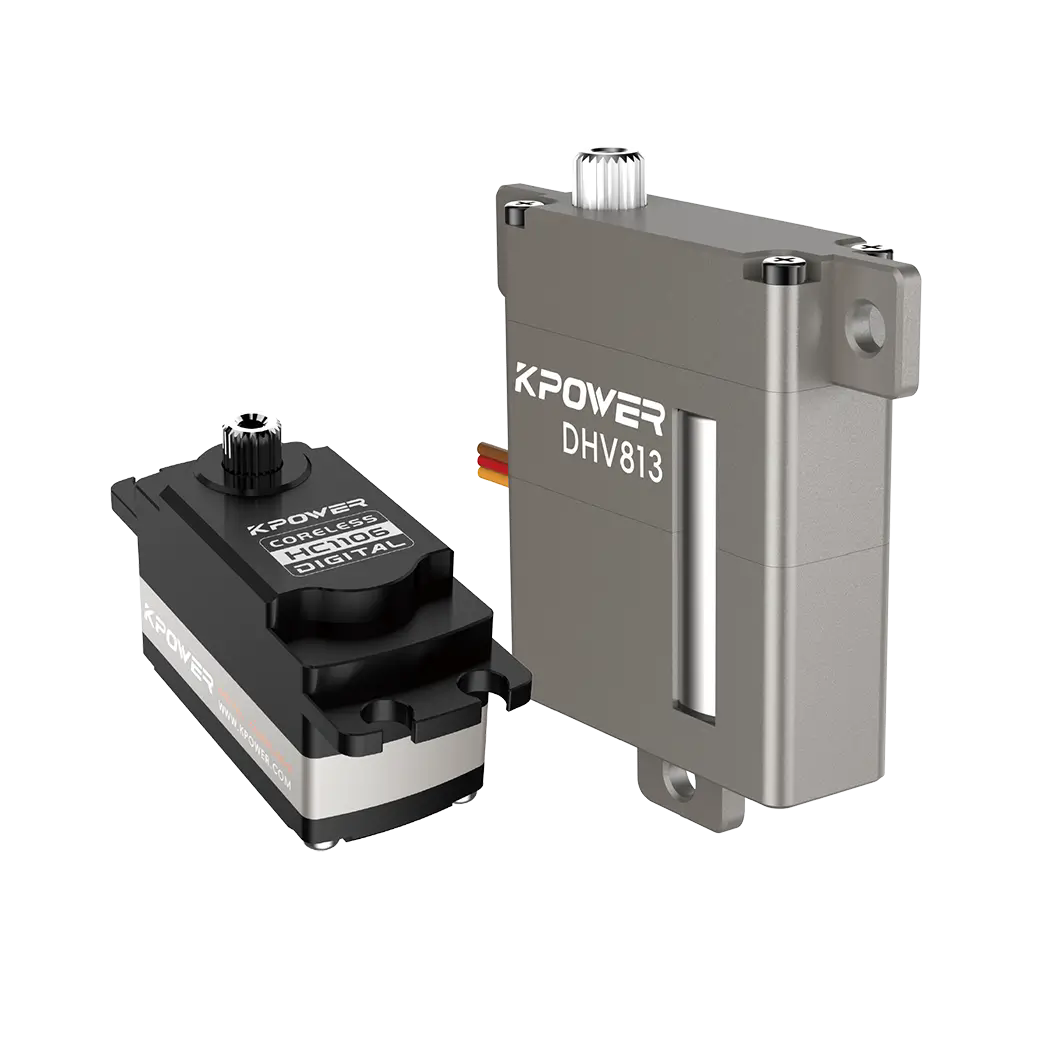
Atkpower, we see this not as a software trend, but as an engineering principle. It mirrors how we approach motion control and mechanical systems. You wouldn’t use the sameservomotor for a delicate surgical robot arm as you would for a heavy-duty industrial press. Each component is selected for its inherent properties—torque, precision, speed, durability—and then integrated into a system through standardized couplings, controllers, and communication protocols.
Our work with clients often starts by listening to the points of tension in their architectures. When we talk about applying polyglot programming, we’re essentially advocating for a similar mindset: match the intrinsic strength of the tool to the core demand of the task. It’s a philosophy that prioritizes fit-for-purpose elegance over monolithic uniformity.
The journey might start with a single service. Identify the one that feels most constrained by the current language. Prototype it in a language that feels intuitively better suited. Measure the difference—not just in performance, but in code clarity and developer satisfaction. Let that success build the case for a more deliberate, thoughtful approach.
In the end, polyglot programming in microservices is about granting yourself permission to seek the right fit. It’s acknowledging that complexity in modern systems isn’t a monolith to be carved from a single block, but a mosaic to be assembled from the best available pieces. The goal is a system where each part isn’t just functioning, but is authentically and efficiently itself, contributing to a whole that is greater, more resilient, and more capable. And sometimes, that starts by letting each service speak its own native tongue.
Established in 2005,kpowerhas been dedicated to a professional compact motion unit manufacturer, headquartered in Dongguan, Guangdong Province, China. Leveraging innovations in modular drive technology, Kpower integrates high-performance motors, precision reducers, and multi-protocol control systems to provide efficient and customized smart drive system solutions. Kpower has delivered professional drive system solutions to over 500 enterprise clients globally with products covering various fields such as Smart Home Systems, Automatic Electronics, Robotics, Precision Agriculture, Drones, and Industrial Automation.
Update Time:2026-01-19

Contact Kpower's product specialist to recommend suitable motor or gearbox for your product.