








TECHNICAL SUPPORT


Published 2026-01-19
Imagine this. You’ve built this sleek, modern application. Everything’s broken down into neat little services—one handles user logins, another manages payments, a third takes care of notifications. They all chat with each other seamlessly. It’s like a well-rehearsed orchestra. Then, one Tuesday afternoon, the payment service gets sluggish. Maybe it’s a database hiccup, maybe traffic spiked. But instead of just slowing down, it stops responding entirely. Now, every service calling it starts waiting. And waiting. Requests pile up. Threads get locked. Before you know it, that one stalling component has dragged your entire application to a grinding halt. The orchestra is in chaos because one violinist lost their sheet music.

Sound familiar? It’s the classic cascade failure in microservices. One failing component can become a single point of failure for the whole system. So, how do you stop a tripped circuit in one room from blacking out the entire house?
You install a circuit breaker.
Think of it like the electrical circuit breaker in your home. When a wire shorts or the load is too high, that little switch flips to “open.” It cuts the flow of electricity to prevent the wiring from overheating and starting a fire. It’s a protective isolation.
In software terms, a circuit breaker is a design pattern that wraps calls to a remote service. It constantly monitors for failures. If the failure count crosses a threshold, the circuit “trips” or opens. For a pre-defined period, all further calls to that service are immediately failed, without even attempting the real request. The system stops waiting on the unhealthy service and moves on, perhaps using a fallback response. After some time, it cautiously allows a test request through (a “half-open” state) to see if the service has recovered. If that test succeeds, the circuit closes again, and business resumes as usual.
It’s not about fixing the broken service. It’s about containing the failure. It’s the difference between a small, contained electrical fault and your whole house burning down.
Let’s get practical. Without this pattern, your service just keeps hammering that unresponsive endpoint. It’s like repeatedly calling a friend’s phone that you know is switched off, just listening to it ring until your own battery dies. You waste resources, you clog your own pipelines, and you guarantee a bad experience for everyone.
With a circuit breaker in place, you gain resilience. The system automatically recognizes the “sick” service and stops sending it traffic. This gives the failing service time to recover without being bombarded, and it lets the calling service fail fast. Failing fast is a superpower—it means you can quickly switch to a backup plan. Maybe you show cached data, or a simplified version of a feature, or a friendly “we’ll be right back” message. The core application stays up and responsive.
You also get valuable monitoring insights. Tripped circuits are a clear, urgent alert. They tell you exactly which dependency is causing problems, turning a vague “the app is slow” into a precise “the recommendation service is timing out.”
Implementing a circuit breaker isn’t just dropping in a library. It’s a mindset shift. You start by identifying your critical external dependencies. Which services, if they go down, would cause major disruption? Those are your first candidates.
Then, you tune the knobs: What failure threshold trips the circuit? Five timeouts in a minute? A 50% error rate? How long should the circuit stay open before testing the waters again? These settings depend on your specific tolerance. An e-commerce checkout might have a very low threshold; a background analytics call might be more forgiving.
The magic happens when you combine it with a solid fallback strategy. What should happen when the circuit is open? This is where your creativity and understanding of user needs come in. Sometimes, a default static response is enough. Other times, you might route the request to a secondary, less-up-to-date service. The key is to degrade functionality gracefully, not catastrophically.
Q: Doesn’t this just hide the problem? A: Not at all. It exposes it brilliantly, but in a controlled way. Instead of the problem hiding and crashing everything, the circuit breaker loudly declares, “Service X is sick!” while keeping the rest of the system healthy. It turns a silent, systemic killer into a noisy, localized fault.
Q: Is it hard to manage? A: Like any good tool, it requires thoughtful setup. But once configured, it operates autonomously. The complexity isn’t in running it—it’s in designing meaningful fallbacks and interpreting its state as part of your operational dashboard.
Q: Can it cause issues if it trips too easily? A: Absolutely. Overly sensitive settings can lead to unnecessary fallbacks, which might confuse users. That’s why tuning is crucial. It’s a balance between protection and over-protection, learned over time with observation.
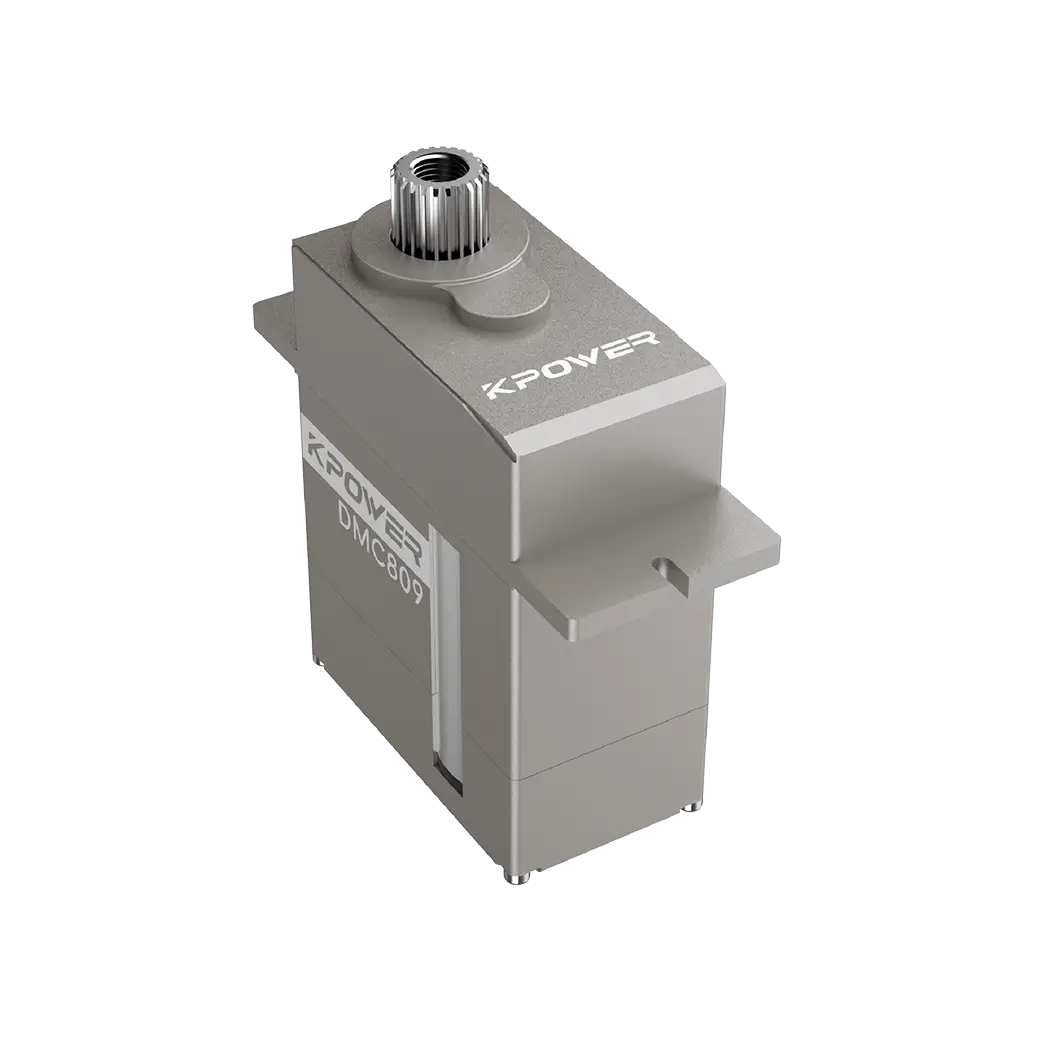
In our work atkpower, whether we’re dealing with preciseservomotors or distributed software systems, the principle is the same: design for failure. A mechanical system has wear and tear; a microservice ecosystem has network latency and unexpected loads. The circuit breaker pattern embodies this pragmatic engineering philosophy. It doesn’t assume a perfect world. It plans for a realistic one, where things break, and focuses on building systems that bend instead of shatter.
It moves the question from “How do we prevent all failures?” (an impossible goal) to “How do we fail intelligently and recover quickly?” That shift is everything. It leads to applications that feel robust and reliable, even when the complex machinery behind them is having a bad day.
So, the next time you design a service that calls out to another, pause. Think about that electrical switch on your wall. A small, simple device that prevents disaster. Your code deserves the same kind of thoughtful protection. It’s not just a technical pattern; it’s the hallmark of a system built to last.
Established in 2005,kpowerhas been dedicated to a professional compact motion unit manufacturer, headquartered in Dongguan, Guangdong Province, China. Leveraging innovations in modular drive technology, Kpower integrates high-performance motors, precision reducers, and multi-protocol control systems to provide efficient and customized smart drive system solutions. Kpower has delivered professional drive system solutions to over 500 enterprise clients globally with products covering various fields such as Smart Home Systems, Automatic Electronics, Robotics, Precision Agriculture, Drones, and Industrial Automation.
Update Time:2026-01-19

Contact Kpower's product specialist to recommend suitable motor or gearbox for your product.