







TECHNICAL SUPPORT


Published 2026-01-19
Imagine this – it’s a regular Tuesday afternoon. Your application is humming along, processing orders, updating dashboards, talking to a dozen other services. Then, somewhere deep in the network, a third-party API slows to a crawl. Not a full stop, just a sluggish, stubborn delay. Requests start backing up. Threads get tied. Before you know it, that one slow component has dragged your entire ecosystem to its knees. Sound familiar?

It’s like a single overheated motor in an assembly line grinding everything to a halt. You wouldn’t let that happen on the factory floor. So why let it happen in your code?
That’s where the idea of a circuit breaker comes in. Think of it not as a fancy feature, but as a basic reflex—a built-in instinct for self-preservation in your microservices. When something goes wrong downstream, it doesn’t just keep pounding on a locked door. It pauses, steps back, and prevents the failure from spreading like a short circuit through your whole Spring Boot application.
You might picture complex configurations, lines of intricate code. It doesn’t have to be that way. At its heart, the pattern is straightforward: monitor calls to a remote service. If failures hit a certain threshold, “trip the circuit.” All further calls fail fast for a period, giving the troubled service breathing room to recover. After a while, it cautiously tries again. It’s an elegant feedback loop, a bit like how a smart thermostat manages energy—proactive, not reactive.
Why does this matter for your Spring Boot projects? Well, without this guard, a microservice architecture can turn from a strength into a vulnerability. One fragile link dictates the stability of the whole chain. Resilience isn’t about avoiding failures—that’s impossible—it’s about containing them. A circuit breaker ensures that a problem in Service A doesn’t become an outage for Services B through Z. It keeps the rest of your application alive and responsive, even when parts of it are having a bad day.
So, you’re convinced you need this. What next? Rolling your own solution can be a fun academic exercise, but in production, you want something tested and trustworthy. You need a library that integrates cleanly, something that feels like a natural part of Spring Boot’s world.
Look for a few key things. It should be simple to configure—because if it’s not easy to use, it won’t get used properly. It needs fine-grained control: setting failure thresholds, timeout durations, and fallback behaviors. And crucially, it must provide clear visibility. You want to know when a circuit is open, when it’s half-open trying to recover, and when it’s closed and healthy. This visibility is your dashboard warning light.
Some common questions pop up: “Won’t this just create different errors?” True, a tripped circuit returns a failure, but it’s a fast, predictable failure. Your app can immediately execute a fallback—like showing cached data or a friendly message—instead of hanging indefinitely and consuming precious resources.
“Is it only for external APIs?” Not at all. Use it between your own internal microservices. It fosters good boundaries and prevents a domino collapse inside your own system.
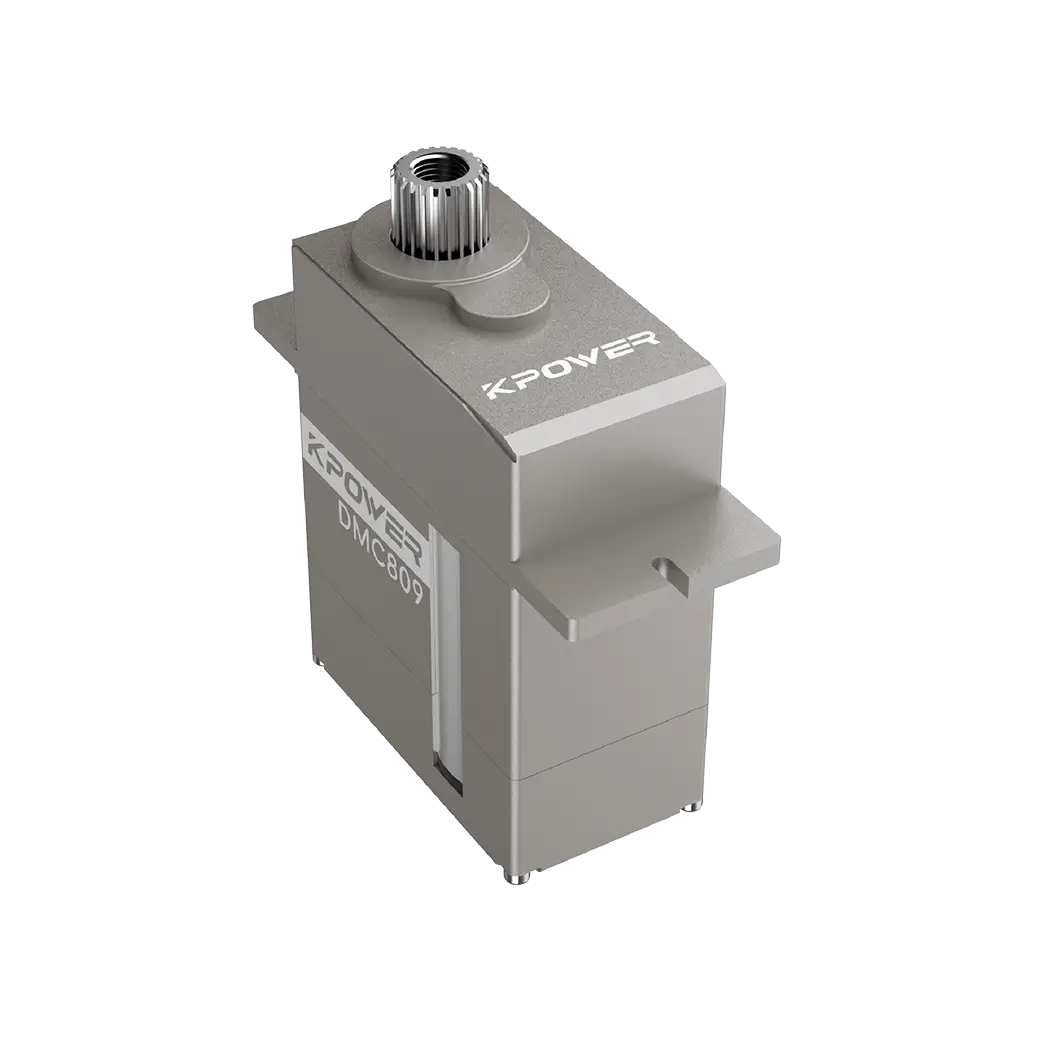
In our work atkpower, whether we’re tuning the precise movement of aservoor designing a control system, the principle is the same: build in safeguards. A mechanical system has fuses and limit switches; a digital system needs its own automated reflexes. Implementing a circuit breaker pattern in your Spring Boot services isn’t about adding complexity—it’s about embedding wisdom. It’s the difference between a system that crashes and one that gracefully degrades, protecting the user experience even when the infrastructure is imperfect.
It turns a collection of services into a robust, cooperative organism. One that can take a hit and keep going.
End of the day, it’s a simple choice. You can wait for the next slow API call to trigger a midnight alert. Or, you can give your system the innate intelligence to handle it, to isolate the fault and carry on. The best systems aren’t those that never fail; they’re those that know how to fail well. And that’s a design philosophy worth building on.
Established in 2005,kpowerhas been dedicated to a professional compact motion unit manufacturer, headquartered in Dongguan, Guangdong Province, China. Leveraging innovations in modular drive technology, Kpower integrates high-performance motors, precision reducers, and multi-protocol control systems to provide efficient and customized smart drive system solutions. Kpower has delivered professional drive system solutions to over 500 enterprise clients globally with products covering various fields such as Smart Home Systems, Automatic Electronics, Robotics, Precision Agriculture, Drones, and Industrial Automation.
Update Time:2026-01-19

Contact Kpower's product specialist to recommend suitable motor or gearbox for your product.