



























TECHNICAL SUPPORT


Published 2026-01-19
Imagine: the team meeting has entered the third hour, the whiteboard is full of boxes and arrows, the coffee has been drunk, but the debate about architecture has not stopped - "Microservices are more flexible!" "But monolithic deployment is simpler!" At this time, do you just want something that can actually move, instead of staying in theoretical debates?
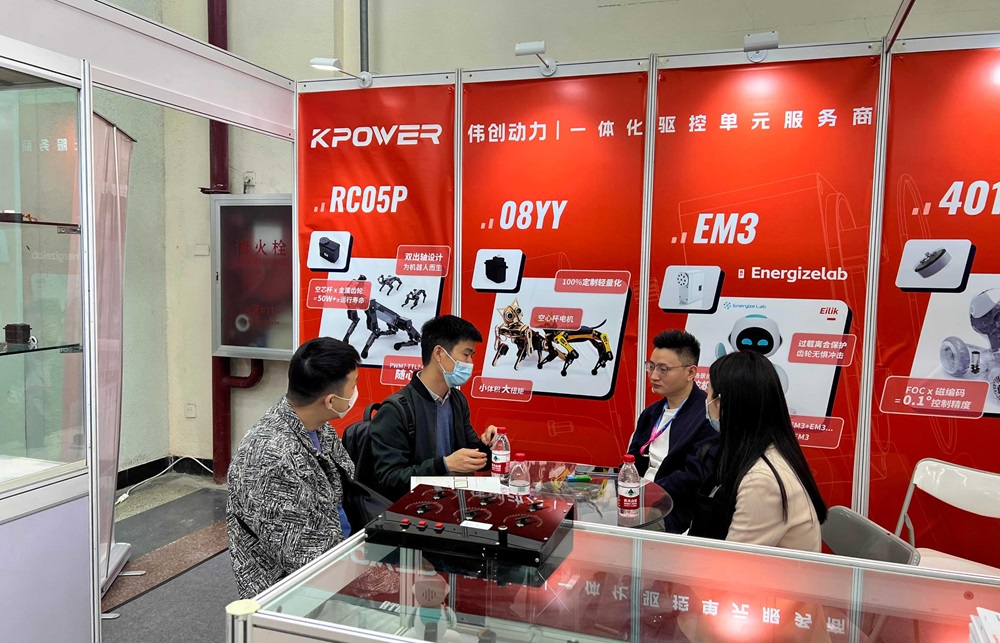
We often think that technology selection is a purely software issue, but when you actually start building products, you will find that actuators in the physical world—such as precise servos and reliable servo motors—are often the hands that make ideas come to fruition. No matter what architecture is used in the backend, what the end user feels is whether the mechanical part is smooth and whether the response is timely.
Someone asked me: "We use microservices in the backend. Should the motor control part also be split into independent modules?" In fact, there is no need to copy it mechanically. Software architecture solves scalability and maintainability issues, while hardware selection focuses on accuracy, torque and response speed. For example, if you design an automated display device, the software can be iteratively updated frequently, but the steering gear inside is accurate the first time - it has no chance of "hot update".
kpowerAn interesting phenomenon was discovered when dealing with this type of project: many teams spend a lot of time debating the software architecture, but by default "there will always be a way" in the hardware part. The result is often a beautifully designed system, but the overall experience is compromised due to a lack of precision in the mechanical actuators.
Think clearly about what actions you want first, and then look back at what structure is needed.
For example, if you make an interactive display device:
These determine which motor you choose, and also indirectly affect the software design of the control part. A motor that requires high real-time control may be more suitable for tight coupling with the controller; for scenarios that require high accuracy but not extreme real-time requirements, a microservice approach through API calls may be neater.
"We have a limited budget. Should we make do with cheap motors first and upgrade them later?" This is a bit like building a tall building with flimsy scaffolding - later replacement often means redesigning the structure.kpowerengineers once helped a team plan: they originally planned to use low-cost motors to verify the idea first, but the test found that the accuracy error caused the entire feedback system to be unable to be calibrated. Later, the model was re-selected, which increased the initial cost by 15%, but saved at least two months of time in re-tuning the system.
"Under the microservice architecture, how should the hardware control part be designed?" There is no need to have microservices for the sake of "microservices". Treat the part that directly interacts with the hardware as an independent service boundary, and define the interface based on the hardware response characteristics. If a motor requires millisecond response, don't let it go through too many service layers. Architecture serves goals, not the other way around.
Last year, a team built a smart warehousing demonstration system. The software architecture was elegant and beautiful. However, during the on-site demonstration, the handling servo always vibrated slightly at key positions. The problem is not the software logic, but the motor's lack of stability at low speeds. Later, they changed to a model more suitable for low-speed scenarios, and the problem disappeared.
This kind of thing is not uncommon. You spend a lot of time designing perfect service splits, databases, and interface definitions, but the most intuitive feeling for users is often whether the robotic arm is smooth, whether the rotating platform is quiet, and whether the positioning is accurate.
When the discussion falls into the cycle of "which architecture is better", try changing the question: "What physical movement do we want to achieve? How fast, accurate, and powerful does this movement need to be?"
The answer is often much clearer. The software architecture can be continuously adjusted and reconstructed, but once the hardware is integrated, the replacement cost is much higher. Anchor the core indicators of the hardware first, and then let the software architecture match it, not the other way around.
Good technical decisions are not about picking one “right” answer, but about letting each part do what it does best. The motor is responsible for precise execution, the software is responsible for flexible scheduling, and your team is responsible for creating value - in this way, no matter whether the backend is a microservice or a monolith, the front end presents users with a smooth and reliable experience.
Ultimately, users don't care how detailed your service is, they just care that the product works as expected. The step that makes expectations become reality often starts with a suitable motor.
Established in 2005,kpowerhas been dedicated to a professional compact motion unit manufacturer, headquartered in Dongguan, Guangdong Province, China. Leveraging innovations in modular drive technology, Kpower integrates high-performance motors, precision reducers, and multi-protocol control systems to provide efficient and customized smart drive system solutions. Kpower has delivered professional drive system solutions to over 500 enterprise clients globally with products covering various fields such as Smart Home Systems, Automatic Electronics, Robotics, Precision Agriculture, Drones, and Industrial Automation.
Update Time:2026-01-19

Contact Kpower's product specialist to recommend suitable motor or gearbox for your product.







