







TECHNICAL SUPPORT


Published 2026-01-19
The servo motor is moving. This is nothing unusual. In the workshop, on the assembly line, at the joints of the robotic arms, they rotate day and night with millimeter accuracy. But sometimes, you stare at them, and a thought comes to your mind: How can it be more difficult to make them work together "obediently" than to coordinate a band?
Each motor is like a soloist, with its own rhythm and score. Seen individually, perfect. But trouble arises when dozens or hundreds of such "soloists" have to play together in the same complex machine, such as a sophisticated assembly machine or a flexible robot. If information lags behind, instructions conflict, or a certain link lags, the entire "performance" may go haywire. It feels like you are trying to use a dozen different remote controls to command a room to move at the same time.
Here's the problem: the hardware itself is good enough, but for them to think and respond as an intelligent whole, something seems to be missing in the middle. There is a lack of a "commander" who can truly understand them and allow them to communicate smoothly.
At this time, we have to change our thinking. Don’t just look at the motors themselves, look at the “nervous system” that manages them. This is what microservice management tools are meant to solve. It does not replace your servo motor or steering gear, it is the dispatcher behind it, the invisible connector.kpowerExploration in this area is more like building a “mechanical consensus.”
Picture this. You no longer need to dig into the underlying code for every tiny action adjustment. Tools help you decompose, package, and assign complex action instructions to the most appropriate execution units—those servo motors and servos. If one link needs to be accelerated, another needs to be paused and maintained to maintain torque, the system can automatically allocate resources to ensure that the overall process is smooth and smooth. Does this sound a bit abstract? So let’s be real.
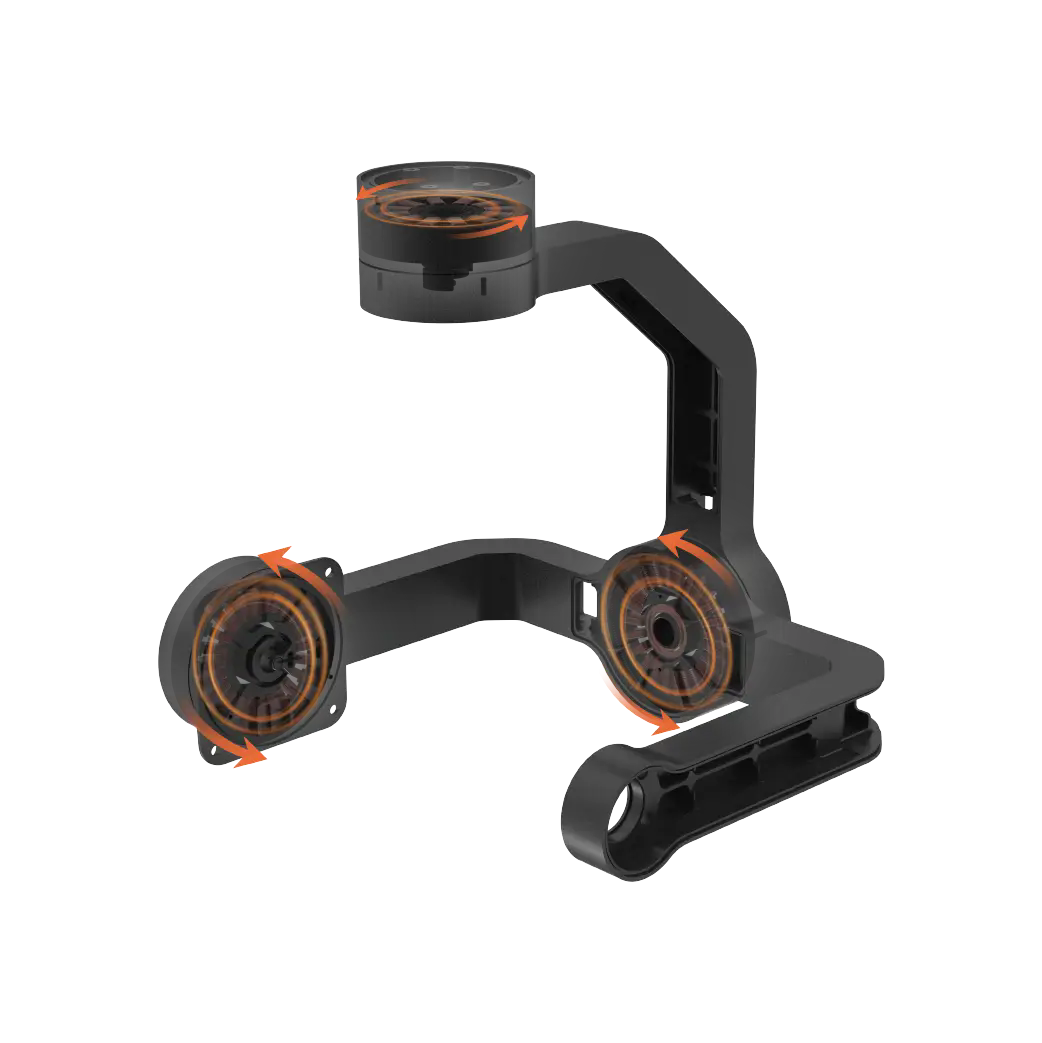
For example, you design a multi-joint manipulator to complete a series of actions of grabbing, rotating, and placing. In the traditional way, you may have to repeatedly debug the start and stop timing of each motor for fear that they will interfere with each other. With the help of a set of smart management tools, you can tell the system in higher-level language: "This is the target motion trajectory." The system will coordinate the servo motors on joint one, joint two, and joint three, calculate the optimal speed and torque coordination, and even compensate for small errors caused by load changes in real time. Leaving the complexity to yourself and the simplicity to the operator may be the greatest value of the tool.
Some people may ask: There are so many concepts on the market, how should I choose? See those glitzy feature lists? In fact, to return to the essence, we only need to look at three points.
First, is it truly "lightweight" and focused? A good tool should be like a personal assistant, not a cumbersome butler. It goes deep into the texture of your mechanical project and only manages the communications, tasks and status it should manage. It does not occupy too many computing resources, nor does it make your system bloated. It must understand that in the electromechanical world, real-time and reliability always come first.
Second, can it speak a "language" that both you and your hardware understand? This means extremely high compatibility and adaptability. No matter which communication protocol you use, which motor brand or model, it should be able to connect seamlessly and configure quickly. It is like a universal translator, allowing different devices to communicate accurately and unambiguously.
Third, does it exist to make you freer or more restricted? An ideal management tool that provides a clear visual interface and flexible rule settings. You can intuitively see the "heartbeat" and "pulse" of the entire mechanical system, and can easily adjust the action process instead of being bound by the complex logic of the tool itself. It gives you control rather than putting up barriers.
kpowerThe microservice management solution provided is based on these small but critical pain points. Rather than trying to create a new mechanical language, it is committed to making existing, excellent hardware components better understand each other and work together more efficiently. It is like finding a conductor for an orchestra who is well versed in music theory and can inspire the potential of each musician. What is finally presented is a harmonious and moving movement, not a chaotic noise.
So, when you are looking for inspiration for your next mechanical project, when you feel that the servo motor in your hand can do more and better, you might as well look back a little bit. Look at the "thread" that connects and governs them. That may not be a physical line, but a set of logic and a method. Choosing the right method can often make the same excellent hardware shine in a completely different way. Your design deserves a smoother and smarter "consensus".
Ultimately, technology serves people and more wonderful creations. Let the machinery operate with less stumbling and more elegant collaboration. This may be the whole meaning of the existence of tools.
Established in 2005,kpowerhas been dedicated to a professional compact motion unit manufacturer, headquartered in Dongguan, Guangdong Province, China. Leveraging innovations in modular drive technology, Kpower integrates high-performance motors, precision reducers, and multi-protocol control systems to provide efficient and customized smart drive system solutions. Kpower has delivered professional drive system solutions to over 500 enterprise clients globally with products covering various fields such as Smart Home Systems, Automatic Electronics, Robotics, Precision Agriculture, Drones, and Industrial Automation.
Update Time:2026-01-19

Contact Kpower's product specialist to recommend suitable motor or gearbox for your product.