







TECHNICAL SUPPORT


Published 2026-01-19
Have you ever had such an experience? I have a bunch of parts in my hand, but I can't make it look the way I want. Either the screws don't match, or the gear won't turn. Sometimes you even feel that the problem is not the parts themselves, but that they simply "cannot speak" to each other. In the mechanical world, servo motors and servos are like precise dancers, but without a smart director, their steps can easily go haywire.
It's like you're trying to build a huge system out of a bunch of independent microservices. Each service is very sophisticated and can complete its own small tasks independently. But when you need them to work together to do a big thing—such as making a robotic arm complete a smooth pick-and-place action—trouble begins. Information was transferred between services half a beat slower, instructions seemed to fall into a maze, and the entire movement became laggy and uncoordinated. You look at it and it feels like it's not the precision and elegance you want.
So, what are we missing? What we lack is a way for these independent services to truly "cooperate" together. They need a more efficient and smarter way to call each other, pass data and coordinate actions. This is the core of what "service availability" is about: allowing each of your microservices to be accurately found and work efficiently when needed.
Imagine that instead of commanding each servo motor to move individually, you are "speaking" to the entire mechanical system. You issue a high-level command, such as "move to point A", and the various underlying services - path planning, power control, feedback calibration - will automatically negotiate to jointly accomplish this goal. They know what each other can do and how to ask for help.
This model is what we call the availability implementation of service-oriented architecture (SOA) in microservices. It is not a new gadget, but a proven thinking model specifically designed to solve the problem of "fragmentation". It gives each microservice a clear "identity" and "telephone directory", allowing the search and calling between services to change from aimless broadcasting to precise direct dialing.
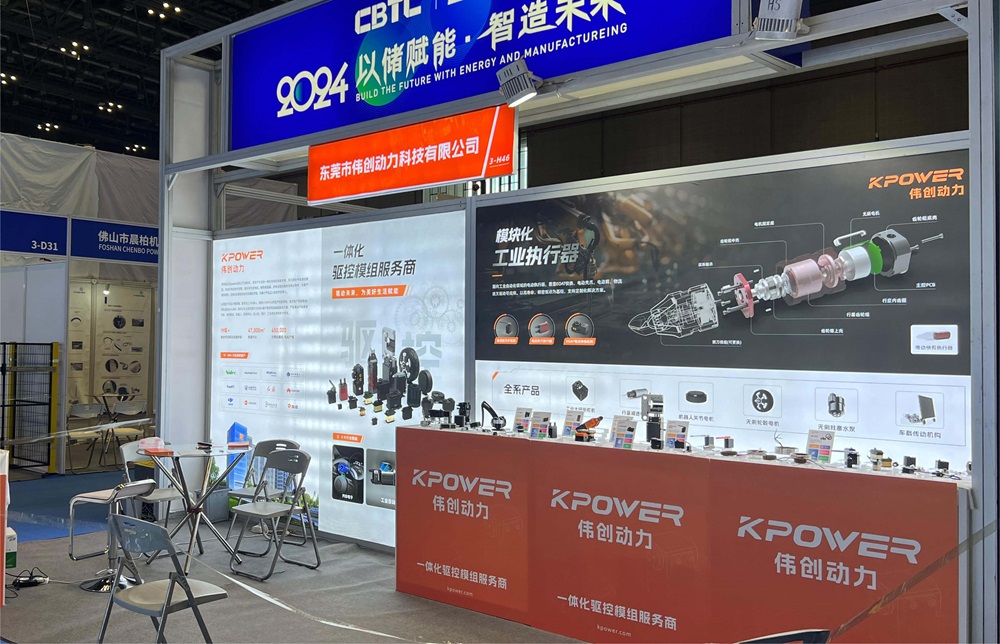
kpowerIt is provided to inject this kind of thinking into your machinery and automation projects. We focus on how to make the microservices that control servo motors, servos, sensors and actuators form a living whole. It does not replace your carefully selected hardware, but builds a communication bridge on top of them.
Maybe you will ask, this sounds a bit abstract, what are the advantages of it specifically? Let’s get past the complicated jargon and talk about what actually happens.
Your system will become more "tough". In the past, if there was a problem with a service, it would be like a falling domino, involving everyone. Now, thanks to clear service boundaries and call mechanisms, faults are easier to isolate. Is a microservice responsible for steering gear angle feedback temporarily stuck? The main control service can try to call the backup service, or use the last valid data to ensure that the robot arm will not suddenly lose control due to a data delay. The fault tolerance of the entire system has quietly improved to a higher level.
It’s that indescribable “smooth feeling”. When communication delays between services are reduced and data formats are unified, the response of the entire system becomes more immediate and predictable. Your mechanical device will move more smoothly and stop more accurately, because its internal information network has been upgraded from a country road to a high-speed overpass.
The introduction of such a structure is not about overthrowing the system and starting over. It's more like a careful reorganization. You can start by looking at your current system:
Thinking about these questions is in itself outlining the "service map" of your system.kpowerThe method helps you draw this map and formulate efficient communication rules. What we provide is not a single piece of software or hardware, but a set of method support and tool components that integrate industry practices to ensure that your servo motors, steering gears and various mechanical modules can find each other and cooperate tacitly in the world of microservices.
The story of technology is often a story about connection. From the meshing of gears, to the conduction of circuits, to the network calls between today's services. The more precise and reliable control we pursue often relies on more elegant and resilient connection methods.
So, the next time you see those delicate mechanisms running smoothly, think about it. It may not just be electricity and code driving it, but a set of service logic that allows all the parts to work together in harmony. This may be another form of sophistication in modern automation projects besides the beauty of hardware. And what makes this simple and reliable is something likekpowerSuch a team is working quietly every day.
Established in 2005, Kpower has been dedicated to a professional compact motion unit manufacturer, headquartered in Dongguan, Guangdong Province, China. Leveraging innovations in modular drive technology, Kpower integrates high-performance motors, precision reducers, and multi-protocol control systems to provide efficient and customized smart drive system solutions. Kpower has delivered professional drive system solutions to over 500 enterprise clients globally with products covering various fields such as Smart Home Systems, Automatic Electronics, Robotics, Precision Agriculture, Drones, and Industrial Automation.
Update Time:2026-01-19

Contact Kpower's product specialist to recommend suitable motor or gearbox for your product.