TECHNICAL SUPPORT


Published 2026-01-19
Does this scene sound familiar?
Many friends who work on mechanical projects have encountered this kind of trouble. The hardware itself is becoming more and more sophisticated, but the software has become a bottleneck. It's not because the technology isn't good, it's because the architecture hasn't kept up.
Let's say you use a centralized control system to manage all your motors and sensors. It started out smooth, but as functions were added - such as adding visual recognition or network monitoring - the code became like a mess. Changing one place may affect ten places, and the amount of testing will increase exponentially. What’s even more troublesome is that as the hardware iterates, the software is difficult to update simultaneously.
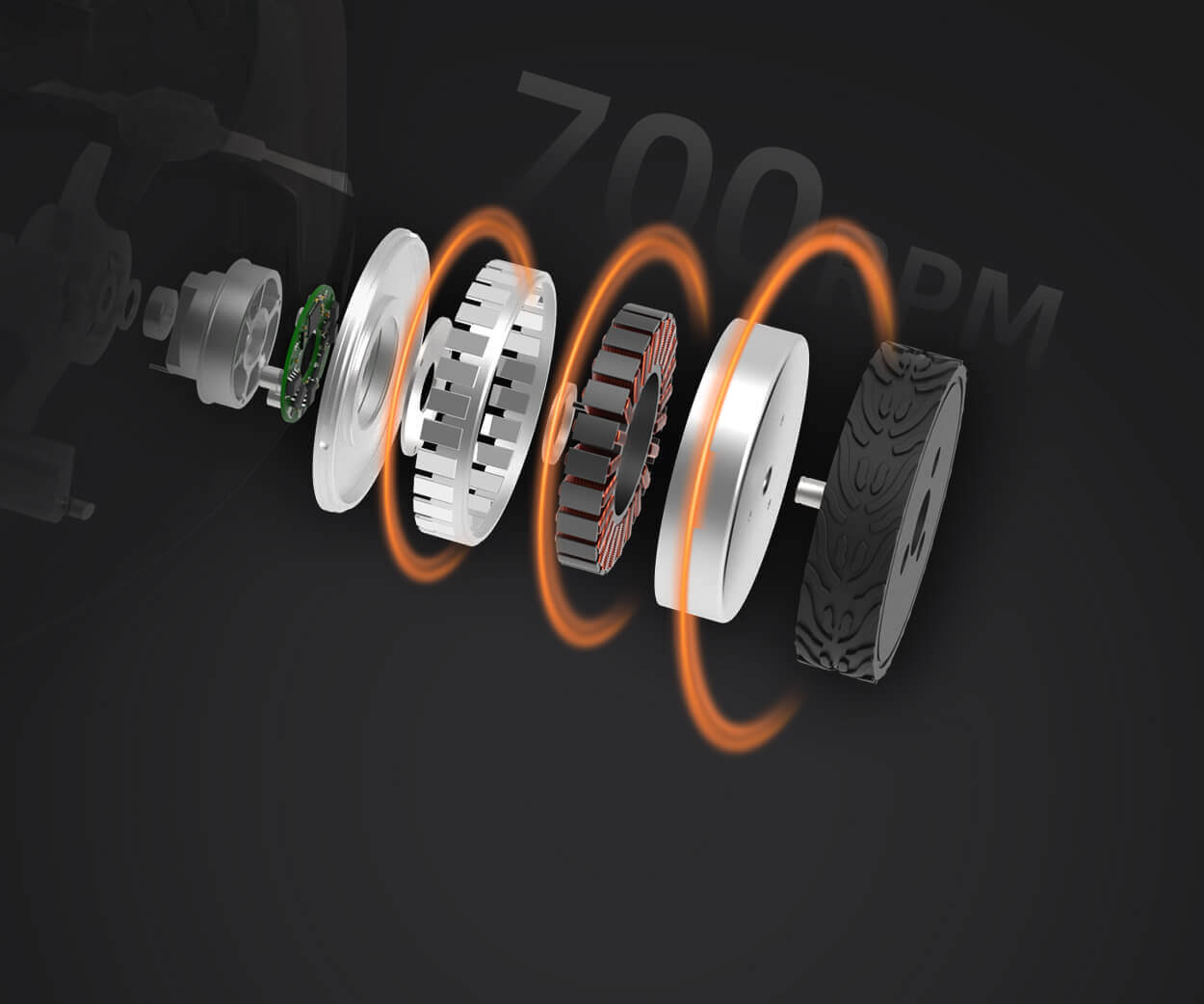
A friend who has worked on an automated assembly line complained to me: "We have more than twenty servos in one equipment, and each one needs to be calibrated independently. Later, the customer wanted to add a remote diagnosis function, and almost rewrote the entire control program." It's like you carefully built a sports car, the engine is very strong, but the gearbox is always stuck.
What about another way of thinking?
If the entire control system is split into multiple independent small modules - each module is only responsible for one thing, for example, one module is responsible for the movement trajectory of a certain group of servo motors, another is only responsible for temperature monitoring, and another is responsible for processing user instructions - will things be simpler?
This is the core of the microservices architecture: breaking it into parts. In a mechanical project it can be mapped like this:
Like Lego bricks. If you want to add a tower to the castle, you don't need to dismantle the entire castle. You just need to assemble new modules on the side and make a stable connection.
kpowerThe team once assisted a robotic arm project in renovating the structure. The original control system was a typical "big one" with all the logic tied together. Adding a simple force feedback function involves changing more than seventy files.
They refactored it into seven microservices: motion planning, motor drive, safety monitoring, user interface, data log, communication interface, and error handling. Each service is deployed independently and can even be written in different languages.
The result? The time to roll out new features has been reduced from an average of two weeks to three days. During debugging, if there is a problem with the motor drive service, you only need to restart the service without stopping the entire robotic arm. Teams can develop in parallel, with one person tracking and another improving the user interface without interfering with each other.
You may be thinking: “Sounds great, but I’m halfway through the project and it’s too expensive to start over.”
In fact, there is no need to push it down. You can start piloting with edge functions. For example, first split data logging or alarm notification into independent services. These modules are relatively independent, have little impact on the core control logic, and can quickly verify the effect.
Key steps:
This is not like replacing the entire engine, but more like upgrading the modular sound system of the car - improving the experience without affecting the original driving functions.
"Will microservices increase complexity?" In the short term, managing multiple services is indeed more troublesome than a single program. But in the long run, it reduces the entanglement complexity within the system. Just like organizing a tool box, separate screwdrivers, wrenches, and electrician's pliers to make them easier to find.
"Do hardware projects need such a 'soft' architecture?" Which high-end device today can't do without software? The precision of machinery depends on servo motors, and the potential of motors depends on flexible and reliable software. The two have long been inseparable.
"Is it suitable for small teams?" It is precisely because of limited resources that we are more afraid of duplication of work. Microservices allow teams to focus on smaller tasks and reduce coordination overhead. One person can be responsible for motor control services and another person specializes in user interface. The boundaries are clear and the cooperation is smooth.
A good structure should not be a constraint, but a support. It stays quietly under the hood, allowing your team to focus more on hardware innovation, user experience—rather than endlessly resolving code conflicts and deployment failures.
The charm of mechanical projects lies in turning ideas into physical objects, watching the motor rotate accurately and the mechanism smoothly perform tasks. The goal of software architecture is to prevent this focus from being weighed down by technical debt.
The next time you have a headache about changing a certain function, you might as well think about it: If this function was an independent module, would the situation be different? Sometimes the best way to move forward isn’t to push harder, but to switch gears.
Just like building blocks, the parts are still the same, but the assembly method has changed, and the possibilities open up.
Established in 2005,kpowerhas been dedicated to a professional compact motion unit manufacturer, headquartered in Dongguan, Guangdong Province, China. Leveraging innovations in modular drive technology,kpowerintegrates high-performance motors, precision reducers, and multi-protocol control systems to provide efficient and customized smart drive system solutions. Kpower has delivered professional drive system solutions to over 500 enterprise clients globally with products covering various fields such as Smart Home Systems, Automatic Electronics, Robotics, Precision Agriculture, Drones, and Industrial Automation.
Update Time:2026-01-19

Contact Kpower's product specialist to recommend suitable motor or gearbox for your product.