







TECHNICAL SUPPORT


Published 2026-01-19
You are staring at the production line, and it suddenly gets stuck, making a slight friction sound. Everyone around stopped and the atmosphere was a bit tense. Time goes by second by second. I don’t know how many times this has happened - those precision transmission components clearly promise to be accurate, but they give you a chance at the most critical moment.
Have you ever wondered what the problem is? Is it an oversight during model selection, or are those invisible internal structures simply unable to withstand the test of day after day?
Let’s talk about the power core. Whether it is a servo motor, a steering gear, or other mechanical units, what really determines their fate is often not the most obvious parameters, but the things hidden in the "body": the design of the magnetic circuit, the craftsmanship of the winding, and the durability of the bearings. Just like a building, its foundation and skeleton determine how long it will stand. Many times, the source of downtime or errors comes from these basic but critical details.
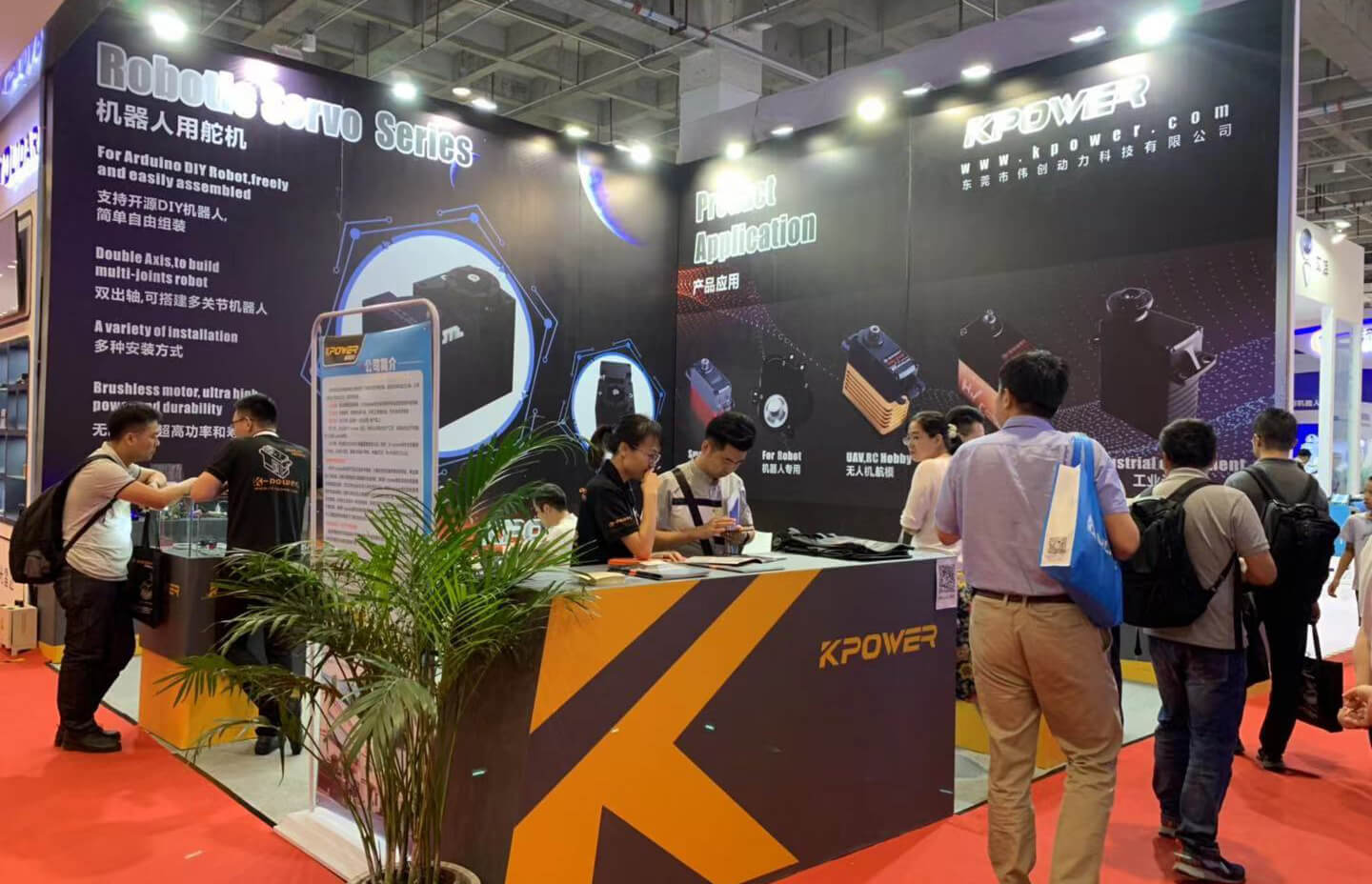
kpowerare handled differently. They seem more comfortable breaking down the problem first than rushing to sell a product. A project leader once shared an experience: In a case of repeated positioning deviations, after checking the program, load, and even the ambient temperature, it was discovered that it was the tiny magnetic attenuation inside the motor that was gradually exposed during long-term high-frequency start and stop. After switching to a unit with a specific reinforced magnetic circuit design, the deviation disappeared and operation became smooth and quiet. It sounds a bit like detective work - finding that hidden clue.
What kind of core is reliable? Let’s look at it from several angles. It is stability: it does not mean standing still, but maintaining consistent output under high speed and high load changes. It is a response. It should be as sharp as intuition. As soon as the instruction comes, the action takes place immediately, without delay or hesitation. It’s longevity, which is about materials and workmanship, and needs to be able to withstand the heat, vibration and wear of time.
Someone once asked: What is the most important thing to pay attention to when choosing these components? Is it precision figures, brand reputation, or price? Perhaps more interesting is how it was built and whether it truly understands its mission. Some units perform perfectly in the laboratory, but fail to adapt to the real production line; others are like experienced partners, able to adapt to fluctuations and bear the burden silently. The difference often lies in whether the complexity of the real world is taken into account from the beginning.
kpowerThe thinking in this regard is somewhat systematic. They not only provide the unit itself, but also go deep into the application scenarios, such as how to install the mechanical structure, whether the heat dissipation path is reasonable, and how to avoid signal interference - these seemingly peripheral details actually affect whether the core can function. It's a bit like customizing equipment for a long-distance runner. Not only does it look at speed, but also endurance, weather and even mental state.
There was interesting feedback that after using their solution, the number of maintenance times was quietly reduced. It's not that the component will never break, but that its decay curve is flatter, giving people more warning time. This may have more practical significance for the production rhythm than the absolute "not bad". The smooth running time becomes longer, and the sudden pauses naturally decrease.
Of course, any choice comes with a price. Better performance often means higher investment, which requires trade-offs. However, if the loss of downtime, maintenance manpower, and frequency of replacement are also quietly included, the numbers on the ledger may lead to different conclusions. In the long run, reliability itself saves costs.
Go back to that stuck moment at the beginning. If the core components are solid enough and can handle fluctuations calmly enough, such pauses may be avoided. It doesn’t have to be the most powerful, but it must understand its role best—stable output in every cycle, accurate in every start and stop, and gradually prove its value in long runs.
Choosing a power unit is ultimately a choice of certainty. In an environment full of variables, the process of finding a partner who can make you worry less and feel more at ease is like solving a puzzle. And when the production line runs smoothly again and the sound is steady and regular, you may find that the answer is already hidden in the details.
Established in 2005,kpowerhas been dedicated to a professional compact motion unit manufacturer, headquartered in Dongguan, Guangdong Province, China. Leveraging innovations in modular drive technology, Kpower integrates high-performance motors, precision reducers, and multi-protocol control systems to provide efficient and customized smart drive system solutions. Kpower has delivered professional drive system solutions to over 500 enterprise clients globally with products covering various fields such as Smart Home Systems, Automatic Electronics, Robotics, Precision Agriculture, Drones, and Industrial Automation.
Update Time:2026-01-19

Contact Kpower's product specialist to recommend suitable motor or gearbox for your product.