






















TECHNICAL SUPPORT


Published 2026-01-19
Remember the last time your team crashed because of a module and the entire application was paralyzed? The feeling of being in a hurry is like a water pipe bursting in a building, causing the entire building to lose power. Traditional architecture is sometimes so fragile - if there is a problem in one place, there will be problems everywhere.
But things could actually go another way.
Imagine if the appliances in your home were not all connected to the same circuit, but were independent but cooperating tacitly. If the light tube is broken, the air conditioner can still operate as usual; when the TV system is upgraded, the refrigerator is not affected at all. This is what the microservice architecture pursues - splitting a large application into multiple independent small services, each of which only focuses on one thing.

What are the benefits of doing this? It's elasticity. When one service fails, it doesn't knock down all the others like dominoes. You can fix it alone while the rest of the system remains online. It's flexibility. When you need to update a feature, you don't have to redeploy the entire behemoth. It's like replacing just one window in your house without having to knock down the entire wall and start over.
So the question is: How to dismantle it well?
Demarcating service boundaries is a bit like slicing a cake – cut it too finely and you’ll be left with crumbs; cut it too big and you’ll lose the sense of flexibility. A good rule of thumb is to divide it around business capabilities. Each microservice should correspond to a complete business domain, run independently, have its own data, and talk to other services through clear interfaces.
At this time, the communication mechanism becomes key. How do we talk to each other? Is it a synchronous call, or asynchronous communication through events? Synchronous calls are simple and direct, but can easily cause chain dependencies; event-driven is more decoupled, but increases complexity. There is no absolute right or wrong, only appropriateness or inappropriateness. Just like the bite between gears, if it is too tight, it will wear, if it is too loose, it will slip. You have to find the just right tension.
By the way, data management is also a topic that cannot be avoided. Each service manages its own database, which brings autonomy but also the challenge of data consistency. Sometimes you will need data views across services. At this time, you can avoid direct coupling at the database level through event synchronization or the establishment of read-only replicas. Remember, a shared database is often the first step in microservices degenerating into a distributed monolithic system.
When you have dozens or even hundreds of services, how do you monitor them? How to track which services a request traverses? Unified log collection, link tracking, and health check dashboards are no longer a luxury, but a necessity. Automated deployment and configuration management also become critical - manually managing so many services is an almost impossible task.
This sounds a bit complicated, right? But think about it from another perspective, when you break the system into small pieces, the complexity of each piece is actually reduced. You can use the most suitable technology stack to implement different services, and the team can develop and release more independently. Just like a band, each musician is proficient in his own instrument, but when they play together, they create a harmonious whole.
Of course, microservices are not a silver bullet. It will bring network delays, distributed transaction troubles, and increased operation and maintenance complexity. Therefore, not every project needs to start with microservices. Sometimes, a well-structured monolithic application is simpler and more efficient.
But when the business you face really requires rapid iteration, independent expansion, and high fault tolerance, the microservice architecture provides a feasible path. The key is to take it step by step and don't try to do it all at once. Start by splitting modules with clear boundaries, and gradually build supporting infrastructure and team capabilities.
uskpowerWhen assisting customers to implement this type of architecture, we often find that success does not lie in how advanced the technology is, but in whether it fits the real business rhythm. Just like oiling a machine, more is not better, but oiling in the right places.
The essence of architecture is to manage complexity. Microservices simplify the complexity of each part through splitting. Although it introduces new topics of coordination, many times, the trade is worth it. It makes the system more flexible and adaptable to change.
If you are considering this path, you might as well start small, verify whether the division of a service boundary is reasonable, and then gradually roll out. Technology ultimately serves a purpose, and finding the balance that makes the system—and the people who build it—work more smoothly is what’s really important.
After all, a good architecture should not make people feel its existence. It is like air that naturally supports everything.
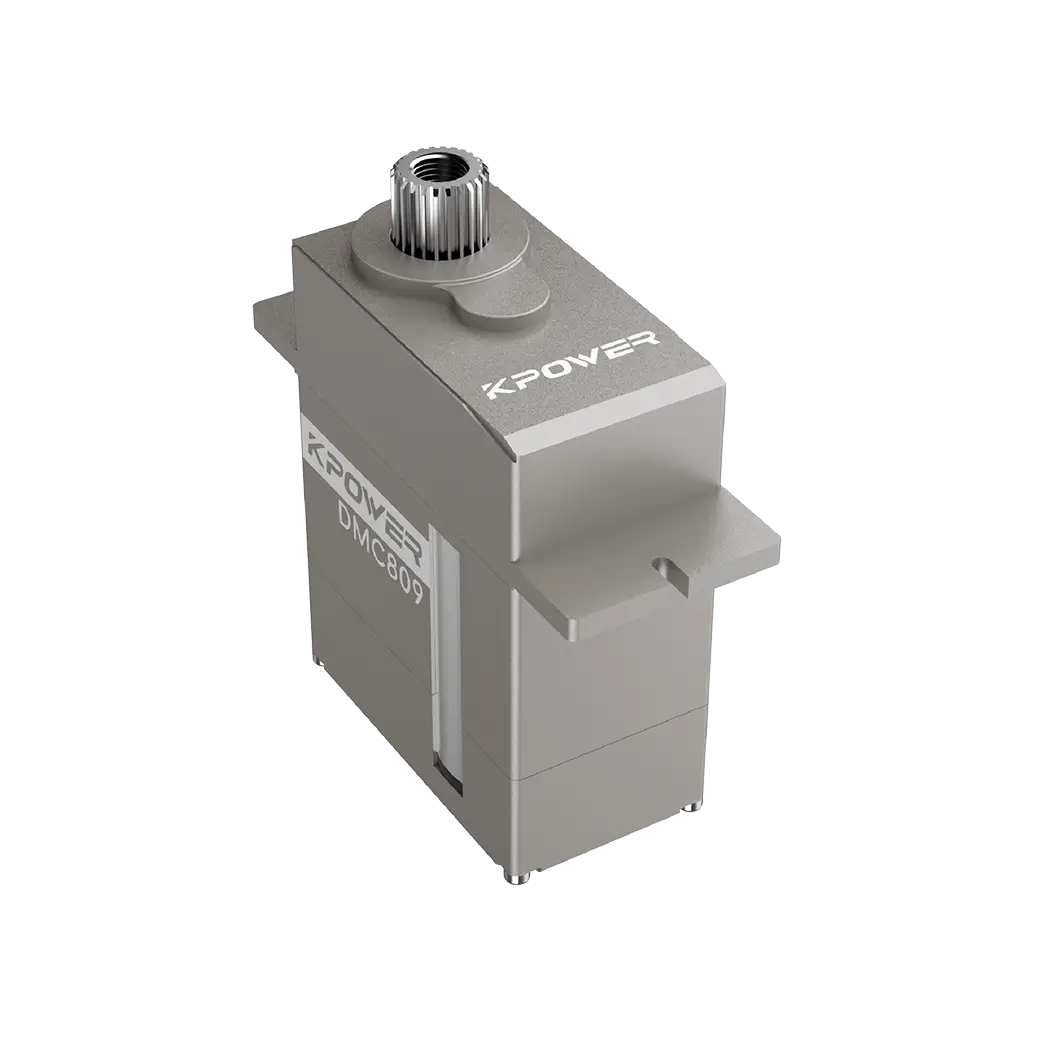
Established in 2005,kpowerhas been dedicated to a professional compact motion unit manufacturer, headquartered in Dongguan, Guangdong Province, China. Leveraging innovations in modular drive technology,kpowerintegrates high-performance motors, precision reducers, and multi-protocol control systems to provide efficient and customized smart drive system solutions. Kpower has delivered professional drive system solutions to over 500 enterprise clients globally with products covering various fields such as Smart Home Systems, Automatic Electronics, Robotics, Precision Agriculture, Drones, and Industrial Automation.
Update Time:2026-01-19

Contact Kpower's product specialist to recommend suitable motor or gearbox for your product.