TECHNICAL SUPPORT


Published 2026-02-25
Friends, when you get aservo, whether you are making a robot, a model, or a product prototype, have you ever been curious about what type of motor is the core component hidden in that small shell? Many friends who are new to steering gear often only know that it can turn to a specified angle, but they don't know much about the mystery of the "heart" that drives it. If you choose the wrong one, it may cause the vibration to be weak at best, or burn out the circuit at worst, which is really a headache. Today we will discuss this core issue thoroughly.
To put it simply and directly, mostservos use brushed DC motors. This is the most common, cost-effective option. You may ask, why is it not an AC motor like the electric fan at home? Because the steering gear works on DC power, it needs to accurately control the rotation. The brush motor has a simple structure and only needs to be connected to DC power to rotate. It is especially suitable for scenarios such as small size and high control accuracy such asservos. If you take apart an ordinary servo, what you will most likely see is this small cylindrical motor with two terminals.
Of course, with the advancement of technology, some high-end servos have begun to use brushless DC motors. This kind of motor has no brush friction, is more efficient, has a longer life, and is stronger. However, it requires more complex control circuits, so it usually appears on highly demanding robots or model aircraft. For most of our entry-level or mid-level applications, brushed motors are still the absolute workhorse.
When you get a steering gear and want to quickly judge whether its motor is good or bad, the most direct way is to look at its parameters: voltage and no-load speed. If you think about it, it's like looking at a car's displacement and top speed. The voltage determines how many batteries it can be powered by, and the no-load speed tells you how fast it turns when there is no load. For example, for common servos, the no-load speed may be around 0.1 seconds/60 degrees under 6V voltage. The smaller the number, the more sensitive the motor response is.
Another key indicator is stall torque. You can understand how powerful the motor can be when it is stuck and cannot rotate. This is closely related to the size of the magnet inside the motor and the number of winding turns. When choosing a servo, if you want to make a robotic arm, you have to choose one with high torque; if you just control the camera gimbal, sensitivity is more important than strong strength. By looking at these parameters, you can basically judge whether this motor is suitable for your project.
The speed of the motor directly determines the response speed of the steering gear. You think, if the motor itself rotates slowly, no matter how powerful the control chip is, it will be difficult for the servo to reach the designated position quickly. This is like a runner whose leg frequency is slow and cannot run fast no matter how hard he trains. Therefore, in scenarios that pursue high-speed response, such as competitive robots, you must choose a servo with a high motor speed.
In addition, the power of the motor affects the load capacity of the steering gear. If the motor power is insufficient and the load driven is slightly heavier, the servo will shake, heat up, or even burn out. It's like a small horse pulling a big cart, something will go wrong sooner or later. Therefore, when selecting a model, you have to estimate the weight of what the servo will push, then leave a certain margin and choose a servo with a slightly larger motor power, so that the system will be stable and reliable and will not drop the chain at critical moments.
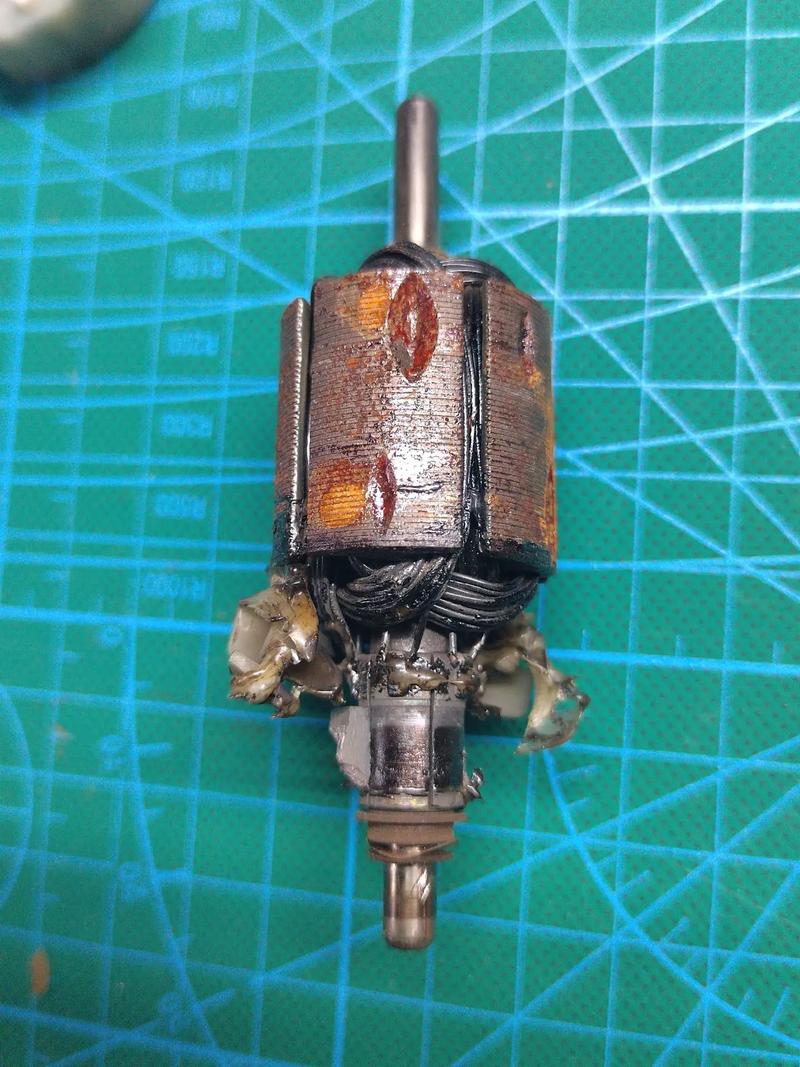
Let’s first talk about the advantages of brushed motors: they are cheap and easy to control. You can buy an ordinary servo for a few dozen yuan, and it can be driven by any microcontroller. If it breaks, you'll have to replace it. So for most DIY projects, teaching demonstrations or product prototype verification, brushed motor servos are the king of cost performance. The small six-legged robots I made in the early days all used brushed servos, and they ran quite happily.
Let’s talk about the advantages of brushless motors: high precision, low noise, and long life. Because it has no brush friction and produces little electromagnetic interference, it is suitable for use in precision instruments or medical equipment. However, the disadvantage is that it is expensive and the control circuit is complex, usually requiring a special driver. Therefore, unless your project has extreme requirements for performance and longevity, or has a sufficient budget, a practical brushed servo is completely sufficient.
The first step is to calculate the load. How heavy is the thing you want to drive? What is the turning radius? This directly determines how much torque you need for the servo. For example, to make a simple mechanical claw, the torque required to clamp a table tennis ball is very different from that of an iron block. You can make a rough estimate and choose a servo with a torque 20%-30% larger than the demand, which is safer.
The second step is to look at the power supply. Is your project battery or USB powered? What is the battery voltage? This determines that you should choose a servo with matching working voltage. For example, if two lithium batteries are used for power supply and the voltage is around 7.4V, then you have to find a servo that supports this voltage range, otherwise it will either turn slowly or burn out. At the same time, we must also consider the current, multiple servos moving at the same time, and whether the power supply can withstand it. These must be calculated clearly.
I have seen many friends who initially pursued high speed and chose a very fast-rotating servo, only to find that it shook badly with even the slightest load. This was because the torque was ignored. Motor speed and torque are often inversely proportional, and those that rotate faster usually have less power. You have to find a balance between speed and power, or adjust it through the gear set outside the servo, but the gear set also has limits.
Another pitfall is to ignore the operating voltage. Some people take a 5V servo and connect it directly to the 12V power supply, and it instantly emits smoke. It's like charging a mobile phone with high voltage, it will definitely be scrapped. Be sure to check the nominal voltage range of the servo to ensure that your power supply system can stably provide this voltage. In addition, pay attention to heat dissipation during installation. It is normal for the motor to heat up when running for a long time under heavy load, but overheating will cause demagnetization and performance degradation, so necessary heat dissipation measures are still necessary.
Having said so much, in fact, choosing the motor in the steering gear is like choosing a suitable heart for the project. Once you understand the principles and parameters, you will have a good idea. I would like to ask you, what is the most troublesome steering gear selection problem you have encountered in the projects you have done? Or in the project you are currently working on, do you have any special concerns about the torque and speed of the servo? Welcome to share your experiences and confusions in the comment area, and let’s discuss and solve them together. If you find the content useful, don’t forget to give it a like and share it with your friends who are also makers, so that we can all avoid detours together!
Update Time:2026-02-25

Contact Kpower's product specialist to recommend suitable motor or gearbox for your product.