







TECHNICAL SUPPORT


Published 2026-03-09
The steering gear does not rotate smoothly, shakes, and freezes. This should be the most common problem encountered by many friends who play with robots or make makers. Obviously the program has been written and the structure has been set up, but theservomotor is stuck one by one, which particularly affects the final effect. Don’t worry, today we are going to talk about how to change the steering gear from “trembling” to “smooth”.
If theservodoes not rotate smoothly, it is often not because it is broken, but because the instructions we give it are too "rigid". Imagine asking a person to sprint from a standstill to a speed of 10 kilometers per hour. He will definitely stagger. The same goes for the servo. If you directly let it jump from 0 degrees to 90 degrees instantly without a transition, the result will be that it rushes over, and then because the inertia is too much, the controller desperately pulls it back, causing jitter. Simply put, the problem lies in the "mutation" of the control signal.
To make the servo rotate smoothly, the core idea is to "interpolate" it in the software. Don't you want it to go from point A to point B? Then let's not jump directly, but artificially insert many, many intermediate positions between A and B. For example, from 0 degrees to 90 degrees, we can break it into 90 small steps from 0 to 1, 1 to 2...all the way to 90 degrees. Then, every short time (such as 20 milliseconds) let the servo go to the next position. In this way, the servo will move forward in small steps, and it will look naturally smoother. It's like a cartoon, the faster the scene switches, the smoother the action becomes.
Position interpolation alone is not enough. If the speed changes suddenly, it will also jitter. This leads to the concept of "acceleration". Let’s use the analogy of driving a car. When you accelerate from a standstill to 60 kilometers per hour, should you keep your foot on the gas pedal, or should you step on the accelerator slowly? Apparently accelerating slowly makes passengers more comfortable. For the servo, we can also control its acceleration. In the starting stage, make the distance of each step smaller and the speed slower; after it starts to move, gradually speed up the distance of each step, that is, increase the speed; when it approaches the target point, gradually slow down so that it can stop accurately and softly. This acceleration-constant-deceleration process is an S-shaped acceleration and deceleration curve, which can make the rotation process extremely smooth.
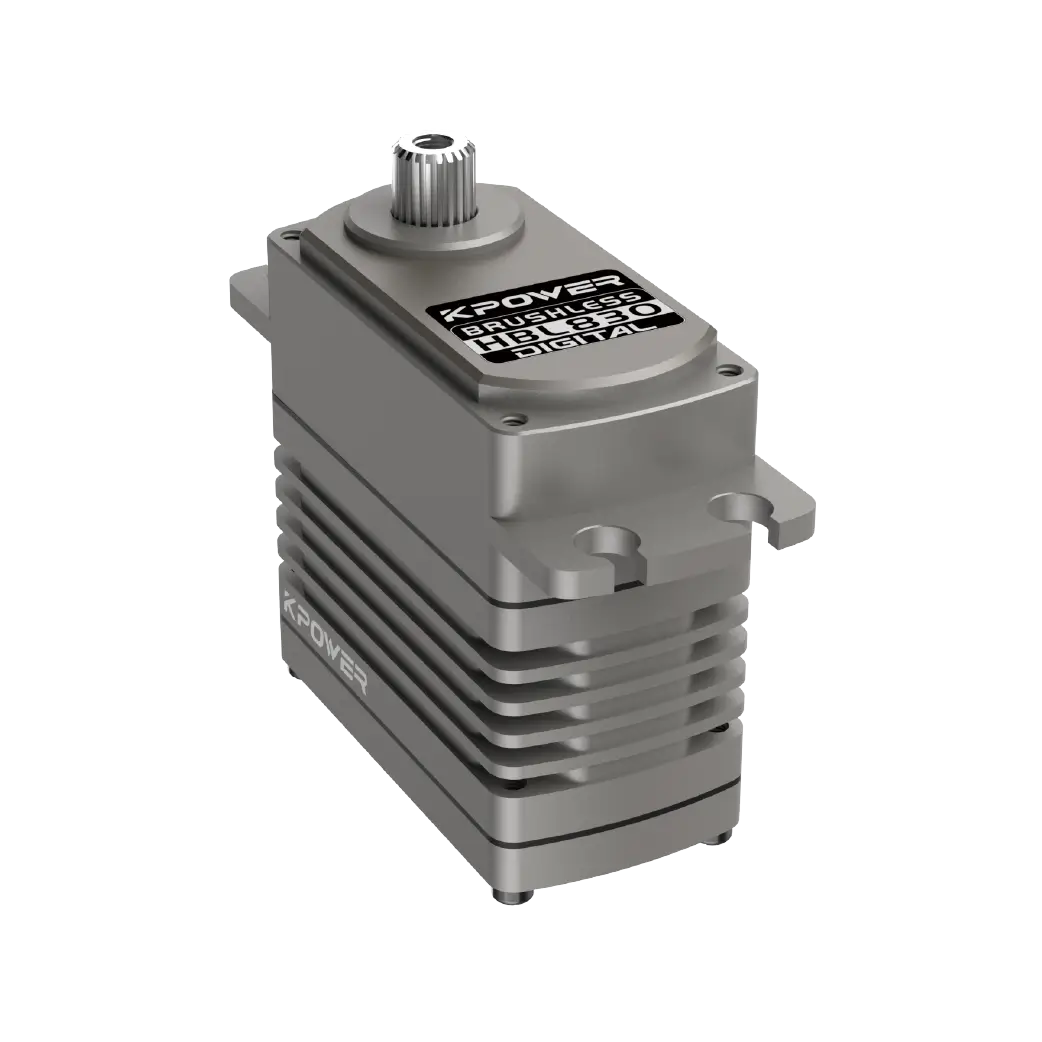
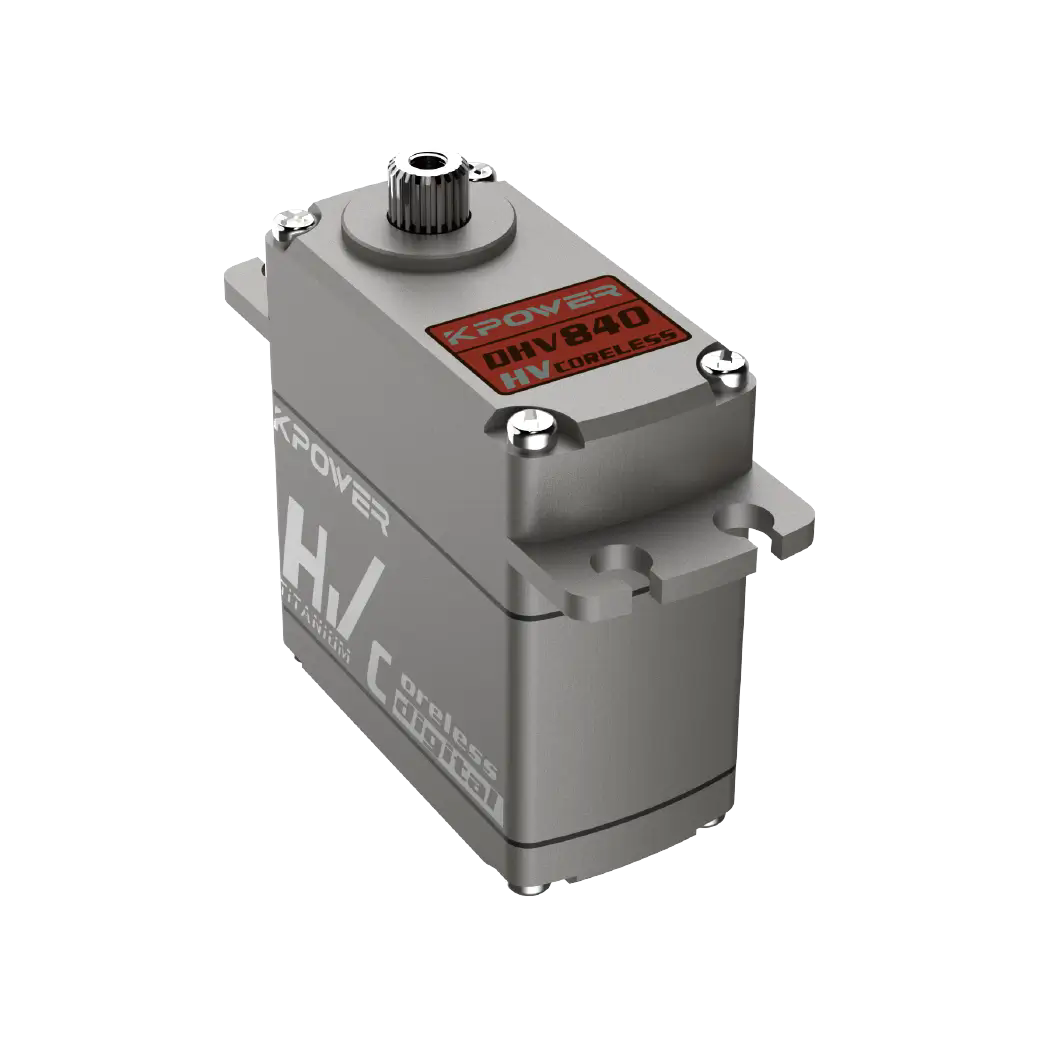
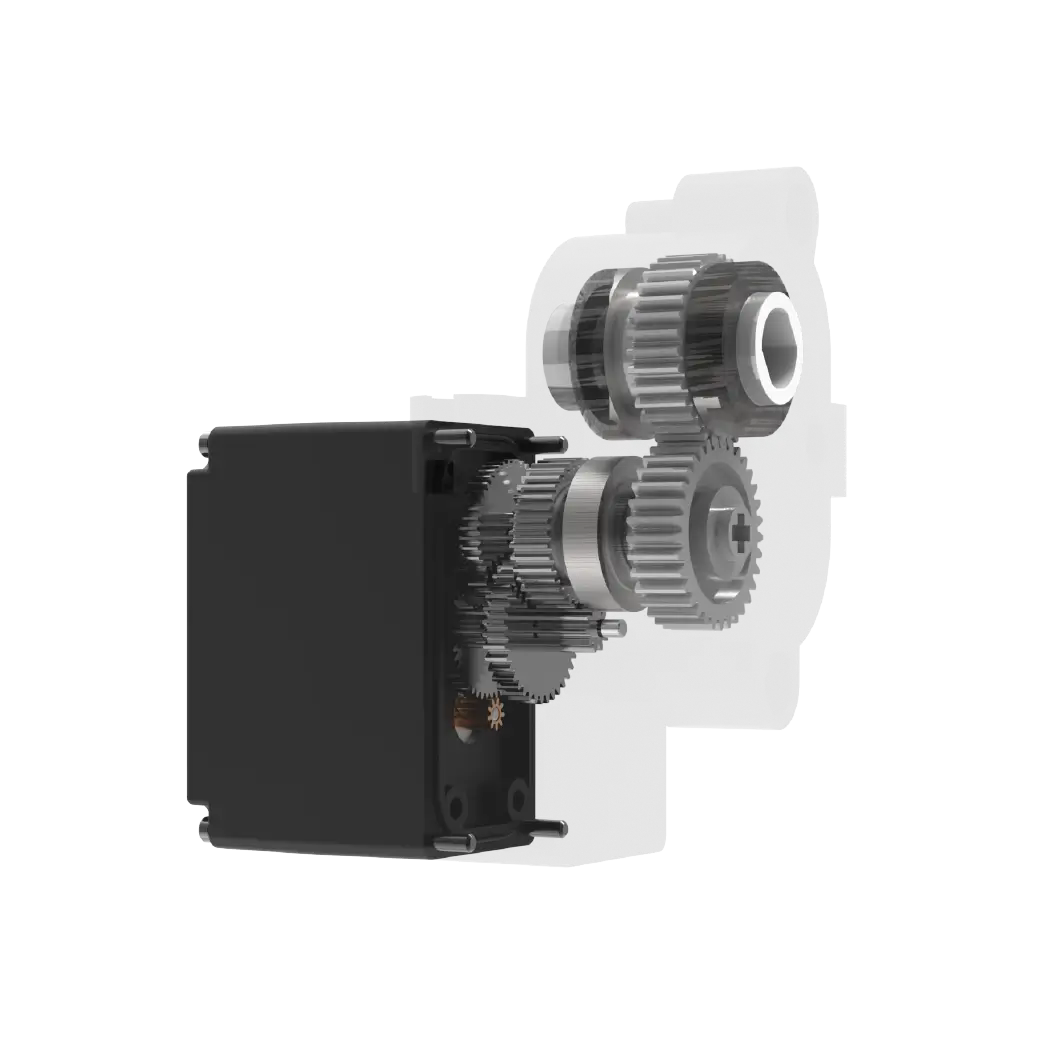
Software optimization is one aspect, but the hardware quality of the servo itself also directly determines the upper limit of smoothness. The servos on the market are mainly divided into analog servos and digital servos. The control chip of digital servos has a higher frequency, faster response, and is more delicate. In addition, the material of the reduction gear inside the steering gear is also critical. Metal gears have better accuracy and wear resistance, and have smaller false positions, which naturally makes them more stable. ️ Therefore, if the budget allows, choosing a servo that supports digital signals and has high-precision metal gears is the hardware foundation for smooth control.
An often overlooked but crucial factor is power. The current of the servo will be very large when it is started and locked. If the power supply capacity is insufficient, the voltage will be instantly pulled down. Once the voltage is unstable, the control circuit inside the steering gear will work disorderly, and the symptoms will be twitching, weakness, and jitter. Imagine that you are concentrating on writing, and suddenly someone shakes your desk back and forth. You will definitely not be able to write well. Therefore, equipping the servo with a stable voltage power supply of sufficient power, or adding a large-capacity capacitor between the battery and the servo, can effectively stabilize the voltage and allow the servo to work "stablely".
Sometimes the problem is neither the software nor the servo itself, but the installation. If the servo arm is installed crookedly, or the linkage it drives is not smooth enough or has sticking points, the servo will experience uneven resistance when turning. In order to overcome these resistances, the motor inside the steering gear must constantly adjust its output, which will also cause jitter and abnormal noise. You can use your hands to turn the linkage mechanism you designed to feel whether it can be pushed easily and smoothly at any angle. If you feel stuck, you need to optimize your mechanical structure.
If you don’t want to write code from scratch, there are many ready-made open source libraries that you can use directly to help you achieve smooth control easily. For example, on the platform, the very popular Servo.h library can only do basic control, but if you use.hor.h(although it is mainly used for stepper motors, the ideas can be used for reference), you can easily set the rotation speed and acceleration of the servo. There are also modules specially used to control multi-channel servos and realize complex movements. When combined withthe verlibrary, they can also output very fine and stable PWM waves, which is very helpful for smoothness.
Okay, on how to make the servo rotate smoothly, we talked about software algorithms, hardware selection, power supply and mechanical structure. I hope these contents can help you create better works. If you encounter any new problems in actual operation, or have your own unique smoothing control skills, please leave a message in the comment area to share, and let us communicate and learn together! If you find the article useful, don't forget to like it and share it with more friends who need it.
Update Time:2026-03-09

Contact Kpower's product specialist to recommend suitable motor or gearbox for your product.