






TECHNICAL SUPPORT


Published 2026-03-10
When performinglinear interpolation operation of theservo, I wonder if you have also encountered such a situation: the movement of the robotic arm seems not smooth enough, and the trajectory always shows a crooked shape. It was obviously expected that the robotic arm would go out in a straight line, but the end of it ended up being an arc. This situation is really a headache in many product innovation processes. In fact, this is often due to the failure to choose the right control method. If we can successfully transform the original "point-to-point" movement of the steering gear into "continuous path" planning, that is, realize linear interpolation, then many of these problems can be successfully solved.
Forlinear interpolation of the steering gear, in actual operation, problems such as unsmooth movements of the robotic arm and skewed trajectories are common. For example, if you want to achieve linear motion, but the end curves out. This situation has always been a troublesome problem for everyone in many product innovation scenarios. In-depth exploration will reveal that the root cause of the problem lies in the wrong choice of control methods. If the steering gear movement can be converted from "point-to-point" mode to "continuous path" planning, that is, linear interpolation is done, many related problems can be easily resolved.
The steering gear is essentially a positionservodevice. Its characteristic is that it only knows how to switch from one angle to another, and does not pay attention to how the path traveled in the middle is carried out. When controlling twoservos to rotate at the same time, you will find that there is a difference in the time they arrive at the target point, which causes the end effector to follow a curved path. This situation is like two people setting off to different places at the same time. One of them is fast and the other is slow. Then the pole connecting the two people will naturally draw an arc. The fundamental reason for this situation lies in the lack of synchronous control of the intermediate process.
In actual mechanical control scenarios, this characteristic of the steering gear is more obvious. Due to the functional limitations of the steering gear itself, it cannot accurately plan the intermediate path. Therefore, when faced with coordinated control of multiple servos, the above problems are prone to occur. For example, in some complex robotic arm operations, multiple servos operate simultaneously. Since they arrive at the target angle at different times, the movement trajectory of the end effector of the robotic arm becomes irregular and presents a curved shape. This fully demonstrates that the lack of intermediate process synchronization control will have a significant impact on the operation of the entire system, thereby affecting the final operating effect and accuracy.
To put it simply, linear interpolation is to break down a straight line trajectory into countless tiny intermediate points, and then let the servo go over one point one by one. For example, if you want the robotic arm to move in a straight line from point A to point B, the controller will calculate dozens or even hundreds of coordinate points on this straight line, and then let the servo go to these positions in sequence. Because the distance between points is very small, from a macro perspective, the robotic arm follows a smooth straight line.
Implementation is actually not as complicated as imagined. The core point is to adhere to the "step-by-step" idea. Let's assume that what we want to travel is a straight line from the starting point to the end point. First, we must accurately know the coordinates of the starting point and the end point in space, and this information can be calculated with the help of geometric operations. Then, set a step length, which represents the length of each short segment. The smaller the step length, the more precise the path will be. Then, an interpolation algorithm (such as DDA algorithm or point-by-point comparison method) is used to calculate the intermediate point, and finally these coordinate values are successfully converted into the angle value of the steering gear and sent out.
Every step of the above process is crucial. Starting from obtaining the starting point and end point coordinates, this is the basis of the entire traveling process. Only by accurately grasping these two key information, subsequent operations will be meaningful. Setting the step size provides a measure for the path of travel, which determines how detailed the path is. The use of interpolation algorithms can accurately calculate intermediate points, thus making the entire travel route smoother. Converting the coordinate value into the steering gear angle value and sending it out is a key step in realizing the final movement, ensuring that it can accurately travel according to the predetermined path.
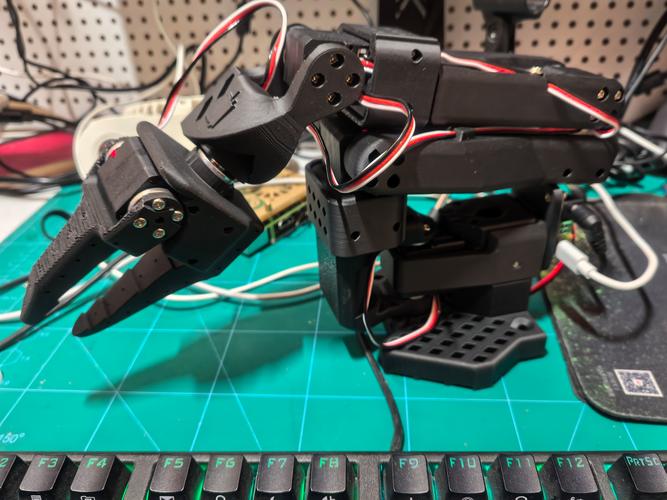
️ The first benefit is that the movement is smoother and the product quality is significantly improved. The previous "beat by beat" feeling disappeared, replaced by smooth movements like an industrial robot, which is especially important for display products or teaching tools.
️ The second benefit is that the path is controllable and you can accurately predict the direction of the end of the robotic arm. When doing applications such as gluing and drawing that require precise trajectories, only linear interpolation can ensure that the lines are not skewed. This is also one of the indicators of whether a steering gear control system is professional.
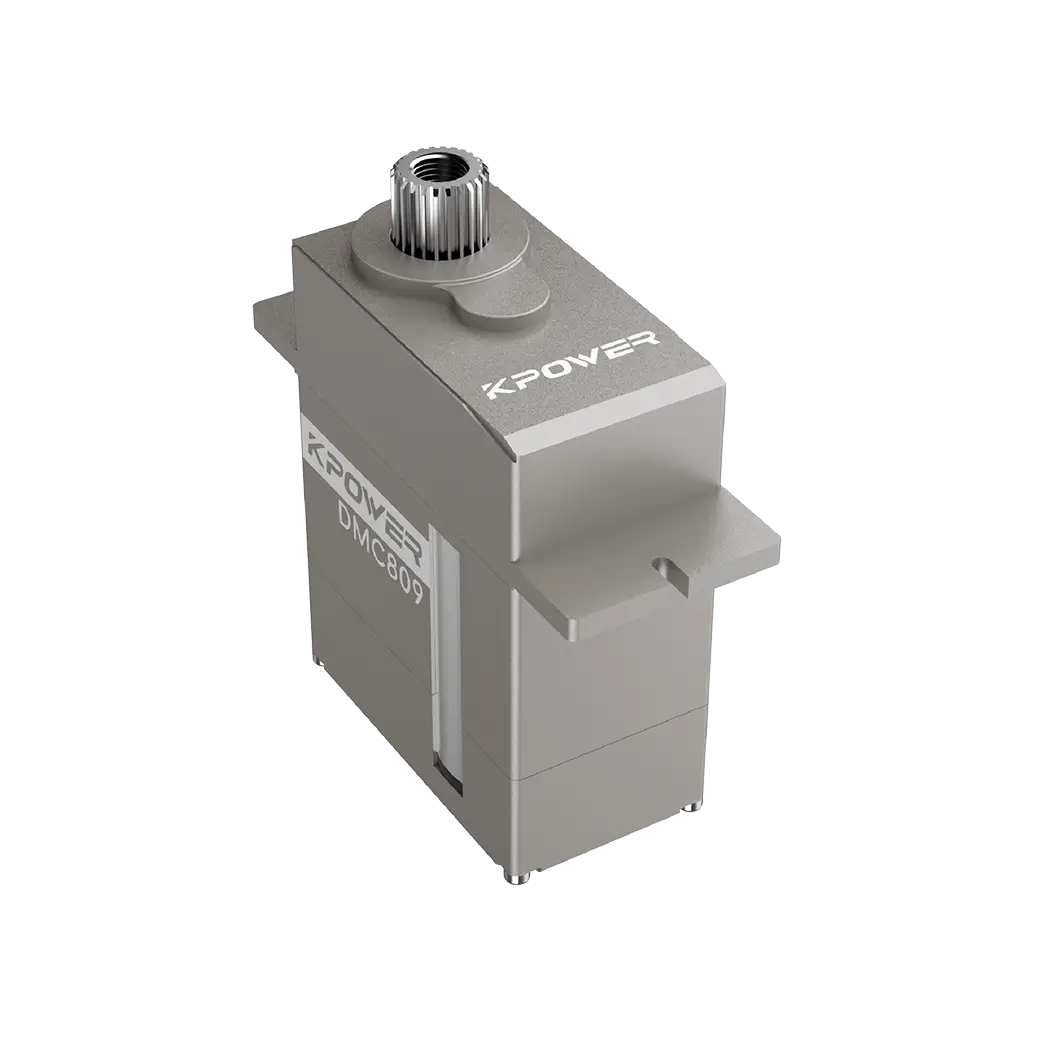
To achieve linear interpolation, there are also requirements for the steering gear itself. First of all, the response speed of the steering gear must be fast, because it needs to receive new angle instructions frequently. If the response is too slow, the actual trajectory will seriously lag behind the theoretical trajectory. Secondly, it is recommended to use a digital servo with angle feedback, so that the controller can know where the servo is actually going, forming a closed-loop control, and the interpolation accuracy will be much higher. The interpolation effect of ordinary analog servos is usually not ideal.
1. First draw the geometric model of the robotic arm and clarify the length and range of motion of each joint.
2. Use a simple test program to make the servo move according to the calculated point and observe whether the actual trajectory is close to a straight line.
3. If jitter is found, you can increase the step size appropriately, or add a small delay between every two points to give the servo enough response time.
4. Keep fine-tuning the parameters of the interpolation algorithm until the trajectory meets your expectations. This process requires a little patience, but once you get it right, the results are great.
I don’t know whether the biggest trouble you encounter in actual debugging is algorithm understanding or servo response? Welcome to chat about your experience in the comment area. If you find the content useful, remember to give it a like and share it with more friends!
Update Time:2026-03-10

Contact Kpower's product specialist to recommend suitable motor or gearbox for your product.