TECHNICAL SUPPORT


Published 2026-03-14
Don’t understand the steering gear hydraulic system? Don’t worry, a picture is worth a thousand words, let’s take a look at this “Hercules” inside and out today!
Many friends who are engaged in product innovation will think of the steering gear hydraulic system when they encounter links that require huge power and precise control. But this thing sounds very "hardcore". How does it work internally? How to choose? How to fix it if it's broken? My mind is full of questions. Looking at the complicated schematic diagram, I feel even more confused. In fact, if you take it apart and use the "look at the pictures to speak" method, you will find that it is far less mysterious than you imagined.
To put it simply, it is a precise remote control that "power can do wonders". You can think of it as the muscles and brain of our body. Your brain (control circuit) wants to lift a heavy object, but it doesn't have the strength, so it directs the muscles in your arm (hydraulic system) to do the work. Muscles produce tremendous force through contraction and accurately complete the brain's instructions. The same goes for the steering gear hydraulic system. It uses high-pressure oil as "power" to push huge mechanical arms, ship rudders or aircraft landing gear under the command of weak electrical signals, which is both obedient and powerful.
This all relies on a principle called "hydraulic amplification". The control signal you give may only have a few watts of power, but the hydraulic pump is driven by a motor and can generate tens of kilowatts or even higher hydraulic energy. This huge amount of energy is directed into a precision little part called a "servovalve." Theservovalve is like an extremely sensitive faucet. It opens or closes accurately according to your electrical signal instructions, allowing high-pressure oil to flow to this side or that side of the cylinder, thus pushing the piston and outputting huge thrust.
When looking at a schematic, don't be intimidated by a bunch of boxes and lines. Let's simplify it into three core parts. The first is the "power heart", which is the hydraulic pump and motor, which is responsible for converting mechanical energy into pressure energy of oil. The second is the "intelligent brain", which is the controller andservovalve, which receives your instructions and distributes oil accurately. The third is the "execution arm", which is a hydraulic cylinder or hydraulic motor, which converts the pressure energy of the oil back into the mechanical energy to push things. The remaining fuel tanks, pipes, and filters are the supporting facilities that provide "blood" to the system and maintain "health."
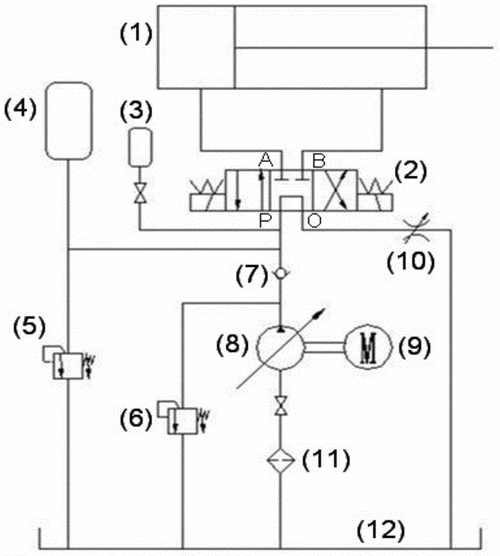
This is usually not a lack of strength, but a problem with the coordination of the "brain" and "muscles". Imagine that you are directing a person to perform actions. If his eyesight is poor (sensor accuracy is low) and his reaction is slow (controller response is slow), then the action will definitely either overshoot or shake. The same is true for the hydraulic system. The problem is likely to be in the feedback link. Check whether the feedback sensor is loose or dirty, and then see if the parameter settings of the controller do not match the system. This is like a nervous system check and adjustment for the system.
This is like buying a car, you must first understand your needs. ️1. How much energy do you need?Calculate how much thrust and torque you actually need, and then leave a 20%-30% margin. ️2. How fast?The action speed determines the flow rate of the hydraulic pump. ️3. How accurate does it need to be?Is it rough work or fine work? This determines the accuracy level of the servo valve and sensor. ️4. How much space is required for installation?This determines whether you choose an integrated small servo or a split large system. Once you understand these things and go to the manufacturer with your needs, they can recommend the most suitable product to you.
Safety first, especially when playing with hydraulics!️ Absolutely prohibited!When the system is under pressure, do not twist any joints. The high-speed jet of oil can cut into the skin, which is extremely dangerous.Operation without power!Always cut off all electrical power before connecting or removing any electrical components.Stress test!When starting up for the first time, be sure to test with the lowest pressure, check all pipe joints for leaks, and then gradually increase the pressure to ensure that nothing is wrong.Oil clean!Be sure to use a filter device when filling hydraulic oil. A small impurity may cause your precision servo valve to become stuck and scrapped.
Don't panic, go in order, look at "power" first and then "control". First, listen to the sound! Start the hydraulic pump. If the noise is loud, it may be due to empty suction. Check the oil level in the tank and whether the suction filter is clogged. Then, look at the pressure gauge! If the pressure does not rise at all, it is most likely that the relief valve is stuck or the pump itself is damaged. If the pressure fluctuates, first check whether a large amount of air is mixed in the oil (there will be many bubbles in the oil tank). This is usually caused by a loose seal in the pipeline. If you investigate step by step, you can always find the "root cause".
After reading this, do you have a new understanding of the steering gear hydraulic system? In fact, it is not that difficult to understand it. The key is to dismantle complex things and use life experience to understand it by analogy. Will you feel more friendly when you see those drawings next time?
What is the most troublesome problem you have encountered when using or selecting a hydraulic system? Come and chat in the comment area, maybe I can help you with some ideas! If you find this article useful, don’t forget to like it and share it with more friends who need it!
Update Time:2026-03-14

Contact Kpower's product specialist to recommend suitable motor or gearbox for your product.