








TECHNICAL SUPPORT


Published 2026-03-16
Friends who are engaged in product innovation, have you ever encountered this situation: theservosuddenly stopped turning, or vibrated so much that the entire project got stuck? Although the steering gear is small, it can be really frustrating if it breaks down. Today we will talk about common problems with steering gears, how to quickly diagnose and solve them, and help you avoid detours.
The most common reason why theservodoes not turn is that the power supply is insufficient. You know, the steering gear is like a small motor. How can it turn when there is no power? Sometimes when you use USB power supply or use a small battery, the voltage and current cannot meet the demand, and theservowill naturally stop working. At this time, you need to check whether the power supply voltage is within the rated range and whether the current is large enough. This is the same as charging a mobile phone. If the power is insufficient, charging will not be possible.
In another situation, if the power connection is unstable, the servo may not turn. It's like there is a bad contact in the circuit, the current transmission is blocked, and the steering gear cannot obtain the energy required for normal operation. Therefore, check the power line carefully to ensure that the connection is stable and there are no loose or virtual connections. In addition, if the servo itself fails, such as internal parts being damaged, it will not be able to rotate even if the power supply is normal. This requires further testing of the steering gear to determine whether it is caused by its own problems.
Another problem may be the signal line. The servo controls the angle by PWM signals. If the signal line is not in good contact, or the signal from the control board is incorrect, the servo will not move. You can use a multimeter to test the continuity of the signal line, and then check whether the pulse width parameter setting in the control program is correct. The standard is a 1-2ms pulse.
The servo vibrating from time to time is really annoying. In many cases, this is caused by excessive power ripple or insufficient power supply. This is just like when a car is running, if the oil supply to the oil circuit is unstable, the engine will vibrate. For this situation, you can connect a larger-capacity capacitor in parallel to the power line of the servo, such as a 470uF capacitor, which can effectively filter out the power supply ripple. If the servo still has jitter problem after such operation, then you need to further consider replacing it with a more powerful power supply to solve the problem.
Signal interference is also one of the culprits of jitter. Especially when the servo cable and power cable are tied together, the interference is particularly obvious. It is recommended that you use shielded wires for the servo signal wires, or run them separately, away from the motor and power wires. Grounding should also be handled well, preferably at a single point to avoid forming a ground loop.
It's normal for the servo to get a little hot when it's working. After all, the motor is rotating inside. But if it's so hot that you can't even touch it, there's something wrong. Overheating is usually caused by overloading. For example, if the load driven by the servo is too heavy, or the motor frequently rotates back and forth between two extreme positions, then the motor is always working with high current, so it is strange that it does not heat up.
To solve an overheating problem, start at the source. First check whether the selection is too small, resulting in insufficient torque to meet the demand. Then check whether the mechanical structure is stuck and whether its rotation is smooth and unimpeded. You can also set reasonable action intervals in the program to prevent the servo from continuing to work at high intensity. If none of the above methods work, you can add a heat sink or use a metal servo housing to assist in heat dissipation.
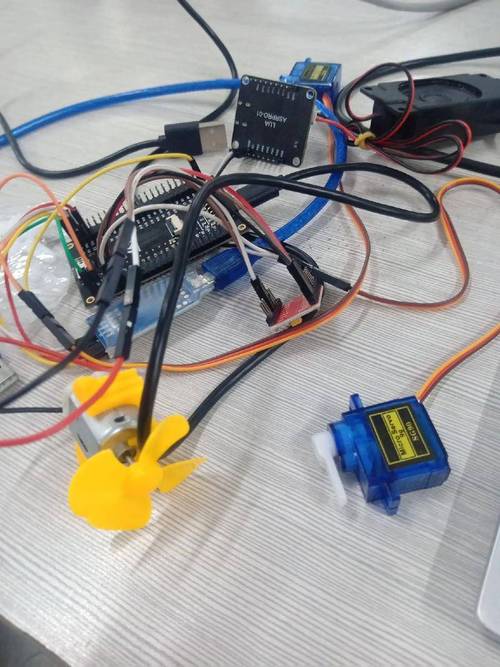
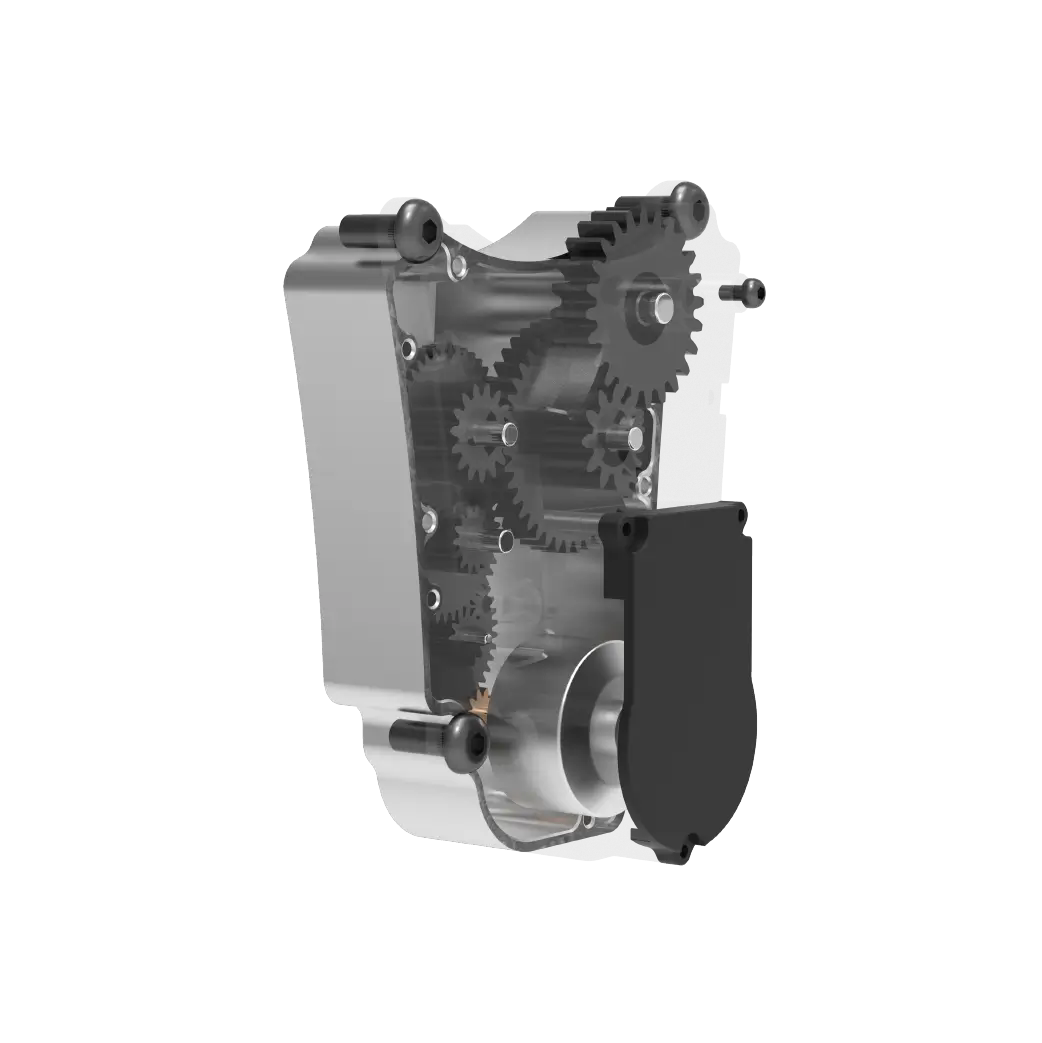
After using it for a while, I found that the servo could not turn in place or could not return to the center accurately. This was probably because the gears were worn. The plastic gear in the steering gear will wear out and create gaps after being used for a long time, causing the output shaft to have a false position. You can disassemble the gear, check it, and add some grease. If the wear is serious, you can only replace the gear or the servo.
Another possibility is that there is a problem with the potentiometer. The feedback potentiometer inside the servo is prone to poor contact after long-term use, resulting in inaccurate position detection. In this case, you can try to recalibrate the servo. Many digital servos support the calibration function. If there is still no effect after calibration, then the potentiometer must be replaced or a new servo must be purchased. After all, such components also have a service life.
When choosing a servo, you can't just look at the torque parameters, you have to consider your application scenario comprehensively. For example, when doing smart car steering, speed is more important than accuracy; when doing robotic arm grabbing, accuracy and repeatable positioning ability are more critical. Don't blindly pursue high torque. If the torque is high, the speed will be slow and the power consumption will be high. It will be easy to pull a large car to a small car, which is wasteful.
Also pay attention to the control method of the servo and the type of feedback. Ordinary analog servos are relatively cheap, but their accuracy is at an average level, while digital servos perform well in terms of response speed and have relatively high accuracy. Some servos have an angle feedback function that can read the current position in real time. This feature is particularly useful for closed-loop control. Before making selection, go to our company's official website to view the relevant technical parameters and application cases, which can help you avoid a lot of unnecessary trouble.
The effect of prevention is far better than treatment, so daily maintenance work is of vital significance. The wiring condition of the servo should be checked regularly to see if it is loose, and the plug should be paid attention to for oxidation. If the working environment is dusty, the dust inside the steering gear must be cleaned regularly, especially the gear part.
Adding an appropriate amount of grease to the gears at specific intervals can effectively extend the service life of the steering gear. This approach is just like oiling a bicycle chain. It has the same effect.
Usage habits also affect the life of the servo. Try not to let the servo stall for a long time, that is, it is stuck and cannot move. At this time, the current is maximum and the servo will be most damaged. It is best to set a soft limit in the program and do not let the servo go to the physical limit position. Also, when not using it for a long time, remove the servo and store it, so as not to keep it under stress.
What weird failures have you encountered in steering gear applications? How was it solved? Welcome to share your experience in the comment area. If you find it useful, don’t forget to like and share it so that more friends can see it!
Update Time:2026-03-16

Contact Kpower's product specialist to recommend suitable motor or gearbox for your product.