







TECHNICAL SUPPORT


Published 2026-03-17
If you are engaged in work on a ship, or are carefully selecting a steering gear for your project, then you must know that the hydraulic steering gear is the "heart" of the ship's steering system. Once this key component fails, the ship will seem to lose its direction in an instant, and the possible consequences will be unimaginable.
But don't worry, hydraulic steering gear is not that mysterious. In fact, most faults have certain patterns that can be explored. Today, I will use easy-to-understand vernacular to talk to you in detail about the most common faults of hydraulic steering gears, and how to prevent and properly deal with these problems. I sincerely hope to help you avoid detours in related operations.
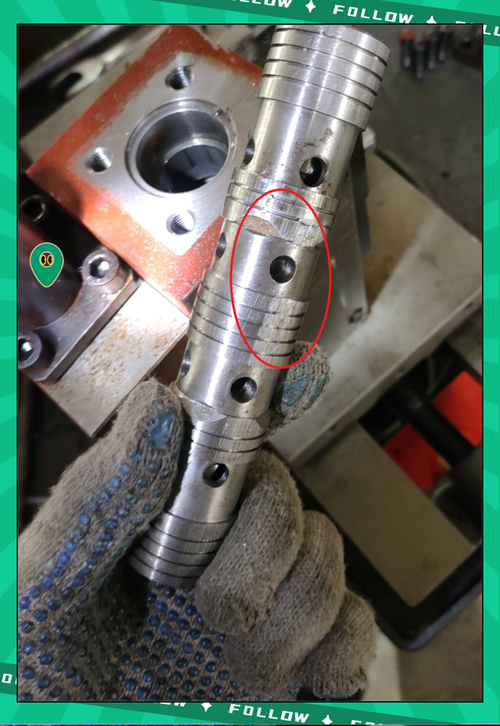
Steering gear stuck is one of the most frightening failures. It is usually caused by stuck mechanical parts or problems with the hydraulic system. For example, if the plunger or shift fork inside theservois short of oil for a long time or is extremely worn, it is very likely that it will suddenly get stuck when it reaches a certain position and cannot continue to move. This is exactly the same principle as the chain getting stuck due to lack of oil when you are riding a bicycle.
Once a fault such as a stuckservooccurs, it will bring great safety risks to the entire system. The jamming of mechanical parts is often due to the long-term lack of maintenance, which reduces the matching accuracy between the components, leading to the occurrence of jamming. Problems with the hydraulic system may be due to poor quality of hydraulic oil or failure of key components such as the hydraulic pump. Just like the plunger or fork in the steering gear, if it is short of oil for a long time, it will increase the friction between the components, thereby accelerating wear and tear, making them more likely to get stuck during operation. This is just like a bicycle chain that will get stuck if it is short of oil, seriously affecting the normal operation of the equipment.
Another possibility is that there are impurities in the hydraulic oil. These dirty things flow into the valve group along with the oil, blocking the valve core that controls the oil circuit, causing the cylinder to fail to operate normally. Therefore, regular oil changes and filter cleaning are not just a formality, they are saving your steering gear.
You may have encountered this situation. When turning the rudder, the boat always drifts to one side, or the rudder blade cannot return to the center position. This situation is mostly caused by problems with the feedback system. Nowadays, many rudders use electronic sensors to feedback the rudder angle position. If the sensor becomes loose, has water ingress, or the circuit contact is poor, the signal transmitted to the controller will be inaccurate, and the boat will naturally deviate.
In addition, leakage inside the hydraulic system can also cause deviation. For example, if the sealing ring of the oil cylinder is aged and damaged, high-pressure oil leaks from one side to the other, and the forces on both sides are unbalanced, the rudder blade will not be stable. Touch the oil cylinder with your hand to see if there is any abnormal heat. This can usually help you determine whether internal leakage is causing the problem.
Don’t panic if you find oil stains near the steering gear. You should first check whether the pipe joint is leaking or the cylinder piston rod is leaking. Oil leakage from joints is usually caused by the vibration of the hull causing the nut to loosen. You can usually solve the problem by tightening it with a wrench, but don't tighten it too hard and be careful of the slip wire.
If there is oil leakage from the piston rod, it means that the oil seal is worn. It would be troublesome to replace it yourself. You need to prepare a new oil seal in advance before starting the operation. In addition, there is another place that is easily overlooked, and that is the sealing ring of the fuel tank cap or oil dipstick. Once it ages, oil will also leak out. When checking, wipe the suspicious parts clean with paper towels, and then run them for a while before observing. The first place that gets wet is the source of oil leakage.
If the maintenance is done well, there will be fewer failures. First of all, you must take good care of the "health status" of the hydraulic oil. Check the cleanliness and viscosity of the oil every six months. If you find that it is black, white, or foamy, you must change it quickly. When adding new oil, you should also filter it to prevent dirt from getting in.
Don't forget to grease the mechanical movable joints. Parts such as the rudder stock, plunger, bearings, etc. need to be filled with grease according to the intervals specified in the instructions. This can greatly reduce the wear of the components.
You can also develop a good habit. Before each sailing, go to the steering gear and go around, listen carefully for any abnormal sounds, and carefully check whether the pressure gauge is stable. This approach is a hundred times more effective than repairing it after an accident.
If the steering gear does get stuck during navigation, you need to know how to save your life. Most hydraulicservos are equipped with a manual emergency pump. At this time, you need to start it quickly and use manual steering to control the direction. You should be familiar with how to turn this switching valve at ordinary times. Don't wait until you are in the dark to read the manual.
If the hand pump also fails, the backup rudder will have to be activated. You need to slow down quickly, use the rudder to stabilize the boat, and call for shore support immediately. Remember, the golden rule of emergency operations is: save the ship first, then repair the machine. If you practice a few more times, you will have peace of mind when encountering problems.
If you want to reduce failures from the root, choosing the right product is the most important thing. Don't just look at the price, you have to check whether the steering gear factory has a ship inspection certificate and whether it is produced according to ISO standards. The high-quality steering gear, valves and oil pump are all brand-name products, and the casing is thick. It can be used for ten or eight years without any problem.
In addition, you need to choose based on your own ship type. Vessels with harsh operating conditions, such as fishing boats and tugboats, must choose products with strong impact resistance; as for inland river vessels, due to limited space, you may wish to look at highly integrated swing-cylinder steering gears. When ordering, be sure to ask the manufacturer to provide a detailed spare parts list and hydraulic schematic diagram. Only in this way can the corresponding methods and approaches be found for subsequent maintenance work.
Okay, let’s talk about this first today, about the failure and maintenance of hydraulic steering gear. I would like to ask you, in the actual use of hydraulic steering gear, what is the most difficult steering gear problem you have encountered? Everyone is welcome to share their experiences in the comment area. If you think this article is useful to you, don’t forget to like it and forward it so that more shipmates can see it!
Update Time:2026-03-17

Contact Kpower's product specialist to recommend suitable motor or gearbox for your product.