







TECHNICAL SUPPORT


Published 2026-02-26
Our friends who are engaged in product innovation, especially those who are considering the application ofservos, must have encountered this situation: the movement of the equipment is not smooth enough, the response is always half a beat slow, or it simply gets stuck at critical moments. These problems are often caused by our lack of understanding of the hydraulic control system, the "heart" of the steering gear. Don't worry, today we will break it down and talk about what big problems this hydraulic control system can help you solve.
In fact, to put it bluntly, the hydraulic control system is the "force multiplier" and "action commander" of the steering gear. Think about it, just relying on the motor to push directly will definitely be thankless when encountering a large load. The hydraulic system is like a super strong assistant. It can control a lot of power with a small amount of effort. It can instantly amplify your control signal, such as a weak electric current, into a powerful force that drives the rudder of a ship, the wing of an aircraft, or a heavy robotic arm. The power conversion and precise transmission in between all depend on it.
Moreover, this guy not only has brute strength, he is also very obedient. It can make the movements you want become silky and smooth, stop when you want, move when you want, without any sloppiness. With it, your product can be both powerful and sensible, and can handle various complex working conditions with ease. It can be said that it is the soul of achieving precise and powerful control.
We often complain that the movement of the device has an impact and feels like it is stuck one after another. This is probably because there is a mismatch between the control signal and the actual action. It's like you want the car to stop slowly, but you slam on the brake. The hydraulic control system can exactly solve this pain point. It precisely adjusts the flow and direction of hydraulic oil through the internal valve core, making the transmission of power as consistent as mercury pouring down the ground.
Imagine that you slowly push open a heavy iron door with your hand, and that it feels the same as using a finger to let it open automatically and at a constant speed? The hydraulic system provides this latter experience. It turns rough "push" into elegant "guidance" through buffering and speed adjustment functions, giving your product a high-end feel when performing every action.
The slow response speed means that after the command is issued, the device always has to be stunned for a moment before it can move. This is too fatal in a scenario where seconds are crucial. The advantage of the hydraulic system is that its power density is extremely high. Simply put, it uses the smallest volume to explode the strongest power. The oil is almost incompressible, and as soon as the pressure is built up, the action can be transmitted immediately with very low latency.
So how to use it to speed up? Here are a few key points: ️ 1. Choose aservovalve or proportional valve that responds faster. They are the "translators" of signals. ️ 2. Optimize the oil circuit design, shorten the length of the oil pipe as much as possible, and reduce the resistance to oil flow. ️ 3. Use a higher pressure system. The higher the pressure, the faster the initial speed of action establishment. By following these few steps, your servo response speed will definitely reach a higher level.
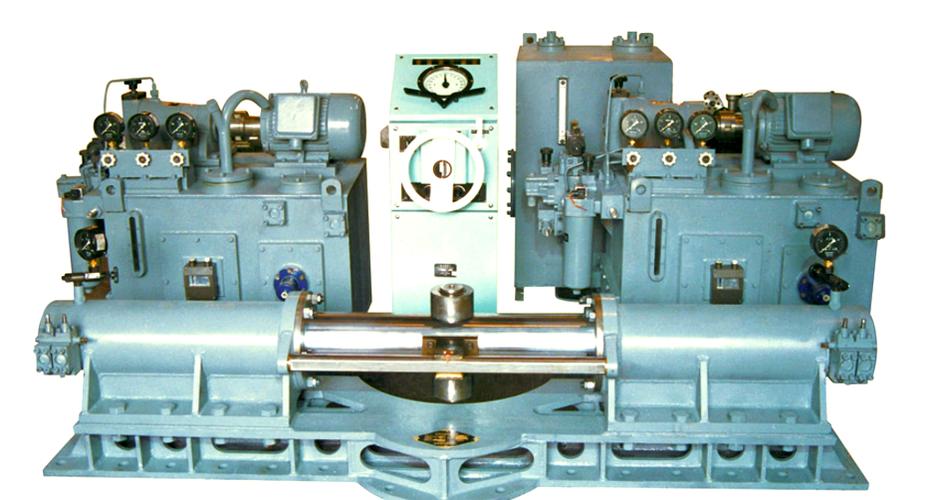
"Strike" or "legs weak" when encountering heavy loads are the most troublesome. Hydraulic control systems are made for hard work. It's like a lever that can amplify the input force you provide (such as the torque of a motor) hundreds of times. The principle behind this is Pascal's law. In a closed container, the pressure exerted on the liquid can be transmitted in all directions with constant magnitude.
To really make good use of this capability, you need to consider when designing: First, calculate the working pressure required by the system based on the maximum load. Secondly, choose a hydraulic cylinder with a suitable cylinder diameter. The larger the cylinder diameter, the greater the thrust it can produce. Finally, don’t forget the setting of the safety valve. It is like a fuse, which can prevent the system from being damaged due to overload, ensuring that your product is both powerful and safe.
If you want the servo to stop at a precise angle, such as within 0.1 degrees, you can't just rely on feeling. Hydraulic control systems combined with modern electronic technology can achieve this "embroidery needle" level of precision. The core lies in closed-loop control, which means that the system is equipped with "eyes" - displacement or angle sensors, which feed back the current position to the controller in real time.
After receiving the signal, the controller will compare it with your target position. Once a deviation is found, it will immediately issue instructions to fine-tune the valve opening until the position is accurate. This is like an extremely responsible sentry, always keeping an eye on the target and correcting deviations. When selecting a model, remember to choose a servo cylinder with high-precision displacement feedback and a fast-responding controller. With this combination, accuracy is guaranteed.
No one wants the product they designed to break down every three days. Hydraulic systems can indeed become irritable if not properly maintained, but as long as you master the correct methods, they can also become the most reliable partners. The most common problem is oil contamination. Impurities mixed in are like a person suffering from a blood clot, which may block the valve core or damage the pump body.
Therefore, you have to maintain the hydraulic system as a living thing. In daily work, you should do the following: ① Regularly replace the hydraulic oil and filter element, which is a "blood change" and "kidney dialysis" for the system. ② Always pay attention to the oil temperature. Overheating will accelerate the aging of the oil. It is necessary to install a radiator for it. ③ Make sure the pipes are clean during installation and do not let dirt get in. If these details are taken care of, the system will naturally work for you conscientiously for many years.
After all, the steering gear hydraulic control system is a powerful tool on your road to product innovation. It can help you get rid of the dilemma of "not being able to do what you want" and truly realize your pursuit of precision and power. The next time you are scratching your head about control issues, think about whether you can incorporate this set of "hydraulic wisdom" into your design. So here comes the question: In your product vision, what is the core pain point that the hydraulic system can help you solve the most? Welcome to chat in the comment area, give it a like and share it with friends who are also innovating. Let’s make the product more and more hard-core together!
Update Time:2026-02-26

Contact Kpower's product specialist to recommend suitable motor or gearbox for your product.