







TECHNICAL SUPPORT


Published 2026-02-26
Do you always feel like theservois "twitching" when you play with it? Either it shakes non-stop, or it cannot rotate in place, and it will "strike" under slight force. Don't worry, it's probably because your steering gear lacks a smart "brain" to direct it. Today we will talk about how to use the key of PID to open the door to precise control of theservoand make its movements smooth and obedient.
You happily install theservoon the robot arm, but when you turn on the power, something goes wrong. It either rushes over, or sways slowly but cannot reach the position. Even if you touch it lightly with your hand, it will continue to tremble. This is actually a typical control problem. The steering gear itself only knows to "turn to a certain angle", but it does not know how much resistance it encounters during the rotation, nor does it know whether the speed should be fast or slow. This is like a novice driver who only slams on the accelerator and brakes, and the car will naturally rush. What we need is an intelligent driver that can adjust the "throttle" and "brake" in real time based on the actual situation, and PID is the most suitable candidate.
As the key to real-time adjustment according to actual conditions, PID plays an important role in solving steering gear control problems. It can accurately sense various conditions encountered when the steering gear is turned, just like an experienced driver, calmly coping with complex road conditions. When the steering gear encounters large resistance, PID will adjust the output reasonably to avoid overshooting or shaking in place, just like skillfully controlling the vehicle speed. It can dynamically adjust the "throttle" and "brake" based on real-time feedback, making the steering gear run more smoothly and accurately, just like an excellent driver driving a vehicle on a smooth and smooth road.
Simply put, PID is a "error correction master" that helps you get things done quickly and stably. P (proportion) looks at how much the current deviation is, and if it is too far, pull it back with force; I (point) is responsible for settling old accounts, accumulating small deviations that have always existed and slowly eliminating them; D (differential) is like a prophet, predicting that the momentum is not right and applying the brakes in advance to prevent overdoing it. Combining these three, your steering gear will no longer be a dazed young man, but a master who knows how to "goal-oriented, review the past, and look forward to the future", and his movements will be natural, precise and smooth.
When you first start adjusting parameters, it’s easy to fall into a trap. The most common thing is that if the P key is too large, the servo will be like Parkinson's disease, vibrating at high frequencies, noisy and hot. Or the P is too small, and it is like a sloth, limp and weak, and cannot reach the designated position at all. Some people will ignore the role of D, causing the servo to always " " (overshoot), oscillating back and forth several times before it can stop. ️ Remember, adjusting parameters is like pumping up the tires of a bicycle. If it’s too little, you won’t be able to ride, and if it’s too much, the tire will blow out. You have to try little by little to find the perfect balance point.
Don't panic, there are routines for adjusting parameters. First keep only the P item, and slowly increase it from small to large until the servo begins to vibrate slightly. Write down the P value at this time, and then halve it as the basic P value. Then add item D, which can effectively suppress jitter. Add it until the hand-push servo can feel obvious resistance but not get stuck, and the jitter disappears. Finally, if you find that the servo always has a little static error (for example, the total difference is less than one degree), add a little I term to eat it up. ️Be patient in the whole process, fine-tune once, observe once, don’t think about becoming fat in one bite.
It is really troublesome to write a PID algorithm from scratch. Fortunately, there are many ready-made "wheels" available for use. If you use it to perform related operations, the most classic one is "PID". It has powerful functions and rich documentation. You can call it directly, which is extremely convenient.
If you are playing with ESP32, you can find a PID library adapted to the ESP32 core, or choose the FOC library, which has good support for the control of motors (including servos). STM32 users can directly use the PID function in the CMSIS-DSP library, which is efficient and trouble-free. Choosing one that suits your needs will save you a lot of detours.
Writing code is actually to accurately translate the above ideas to the microcontroller for understanding. Its core mainly includes three steps: first, set the target value, for example, set to 90 degrees; second, read the current value, which is implemented through potentiometer feedback; third, call the PID calculation function to obtain the output value, which is the PWM duty cycle, and then let the servo operate according to this new instruction. The code framework is usually as follows: initialize the PID and servo in the setup function, and continuously perform a series of actions of "read->calculate->application" in the loop function, thus forming a closed loop. ️ Be sure to remember to set the sampling time, so that the PID cannot be calculated too frequently or too slowly. Generally speaking, a sampling time of about 10 milliseconds is more appropriate.
In the actual coding process, every step is crucial. For the step of setting the target value, it is necessary to accurately determine the required angle and other parameters according to the specific application scenario. When reading the current value, the feedback accuracy of the potentiometer will also affect the accuracy of subsequent calculations. When calling the PID calculation function, it is necessary to ensure that its parameters are set appropriately to obtain accurate output values. When building the code framework, the operations in the setup and loop functions must be performed strictly in accordance with the specifications to ensure that the entire closed-loop system can run stably and efficiently. ️ The setting of the sampling time is directly related to the performance of the system. An appropriate sampling time can avoid excessive consumption of resources while ensuring calculation accuracy, so that the servo can accurately act according to instructions.
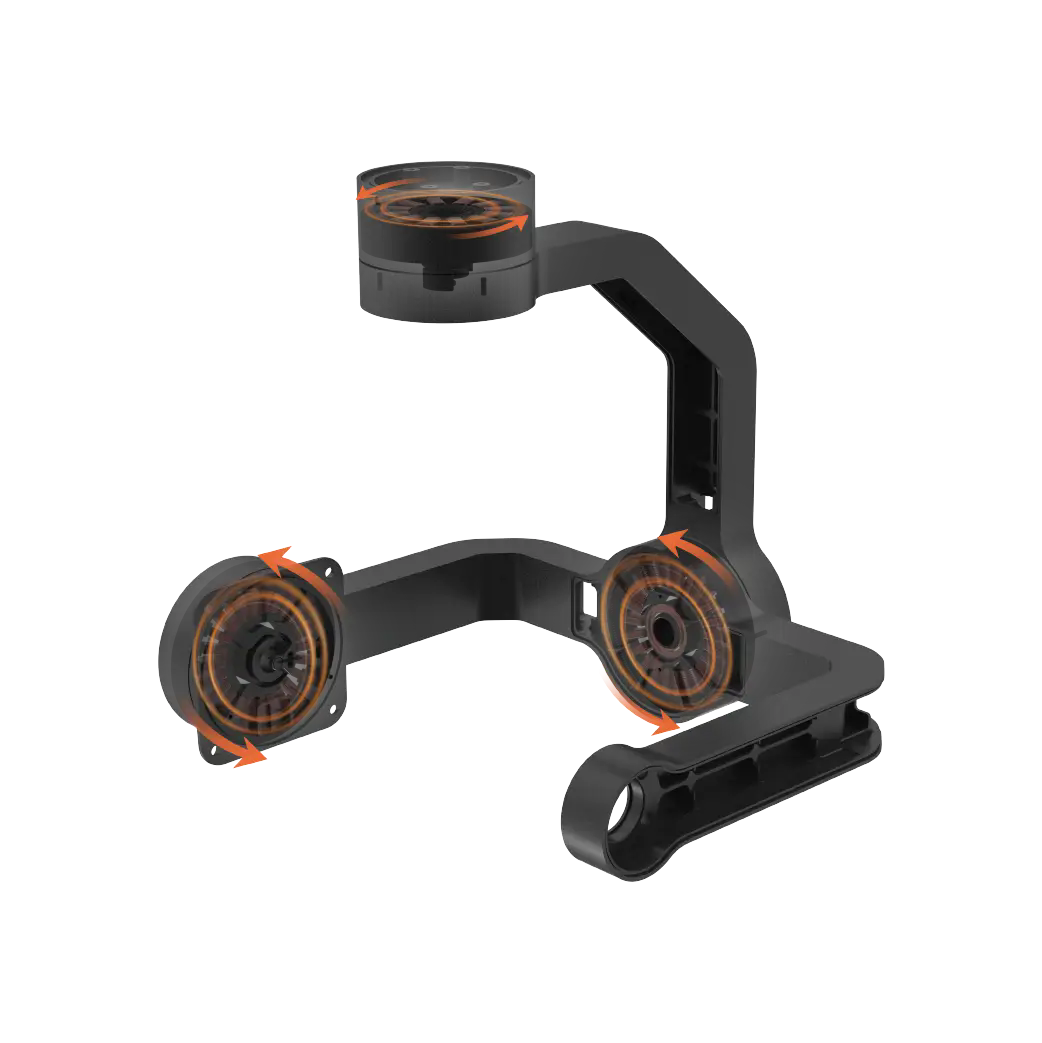
Before using PID, your servo may look like a reckless drunk; after using PID, it immediately turns into an elegant dancer. For example, if you make a two-degree-of-freedom gimbal and don't use PID, the camera image may shake so much that you can't find the north direction if you move it even slightly. After using the adjusted PID, the gimbal can lock the target steadily. No matter how you shake the base plate, the camera will always face the direction you should look at. The precise feeling of hitting where you point without moving will make you feel that all the brain-burning parameter adjustment you did before was worth it.
After reading this, are you itching to give it a try? What is the most troublesome problem you encounter when adjusting the PID of the steering gear? Welcome to leave a comment in the comment area, give it a like and share it with more friends who are tortured by the servo!
Update Time:2026-02-26

Contact Kpower's product specialist to recommend suitable motor or gearbox for your product.