







TECHNICAL SUPPORT


Published 2026-03-01
When we engage in product innovation, especially those devices that requireservos to achieve precise control, do we often encounter a headache: theservos respond half a beat too slowly, or are not stable at all under high-frequency jitter? Especially if you want to add a stabilization function to the device, it feels like putting skates on a drunk person. The more control you have, the more chaotic it becomes. This is actually the lack of a translator who can understand "high-level instructions" between the control signal and the execution of the steering gear. Today we will talk about this translator - the schematic diagram of the parallelservoin the control stability augmentation system, and see how it turns a complex stability algorithm into a real and precise movement of the servo.
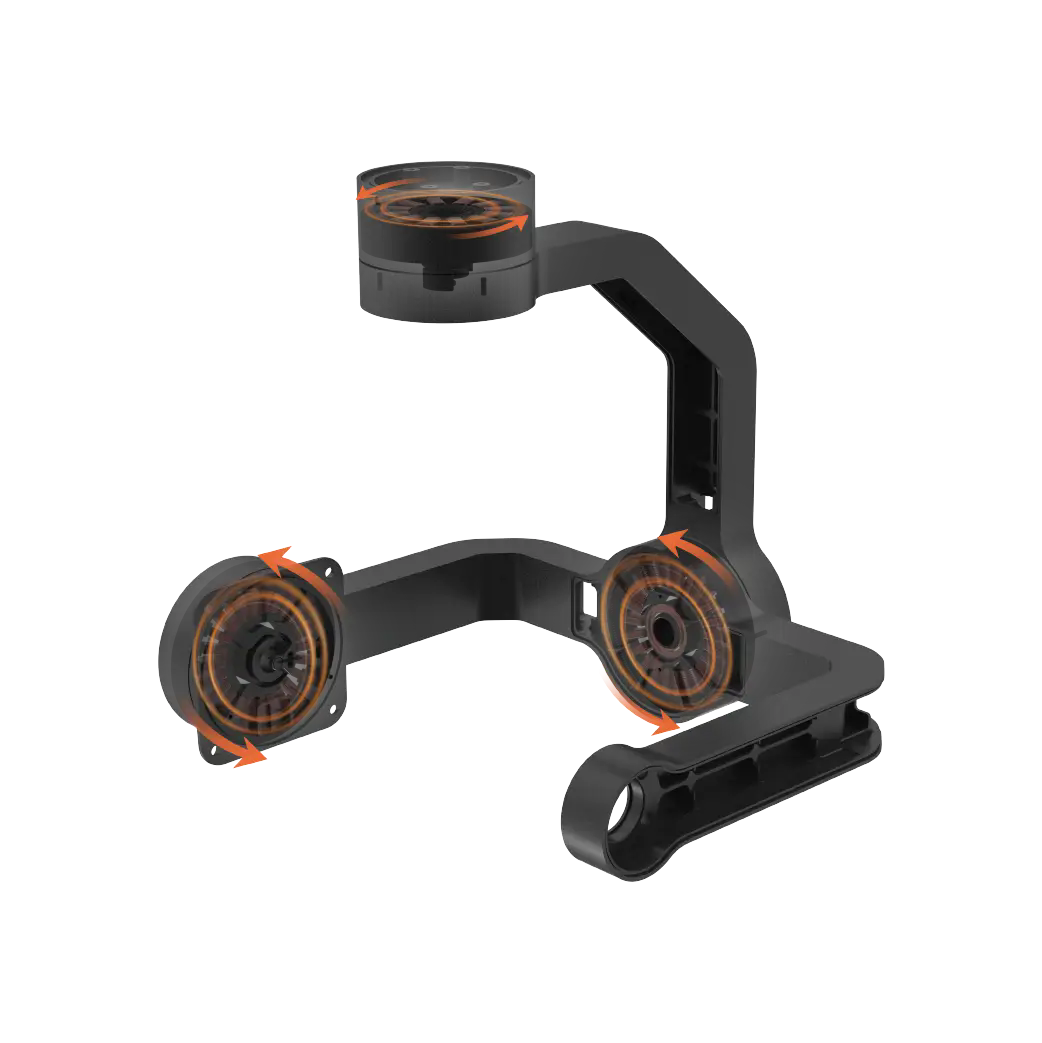
To put it simply, the parallel steering gear control and stabilization system is to install a smart "brain" and a "mechanical skeleton" on the traditional steering gear. Its core schematic diagram can be disassembled into three parts:the sensor module(the sensory nerves of the brain),the controller(the decision-making center of the brain), andthe parallel steering gear group(the skeletal muscles that perform actions). The sensor monitors the attitude and vibration of the device in real time and transmits the data to the controller. The algorithm in the controller calculates how much angle and force needs to be corrected, and then sends this command to several parallel servos at the same time. When several servos work together, they can produce much greater torque and faster response than a single servo, thereby offsetting external interference and making the equipment as stable as a mountain. This is just like several people lifting a piano together. It is much more stable and faster than moving it alone. This is the truth.
Let’s think about it first. Did you think that as long as the steering gear was powerful enough, it would be fine to increase stability? In fact, couldn't be more wrong. In high-speed flying drones or rapidly rotating camera heads, interference is high-frequency and multi-directional. A single servo must be busy processing the main control signal and responding to stability enhancement instructions, so it is often in a hurry. Its response speed cannot keep up with high-frequency interference, and "overshoot" or "lag" will occur, causing the screen to shake or the flight attitude to sway. Moreover, the torque output of a single servo has a limit. When encountering strong winds or violent movements, it will be like a person trying to catch a galloping horse. It will either be dragged away or directly burned out. Therefore, when traditional solutions deal with complex working conditions, physical bottlenecks are very obvious and they are insufficient.
The magic of the parallel steering gear is that it turns "working alone" into "teamwork". On the schematic diagram, you will see that the instructions issued by the controller are not sequential, but assigned to servo A and servo B at the same time. When interference strikes, the sensor tells the controller that "immediate correction is needed to the left." The controller will instantly calculate how much angle A and B need to turn and how much torque they need to output to complete this action together. The two of them push and pull one through a mechanical linkage or electronic differential, and the combined force produces a precise and controllable correction torque. This "differential parallel connection" method greatly improves the dynamic response bandwidth of the system. As soon as high-frequency interference appears, it is suppressed by this combination of punches, and the response speed and stability naturally increase.
When using parallel servos, the most intuitive feeling isstability. Whether it is aerial footage or the end accuracy of the robotic arm, there will be a qualitative leap. Because the parallel structure is inherently rigid and can withstand greater loads and impacts, the equipment can maintain normal operation in harsh environments, and the failure rate is also reduced. After all, if one steering gear is a little small, the other one can still support it for a while. For those of us who engage in product innovation, this means that we can make our products even more perfect. For example, the gimbal can be made smaller but more stable, and the drone can fly harder but take clearer photos. Moreover, electrical parallel connection can simplify wiring and make the internal structure cleaner, which is great news for compact products where space is precious.
Don't be frightened when you see those dense lines and symbols, it's very simple when we dismantle it. First look for the core. The most prominentmicrocontroller (MCU)in the picture is the brain. Following its output pins, you will see two or more lines connected to severalservo driver chips. This is the command transmission channel. The driver chip is then connected to the servo motor. Here's the kicker, you'll also see feedback lines coming from the servo position sensor (such as a potentiometer or encoder) and they will wrap back to the MCU. This forms a closed loop: the brain sends the command, the servo executes it, and then tells the brain its position, and the brain checks it before proceeding to the next step. There may also be symbols ofadderorcomparatoron the picture. They are used to process the main control signal and the stability correction signal. They combine the two instructions into one and send them to the parallel servos.
️ 1. Look at the torque matching:Don’t just look at the torque of a single servo. Calculate whether the total torque of two servos connected in parallel can reach more than twice the demand of your system, leaving enough margin. For example, if the system requires 5Nm, then it is safe to choose two 3Nm servos in parallel.
️ 2. Look at the response speed:The stabilization system is extremely sensitive to delay. Be sure to choose a digital servo with fast response speed and high signal frequency. Ordinary analog servos may have passed the interference before they can react, and have no effect at all.
️ 3. Look at the synchronization accuracy:The key to parallel connection is that the movements of the two servos must be consistent. To choose servos with small individual differences and good consistency, it is best to come from the same batch. Otherwise, if one rotates faster and the other rotates slower, not only will the stability not be increased, but they will also compete with each other and produce oscillations.
When doing parallel design for the first time, the easiest pitfall ismechanical coupling. The output shafts of the two servos must be perfectly connected through a rigid connecting rod or rocker arm. If there is a gap, a false position will occur, causing the instructions and actions to mismatch, and the system will adjust back and forth, forming what we often call "rudder shake". In addition,the power supplymust also keep up. Parallel connection means that the instantaneous current demand is doubled. If the power supply is insufficient and the voltage drops, the servo will immediately lose its power and the stability enhancement effect will be greatly reduced. Finally, don’t forget to debugthe firmware algorithm. In the control program, special PID parameter settings must be made for the parallel structure. The old parameters of a single servo cannot be used, otherwise the system will easily become unstable. It is recommended to conduct more ground tests to simulate various working conditions and find problems in the cradle.
After seeing this, do you have a clearer understanding of the mysterious parallel servo schematic diagram? It is like the conductor of the team, keeping everyone on the same page. If you want to use this solution in your own products, you may wish to first search the official websites of mainstream steering gear manufacturers, such as their selection manuals and technical white papers, which will contain more detailed reference circuits and application cases. What problems have you encountered regarding steering gear control when designing products? Welcome to chat in the comment area and share your progress together. If you find it useful, don’t forget to give it a like and share it with more friends who need it!
Update Time:2026-03-01

Contact Kpower's product specialist to recommend suitable motor or gearbox for your product.