







TECHNICAL SUPPORT


Published 2026-03-16
Have you also encountered this situation? I was very happy to buy a newservo, but I had trouble with the pile of wires and rocker arms in the fuselage, and I didn't know where to start. I had to bite the bullet and install it, but as a result, the sky lost control, and hundreds or even thousands of model aircraft exploded, and I stomped my feet in distress. In fact, there are routines for installing theservo. As long as you understand the inner workings, installing theservois as simple as tightening a screw. Today I will use the simplest vernacular to walk you through it from beginning to end. After reading it, I guarantee that you will be able to pretend to be upright.
As the saying goes, if a worker wants to do his job well, he must first sharpen his tools. Before installing the servo, you need to prepare everything first so that you don’t have to look for a screwdriver in the middle of installation. The most basic thing you need is a set of Phillips and slotted screwdrivers, preferably small ones, because the screws on model aircraft are very small. In addition, tweezers and needle-nose pliers should also be prepared to facilitate grasping small screws and plugging and unplugging wire connectors.
️ In addition to these, extension cords and heat shrink tubing are also must-have items. Sometimes the servo cable is not long enough, and extending the cable can save the situation. Heat shrink tubing is used to wrap exposed solder joints, which is both insulating and beautiful. If there is no heat shrink tubing, you can wrap it with insulating tape a few times. Finally, don’t forget the model glue. Use it when fixing the servo body. It is stronger than screws and not easy to loosen.
The most common mistake that many novices make is to buy a random servo and stuff it into the aircraft. As a result, they cannot move the rudder at all. There are three main parameters when choosing a servo: torque, speed and size. Torque determines power. If your aircraft has a large rudder surface and a heavy weight, you must choose one with high torque. Otherwise, it will fly as softly as if it has not eaten.
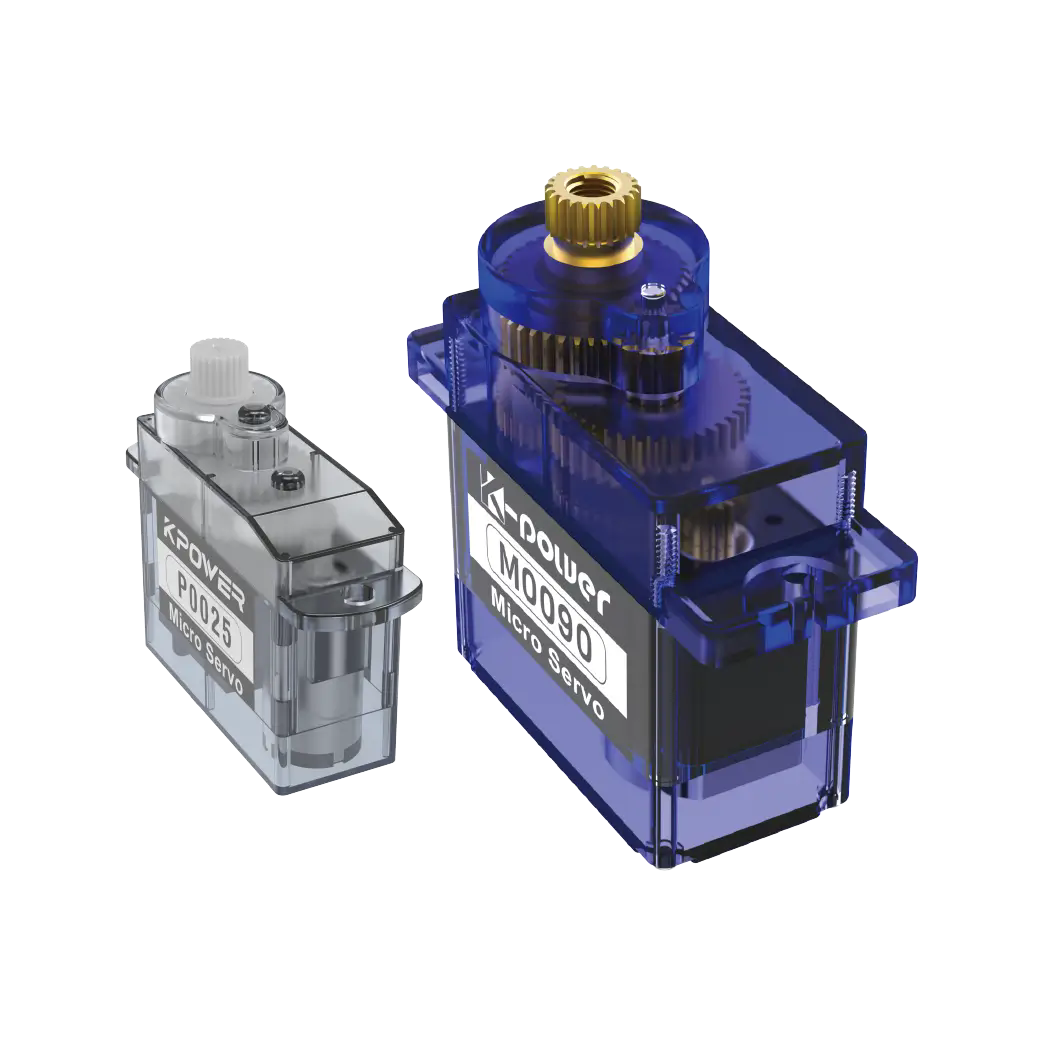
️ The speed depends on your response requirements to the control. If you want to do 3D stunts, you should be fast. If you want to fly casually, it doesn't matter. Size is more critical. You have to buy the size of the slot left in the fuselage. The common ones are 9g, 12g and standard servos. For example, when installing a small flutter plane, you have to insert a standard servo. Not only will it not fit in, but it will also increase the weight. The plane will fly like a brick.
This step is the soul of steering gear installation. Many people ignore it and the aircraft will never fly straight. The neutral point is the position where the servo should stop when the joystick of the remote control is in the neutral position. You need to connect the servo to the receiver first, and then power on the aircraft. Don't rush to install the rocker arm at this time. First, check whether the servo itself has turned to its mechanical neutral position.
️ Wait until the servo has stopped, then install the rocker arm. Try to keep the rocker arm and the servo housing at a 90-degree vertical angle. If the rocker arm is installed crookedly, it is better to replace the rocker arm with a different angle than to tighten it hard. Otherwise, the flight control will always struggle when working, and the servo will not only generate heat but also consume power. Only after you have calibrated your aircraft can you point where to hit.
Only when the steering gear is installed on the rocker arm can the power be transmitted to the steering surface. There are several holes on the rocker arm. The holes close to the rotating axis are strong but have a small range of movement on the rudder surface, which is suitable for rudders that require strong force. The holes far away from the rotating axis are small but have a large moving range and are suitable for ailerons that require a large angle. You have to choose based on actual needs, don't just plug in a hole to save trouble.
️ When installing the rocker arm, make sure it is parallel to the servo housing and exactly at the neutral point. If they are not parallel, it means your neutral point is not adjusted correctly, or the rocker arm has the wrong teeth. At this time, you need to re-align the teeth, pull out the rocker arm and try again with a different tooth until it is nearly parallel when installed. It's almost okay, you can use the remote control to fine-tune it.
The servo cable was connected backwards, and when the power was turned on, there was a puff of smoke, and the servo was immediately scrapped. There are three standard servo wires, the brown or black one is the negative pole, the red one is the positive pole, and the yellow or white one is the signal wire. When plugging it into the receiver, be sure to align it with the notch. Generally, there is a mark on the receiver. The place marked with GND or a negative sign is where the brown wire is connected.
️ If you are soldering extension cords or changing connectors yourself, be careful to distinguish them. Use a multimeter to test it before soldering to make sure it's correct. If the connection is really reversed, and the servo does not respond and becomes hot when the power is turned on, cut off the power immediately, and there is still hope. If you wait a few more seconds, you really have to buy a new one. Remember this mantra: brown negative pole, red positive pole, yellow signal, you can never go wrong.
Don’t rush to fly it after it’s installed. Testing it several times on the ground can help you save a lot of money on repairs. First, gently move the rudder surface with your hands to see if there is any jamming or particularly large resistance. If there is any problem, it means there is a problem with the installation or the rudder angle is not smooth. Then turn on the power, and without standing in the propeller rotation plane, turn the rudder slightly to see if the rudder surface responds in the right direction.
️ If the direction is reversed, set the reverse channel on the remote control. Do not disassemble and reinstall it. Finally, make a large rudder turn to see if the rudder surface can reach the maximum angle, and listen for any abnormal noise from the rudder. If everything is normal, congratulations, you are one step closer to flying smoothly. If you feel uneasy, you can continue steering for a few minutes and feel if the servo is hot. If the temperature is too high, lower the voltage.
When you installed the servo for the first time, did you experience any embarrassing things like "smoke" or "reverse direction"? Come to the comment area to share your "history of blood and tears" so that newbies can learn from it! If you find it useful, don’t forget to like and forward it so that more model friends can avoid detours.
Update Time:2026-03-16

Contact Kpower's product specialist to recommend suitable motor or gearbox for your product.