







TECHNICAL SUPPORT


Published 2026-03-04
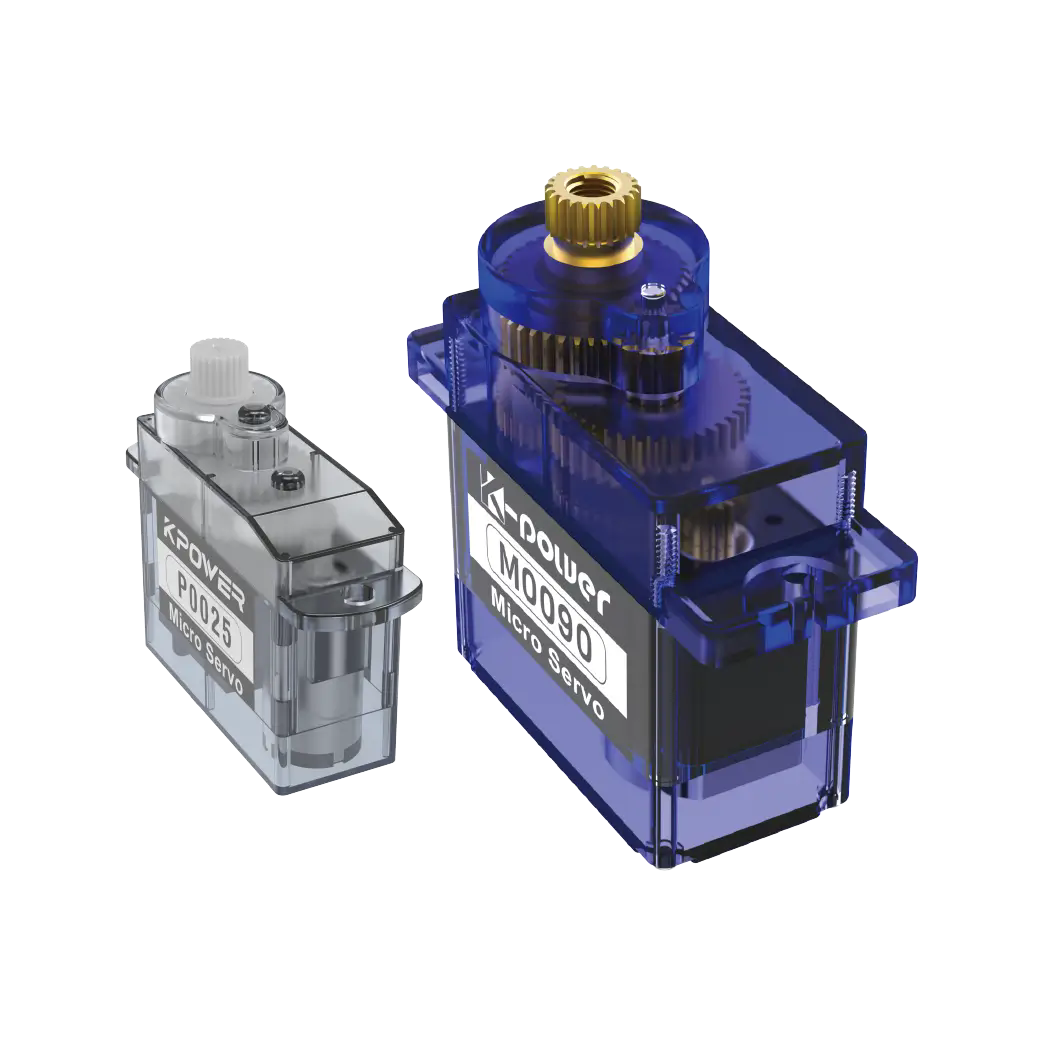
When you were choosing aservo, did you stare at the "9g" for a long time and wonder in your mind: How powerful can this little thing be? Don’t worry, let’s talk it through today. 9-gramservos, as the name suggests, are miniatureservos weighing about 9 grams. They are widely used in aircraft models, car models, or some small robot projects. How strong it is directly determines whether your small plane can turn freely and whether your robotic arm can lift things. This "torque", to put it bluntly, means how much it can move. The unit is usually kilogram·cm (kg·cm), which means how many kilograms of something can be pulled on a 1 cm moment arm.
Most common 9-gram servos on the market have torques in the range of 1.5kg·cm to 3.0kg·cm. How to understand this data? Imagine that if you hang something 1 centimeter away from the steering axis, it can lift about 1.5 to 3 kilograms. This force is more than enough to push the tail of a microplane or turn the wheels of a small remote control car. However, this is just a rough idea. Different brands and models will have differences. It is important to read the parameters clearly before buying.
️ Taking the most classic SG90 servo as an example, its torque is usually around 1.6kg·cm. Better metal-toothed servos, such as MG90S, have stronger internal gears and the torque can reach 2.5kg·cm or even higher. So even though they are about the same size, they may be twice as strong.
This is a good question. Whether it is enough or not depends on what you want it to do. If your project is like the control surface of a fixed-wing model aircraft, the joints of a small robot, or a lightweight camera gimbal, the 9-gram servo's torque can completely hold it. I used it to make a small robotic arm, which can hold a table tennis ball, small wooden block, etc., and the movements are very neat.
️ But if you want to push a metal gear into the soil, or drive a heavier wheel, then this little guy will definitely be very tired. To judge whether it is enough, here is a simple method: estimate the maximum resistance your structure will have to move, and then leave a margin of 30% to 50%. For example, if the estimated resistance is 1kg, then you'd better choose a servo of more than 1.5kg·cm, so that it is stable to use and not easy to burn.
When you get the servo parameter sheet, don’t be intimidated by a bunch of numbers. Let's just focus on the two cores: one is the "torque" we just talked about, the unit is usually kg·cm, the larger the number, the more powerful it is; the other is "speed", the unit is seconds/60 degrees, which means how many seconds it takes to turn a 60-degree angle, the smaller the number, the faster the reaction. For example, "0.1 seconds/60 degrees" is a very sensitive thing.
️ Another point that is often overlooked is "working voltage". The size of the torque is directly linked to the given voltage. The torque at 4.8V and the torque at 6.0V may be quite different. Many servos become stronger at 6V. Therefore, when looking at the parameters, pay attention to how many volts the voltage was measured at. If you want the servo to perform better, confirm the voltage range it can withstand and feed it enough power so that it can work more effectively.

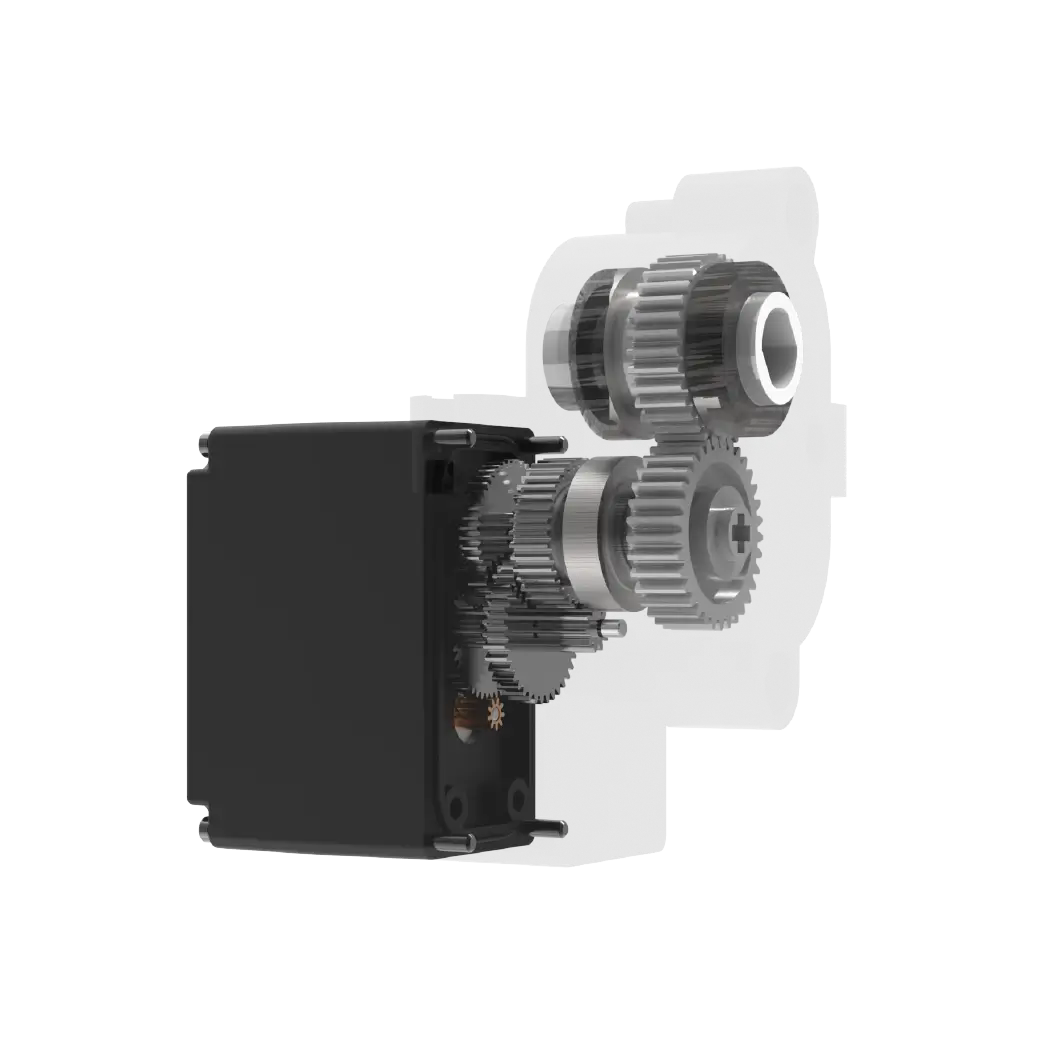
It’s a big deal! The gear is the "muscle" of the steering gear. If the muscle is not strong, it cannot be used no matter how strong you are. The gears of the 9g steering gear are mainly divided into plastic teeth and metal teeth. Plastic teeth are low-cost and quiet, but just like a plastic wrench, they are prone to "beating" when encountering large resistance. That is, the teeth on the gear are ground flat and they are scrapped immediately.
️ Metal gear servos are much stronger and can withstand greater impact and torque. Therefore, the torque of metal gear servos of the same level can usually be larger than that of plastic gears, and they are also more durable. If the project you are working on is relatively violent or requires long hours of work, such as a small off-road vehicle, then it is definitely a wise choice to spend a few more dollars to choose one with metal teeth to avoid having to lie down in the middle of the game, which will be very disappointing.
Choosing a steering gear is like putting a saddle on a horse, it depends on the "job". The first step is to calculate the load. Estimate the maximum resistance that the component you want to move may encounter when rotating. The second step is to leave a margin. Multiply the estimated value by 1.5 to 2 to ensure that the servo will not work at full load for a long time, otherwise it will become overheated and have a short lifespan.
️ The third step is to look at word of mouth and brand. The easiest pitfall for novices is to try to get cheap. The nominal parameters of some off-brand servos are artificially high, and they are not what they are when used. Go to the forums and read reviews from old players. Brands such as Huisheng and Yinyan are very mature in the field of 9-gram servos, with solid parameters and stable quality control. They are safe choices for entry-level and advanced levels. Think clearly about the application scenarios before buying, and then choose the parameters to make sure you don’t make mistakes.
There are also things to pay attention to when using small things. The first is the power supply. Don't think about using the microcontroller pins to drive it directly. If the current is not enough, the chip will be burned. You must power the servo separately, or use a voltage stabilizing module that can provide sufficient current. Remember to connect the ground wire to the same ground as the microcontroller so that you can have a unified voltage reference.
️ Secondly, the fixation must be firm. Although the 9g servo is small, it vibrates quite vigorously. When installing, tighten the screws or use hot melt glue to prevent it from shaking. The last is the control signal, which must issue instructions according to its PWM signal cycle. Usually the cycle is 20 milliseconds, and the high-level pulse width corresponds to different angles between 0.5ms and 2.5ms. If you make a mistake, the servo will either not respond or rotate randomly. When you first start playing, it is recommended to buy a servo tester and adjust it manually to find out its temperament before putting it on the board.
Having said so much, I wonder if your idea of choosing a servo is clearer now? When you are working on a project, do you value strength more, or do you pursue faster reaction speed? Or if you have used any particularly reliable 9-gram servos, you are welcome to share them in the comment area so that everyone can avoid detours together. If you find this article useful, don’t forget to like it and share it with your friends who are also playing with servos!
Update Time:2026-03-04

Contact Kpower's product specialist to recommend suitable motor or gearbox for your product.