







TECHNICAL SUPPORT


Published 2026-03-04
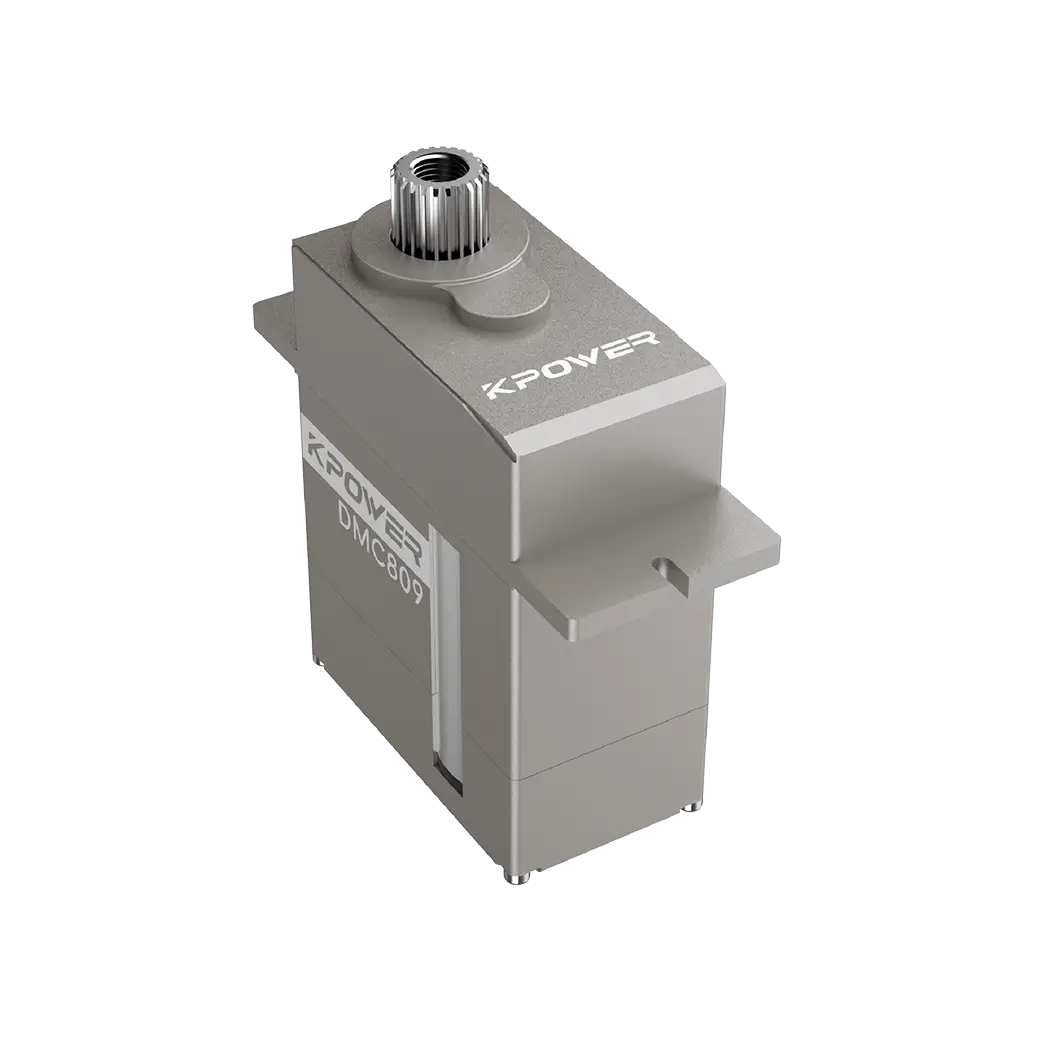
Have you ever encountered this kind of trouble: when making a small invention or robot, theservois either too big to fit in or not strong enough to move it? Especially for projects with limited space, finding a "little guy" with the right size and sufficient strength is like looking for a needle in a haystack. Today we will talk about this GH-S43A 4.3g microservoand see if it can solve your urgent needs.
When doing DIY, the most fearful thing is "almost". When you carefully design a small robotic arm or a miniature car model, only to find that an ordinary servo is larger than the palm of your hand, who can withstand this? GH-S43A, a 4.3g-level micro servo, is designed to fill this gap. It is small enough to be stuffed into a fidget spinner, but it can indeed output 4.3 kilograms of torque, which is equivalent to the fact that it can easily lift nearly nine 500ml bottles of mineral water. For smart car gimbals and mini robot joints that require precise control but are limited in space, this "small size but big power" feature is a savior. Think about it, without it, your design may have to be enlarged several times to accommodate the size of the motor, which would be a pity.
When many people hear about the 4.3g servo, their first reaction is "It must be so light and weak." In fact, this is precisely its highlight. We can make a simple analogy: Have you ever seen ants move rice? Ants are small, but they can move things dozens of times heavier than themselves. The metal gears and coreless motor used in GH-S43A are designed to achieve this effect. In micro quadcopters or precision instruments, the torque it provides is fully sufficient to drive lightweight structures. For example, if you want to make a mechanical claw that can automatically turn books, or add an interactive function that shakes the head and head to the figure, the ordinary large servo is too obtrusive, and this mini version is just right. It just uses its strength on the blade, so you don't have to worry about it "not being able to carry it".
Getting it in place is half the battle. The size of GH-S43A is about 23mm x 12mm x 22mm, which is about the size of a big red date. When you design or select a 3D printed part, remember to reserve the three mounting holes it comes with. The hole spacing is generally standard. The connection method is also simple. It is usually equipped with 1.25 or 1.5 pitch terminal wires. When soldering to your flight control board or microcontroller main control board, remember to check the signal wires, positive and negative poles. A practical tip is: first use hot melt glue or double-sided tape to simply fix it during the test phase. After debugging the movement trajectory, use screws or structural glue to permanently fix it. This way, if the position is inappropriate, it can be adjusted and avoids repeated disassembly.
Selection is like a blind date, you can’t just look at the face (weight), you have to look at the inside. In addition to the 4.3g weight and 4.3kg torque, you also need to pay attention to the "operating voltage" and "speed". Servos such as GH-S43A generally work at 3.7V to 6V, and are very suitable for direct power supply from a single lithium battery. Let’s look at the “dead zone” parameter, which is the accuracy with which it responds to the smallest signal change. This determines whether you control it to rotate 0.1 degrees or 0.5 degrees, which is particularly critical for camera gimbals that require fine positioning. There is also the "gear material". Metal gears are definitely more wear-resistant than plastic. Since it is marked with metal gears, the wear will be less during long-term operation. After understanding these parameters thoroughly, you can choose the most suitable one among similar products at a glance.

Want to use it to make an interactive gadget? Just go with your feelings.
Step 1: Connection test.Connect the servo to the PWM pin of ESP32, download a simple servo library routine, see if it can turn from 0 degrees to 180 degrees, and listen to see if the sound is smooth and without abnormal noise.
Step 2: Conceive the action.For example, if you want to make a mini flag-raising device, you only need to swing the servo arm back and forth 60 degrees. First draw your mechanical structure on a scratch paper. The servo arm drives the rope or connecting rod to ensure that the rotation range is not blocked.
Step 3: Programming optimization.Write the code to make the servo move at a specific time. If jitter is found, add a delay in the code or use an external power supply to power the servo separately, do not take power from the motherboard. In this way, a complete action system comes alive.
What are you most afraid of when playing with micro servos? One is stalling and the other is overloading. If you forcefully hold down the rotating servo arm with your hand, the current in the internal motor will surge instantly, causing it to heat up and burn out. Therefore, there should be room for mechanical structure design, such as adding a limit switch at the end of the connecting rod to automatically cut off the power when it touches the edge. Second, don't over-voltage. Don't try to connect the 7.4V lithium battery directly. Although it rotates quickly, it will burn the chip every minute. The third is to pay attention to the installation direction. If your servo is subject to a constant pulling force in one direction for a long time, you can use the "virtual neutral" function of the servo to keep the force balanced and don't let the gear on one side keep straining. Develop these good habits and your little servo will be able to play with you for several years without any problem.
After talking so much about the GH-S43A micro servo, are you itching to try it? In the project you are planning to do recently, are you planning to use it on a smart car, or are you planning to make some interesting interactive device? Come to the comment area to chat about your ideas. Maybe your creativity can inspire more people. If you find it useful, remember to give it a like and share it with friends who also love to do things!
Update Time:2026-03-04

Contact Kpower's product specialist to recommend suitable motor or gearbox for your product.