







TECHNICAL SUPPORT


Published 2026-01-19
Okay, picture this. You’ve got this beautiful automated setup—maybe it’s a precise sorting line, or a robotic arm doing delicate work. Everything’s humming along, and then… it happens. A slight hiccup. One part of the process slows down, and suddenly the whole line is waiting. The machine stutters. You’re not just losing time; you’re watching a domino effect of tiny delays pile up into a real problem.
It’s frustrating, right? You designed the system to be robust. But sometimes, the very architecture that makes it solid can also make it… a bit rigid. This isn’t just about software; it’s a hardware reality, too. Think of yourservomotors and actuators as the muscles of your machine. In a traditional, tightly-coupled “monolith” design, all these muscles are wired into one central nervous system. One command center calls all the shots. It’s simple to start with, sure. But when you need that one gripper to move faster or that axis to take on a new motion path, you often have to recalibrate the entire system. It’s like asking your whole body to adjust just because you want to wiggle a finger differently.
So, what’s the alternative? Let’s talk about breaking the monolith apart. Not into chaos, but into a team of specialized units.
From One Brain to a Network of Nerves
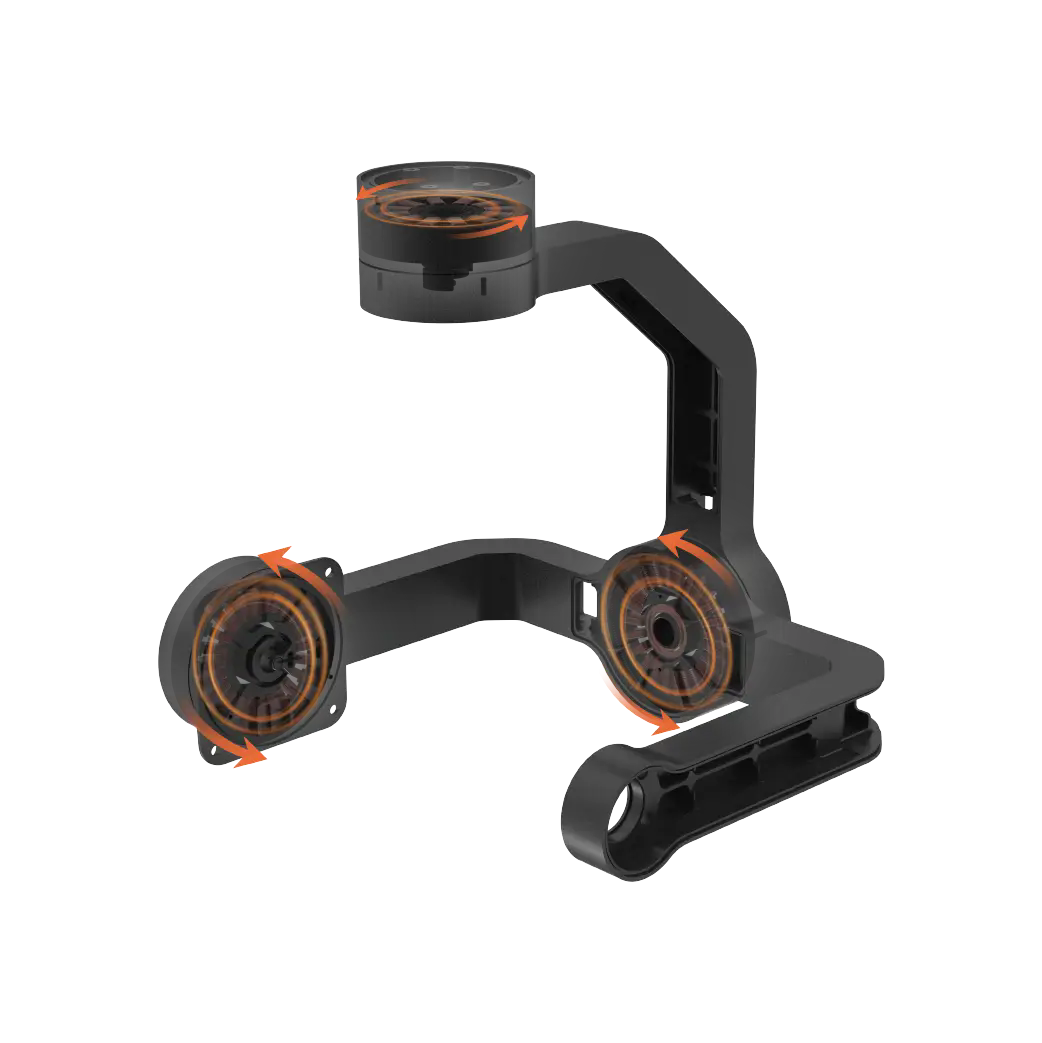
Imagine instead giving each key mechanical function—eachservo-driven joint, each linear actuator, each critical sensor loop—a bit of its own smart autonomy. This is the core idea behind a more distributed, “microservices” style approach for machinery. Each physical module operates with its own localized control, communicating with a central coordinator but capable of acting independently within its defined role.
Why bother? Let’s get practical.
But Isn’t It More Complex?
It’s a fair question. More moving parts, literally and figuratively, can seem daunting. The challenge shifts from central logic complexity to interface clarity. The key is clean, well-defined communication protocols between modules—how position data, completion signals, and error codes are exchanged. It’s about setting clear “contracts” between each mechanical service.
This is where the philosophy of your components matters. You need parts that are built not just for raw performance, but for predictable behavior and easy integration. Think of it as choosing team players. A servo that offers consistent, transparent feedback over standard interfaces becomes a reliable partner in this architecture. It’s not a black box; it’s a communicator.
Choosing the Right Muscles for Your Machine
So, how do you move in this direction? It starts at the component level.
Precision and repeatability are your bedrock. A modular system is only as strong as its weakest link’s predictability. You also want to look for built-in intelligence—features like internal error reporting, temperature monitoring, and compliance adjustment. These aren’t just specs; they’re the self-awareness that allows a module to manage itself and report its status clearly.
Communication protocol support is the language your system speaks. Whether it’s a common fieldbus or a streamlined pulse train, consistency here reduces integration friction. Finally, consider physical form and connectivity. Modules designed with clear power and signal inputs, with robust connectors, turn a wiring puzzle into a simple plug-and-play exercise.
ThekpowerLens
Atkpower, we view engineering through this lens of intelligent modularity. We think about how each servo, each drive, each controller will function not just as an isolated component, but as a potential node in a smarter, more resilient system. Our development focuses on delivering that crucial combination of raw power, nuanced control, and transparent communication. We build the reliable, communicative “team players” that distributed mechanical architectures thrive on.
The goal isn’t complexity for its own sake. It’s resilience. It’s giving your machine the grace to handle a stumble without taking a full fall, and the agility to adapt its strength where it’s needed most. It’s about moving from a single, unbreakable chain to a woven mesh of capabilities—where a single thread can be reinforced without reweaving the whole tapestry.
Ending with a stutter is never the plan. Maybe it’s time to rethink the conversation between all the moving parts.
Established in 2005,kpowerhas been dedicated to a professional compact motion unit manufacturer, headquartered in Dongguan, Guangdong Province, China. Leveraging innovations in modular drive technology, Kpower integrates high-performance motors, precision reducers, and multi-protocol control systems to provide efficient and customized smart drive system solutions. Kpower has delivered professional drive system solutions to over 500 enterprise clients globally with products covering various fields such as Smart Home Systems, Automatic Electronics, Robotics, Precision Agriculture, Drones, and Industrial Automation.
Update Time:2026-01-19

Contact Kpower's product specialist to recommend suitable motor or gearbox for your product.