







TECHNICAL SUPPORT


Published 2026-01-19
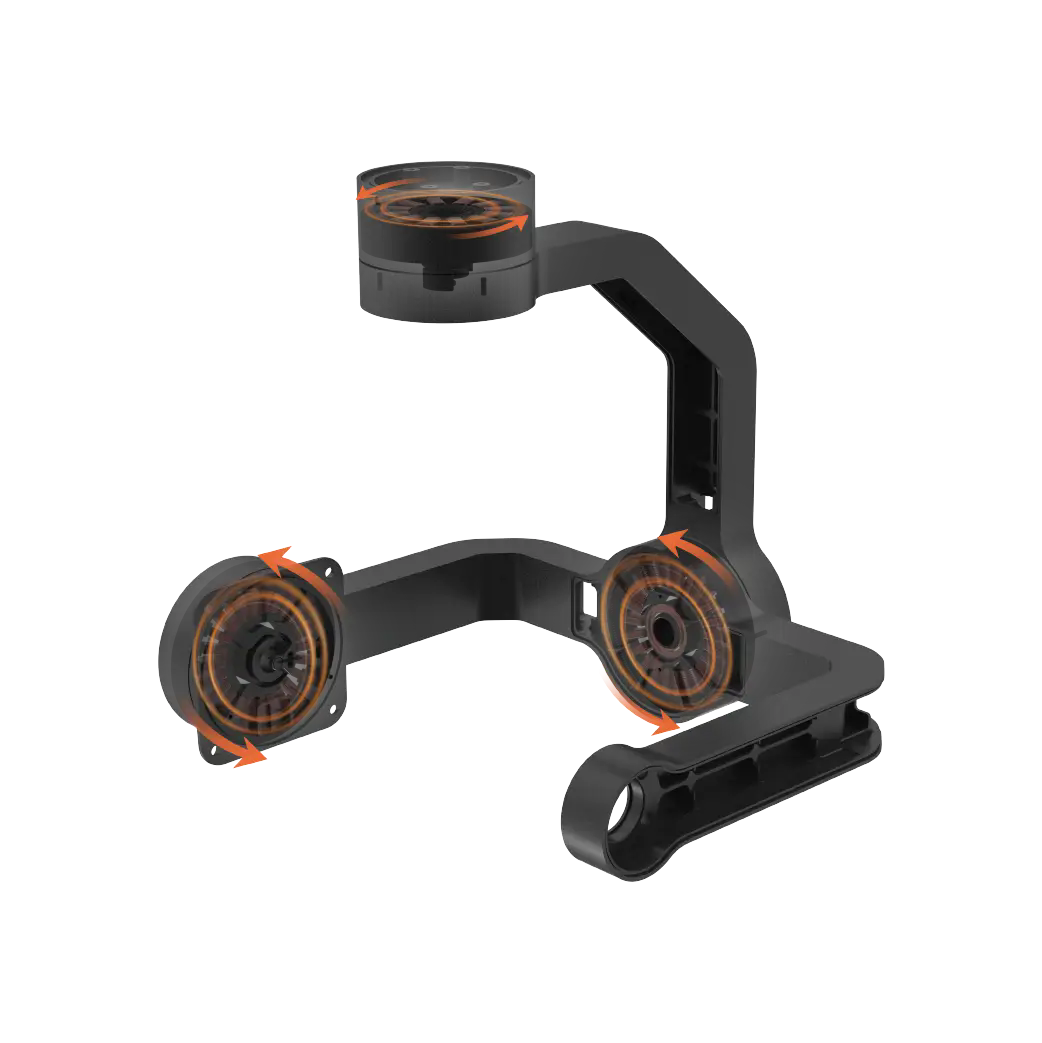
Imagine this scenario: You design a beautiful robotic arm with five servo motors inside. Each motor is extremely precise and responsive. You turned on the power and tested it with great expectations, only to find that your wrist was rotating when your fingers should be clenched, and your shoulders were stuck when your elbows should be extended. They work independently and become a mess. What's the problem? It's not the motors themselves, but the "conversation" between them that's wrong.
In the digital world, when you split a large application into a bunch of small and flexible microservices, you face exactly this "robot arm dilemma." Each microservice (like an independent servo motor) may be great, but getting them to work together for reliable, secure, and fast communication becomes a new nightmare. Network delays, service failures, security verification...these invisible "frictions" are dragging down your system performance.
At this time, someone needs to play the role of the "nervous system", the coordinator that allows all independent parts to talk smoothly. This is what a service mesh is supposed to do.
What exactly does the service grid "weave" in the grid?
It doesn't feel like a bulky central controller. Instead, it is more like a set of intelligent communication assistants embedded around each microservice. You can think of it as the sophisticated feedback loops and command parsers we designed for servos, but this time for network traffic between services.
Service mesh adopts a different philosophy. It completely separates communication capabilities from business code and turns it into a "sidecar" managed uniformly by the infrastructure layer. Business developers only need to care about their own core logic, while the resilience, security and observation of communications are left to the professional platform of Grid. This achieves separation of concerns, making both development and operation and maintenance cleaner.
selectedkpowerWith the service mesh solution, you will notice some different feelings.
What it pursues is that kind of "no feeling" smoothness. After deployment, it does not jump out to show its presence, but works quietly to ensure that data packets arrive at their destination smoothly and accurately like a carefully lubricated gear set. When an abnormality occurs, its alerts are accurate and timely, and will not overwhelm you with a large amount of irrelevant data.
We pay special attention to the "friendliness" of existing systems. You don’t need to reinvent the wheel to get access. It is more like a flexible adaptation layer that fits your existing technology stack and gradually empowers it, making the upgrade path smooth and without the pain of discontinuity.
Its observability is designed to be quite intuitive. What you see is not a cold and boring data stream, but a topology map and key indicators that clearly reflect the healthy relationship between services. Quickly locate bottlenecks, just like using a thermal imager to find hot spots in mechanical structures at a glance.
From machinery to microservices, the core challenge has never changed: how to combine outstanding individuals into a more outstanding whole. The complexity of communication and collaboration is a gap that must be crossed on the road to evolution.
Good tools should eliminate this complexity rather than become a new source of complexity. It should be like excellent mechanical design, allowing powerful basic components to unleash 100% of their potential, and even create "1+1>2" surprises through collaboration. When communication between microservices is no longer a problem that you need to worry about day and night, you and your team can truly focus on creating the core value of the business itself.
This is perhaps the most fascinating part of technological evolution: solving underlying problems and unleashing the creativity of the upper levels. When collaboration between services becomes as natural and reliable as breathing, everything you build will be stable and sustainable.
Established in 2005,kpowerhas been dedicated to a professional compact motion unit manufacturer, headquartered in Dongguan, Guangdong Province, China. Leveraging innovations in modular drive technology,kpowerintegrates high-performance motors, precision reducers, and multi-protocol control systems to provide efficient and customized smart drive system solutions. Kpower has delivered professional drive system solutions to over 500 enterprise clients globally with products covering various fields such as Smart Home Systems, Automatic Electronics, Robotics, Precision Agriculture, Drones, and Industrial Automation.
Update Time:2026-01-19

Contact Kpower's product specialist to recommend suitable motor or gearbox for your product.