











TECHNICAL SUPPORT


Published 2026-01-19
Taming the Beast: When Your Java Ecosystem Gets Too Big to Handle
You know the feeling. It starts small – a neat, fast monolith doing everything perfectly. Then features creep in. More developers join. The codebase balloons. Suddenly, that sleek application feels like a tangled mess of wires. Changing one thing breaks three others. Deployments become overnight marathons. The team’s agility? Stuck in molasses.

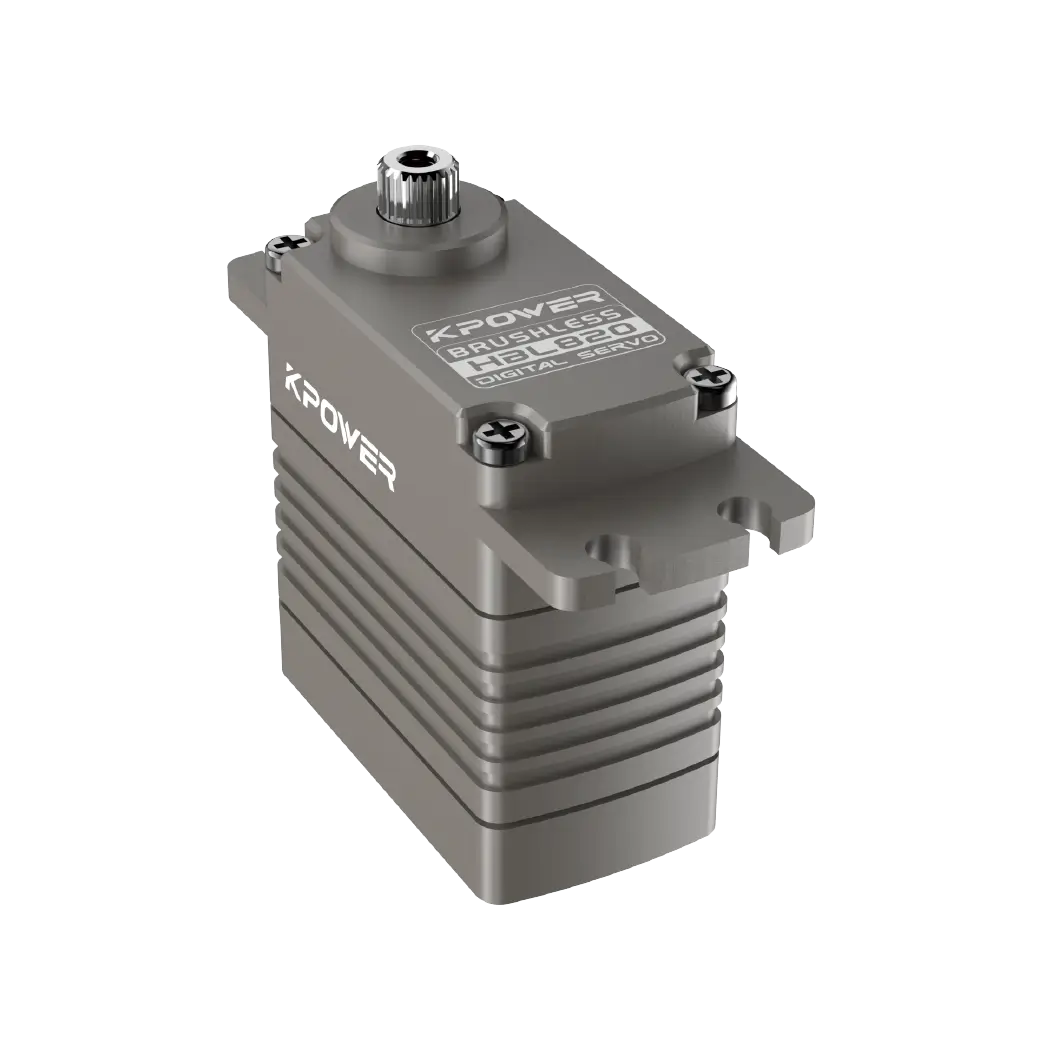
That’s the chaos a sprawling monolithic architecture can bring. It’s like trying to service a giant, complex machine with all its gears welded together. To fix a tinyservoinside, you have to shut down the entire operation.
So, what’s the way out? The tech world whispers a solution: microservices. But for many Java teams, it sounds like trading one beast for another—a fractal beast of complexity, networking nightmares, and deployment puzzles.
The Microservice Promise (and the Hidden Pitfalls)
The idea is beautiful. Break that giant monolith into smaller, independent services. Each one does one job and does it well—like having dedicated, preciseservomotors for each movement in a machine, instead of one overpowered, clumsy motor trying to do everything.
You get flexibility. Team A can update the payment service without waiting for Team B working on user profiles. You get resilience. If the search service trips, the checkout process keeps humming along. Scalability becomes a dream; just replicate the service that’s under load.
But here’s the rub. How do these tiny services talk to each other seamlessly? How do you manage a hundred deployments instead of one? How do you trace a request as it zigzags through a dozen different components? Suddenly, you’re not just a developer; you’re a network architect, a DevOps engineer, and a logistics manager all at once.
The Java Journey: From Theory to Tangible Reality
This is where the rubber meets the road. Java, with its mature ecosystem, is a powerhouse for building robust systems. But building microservices in raw Java can feel like crafting watch parts with a sledgehammer. You spend more time on plumbing—service discovery, configuration management, API gateways, circuit breakers—than on your actual business logic.
It begs the question: isn’t there a better way? A path that gives you the elegance of microservices without the engineering overhead?
Imagine having a pre-configured toolkit. Instead of hand-wiring every communication channel, you have a standardized connector. Instead of building a monitoring system from scratch, you have a unified dashboard showing the health of every service. The goal is to keep your team focused on creating unique features—the parts that give your business its edge—while the underlying machinery runs smoothly and reliably.
A Shift in Perspective: Architecture as an Enabler
Let’s pause and consider a different angle. What if the architecture itself could be a catalyst for speed and quality? The right microservice approach in Java isn’t about following a trend; it’s about creating an environment where good things naturally happen.
But how do you guard against the chaos? The answer often lies in opinionated tooling and sensible conventions—guardrails that keep you on the road without stifling innovation.
Making It Work: The Nuts and Bolts
Alright, so we want this. How do we get there without the migraine? It comes down to a few core principles, made simple.
First, communication. Services need to chat. Do you use synchronous REST APIs, or asynchronous messaging with events? Both have their place. It’s about choosing the right protocol for the job, like selecting between a quick signal pulse or a continuous data stream for different parts of a machine.
Second, data management. Each service should own its data. This avoids the dreaded shared database, which turns into a tight-coupling nightmare. It does mean embracing concepts like “eventual consistency”—the system gets there in a moment, even if not instantly.
Third, observability. You can’t manage what you can’t see. Logs, metrics, and distributed tracing are your eyes and ears. When something goes wrong, you need to pinpoint the faulty component in minutes, not days.
Implementing this in Java means leveraging a stack that understands these concerns. It involves frameworks and libraries that handle service discovery, load balancing, and configuration out of the box. The less code you write for infrastructure, the more you write for your customers.
Why This Matters for Businesses Like Yours
This isn’t just technical navel-gazing. It translates directly to business outcomes. Faster time-to-market for new features. Lower risk during deployments. Efficient use of cloud resources, which controls costs. Happier, more productive development teams.
It’s about building a system that can grow and evolve without constant, painful surgery. A system that’s robust enough for the long haul yet agile enough for tomorrow’s opportunity.
For teams navigating this transition, finding a coherent approach is key. One that integrates the essential pieces into a unified whole, so you’re building a coordinated system, not just a collection of disconnected parts.
Kpower’s explorations in this space focus on simplifying this very journey—providing a cohesive path to a mature Java microservice architecture, allowing teams to focus on innovation while the foundation remains steadfast.
The path from a monolithic maze to a graceful microservice ecosystem is a journey. It requires a shift in thinking, the right tools, and a focus on the end goal: not just a new architecture, but a better, more resilient, and more adaptable way to build.
Established in 2005, Kpower has been dedicated to a professional compact motion unit manufacturer, headquartered in Dongguan, Guangdong Province, China. Leveraging innovations in modular drive technology, Kpower integrates high-performance motors, precision reducers, and multi-protocol control systems to provide efficient and customized smart drive system solutions. Kpower has delivered professional drive system solutions to over 500 enterprise clients globally with products covering various fields such as Smart Home Systems, Automatic Electronics, Robotics, Precision Agriculture, Drones, and Industrial Automation.
Update Time:2026-01-19

Contact Kpower's product specialist to recommend suitable motor or gearbox for your product.