







TECHNICAL SUPPORT


Published 2026-01-19
So you’ve built your microservices in C#. They’re sleek, they’re independent, they promise scalability. But then, something in the real world has to move. A conveyor belt needs precision control, a robotic arm demands smooth motion, or a sensing mechanism requires exact positioning. Suddenly, your elegant digital architecture meets the physical dance of motors and gears. This is where many elegant systems hit a snag. The logic is sound, but the physical response feels sluggish, uncoordinated, or just plain unreliable.
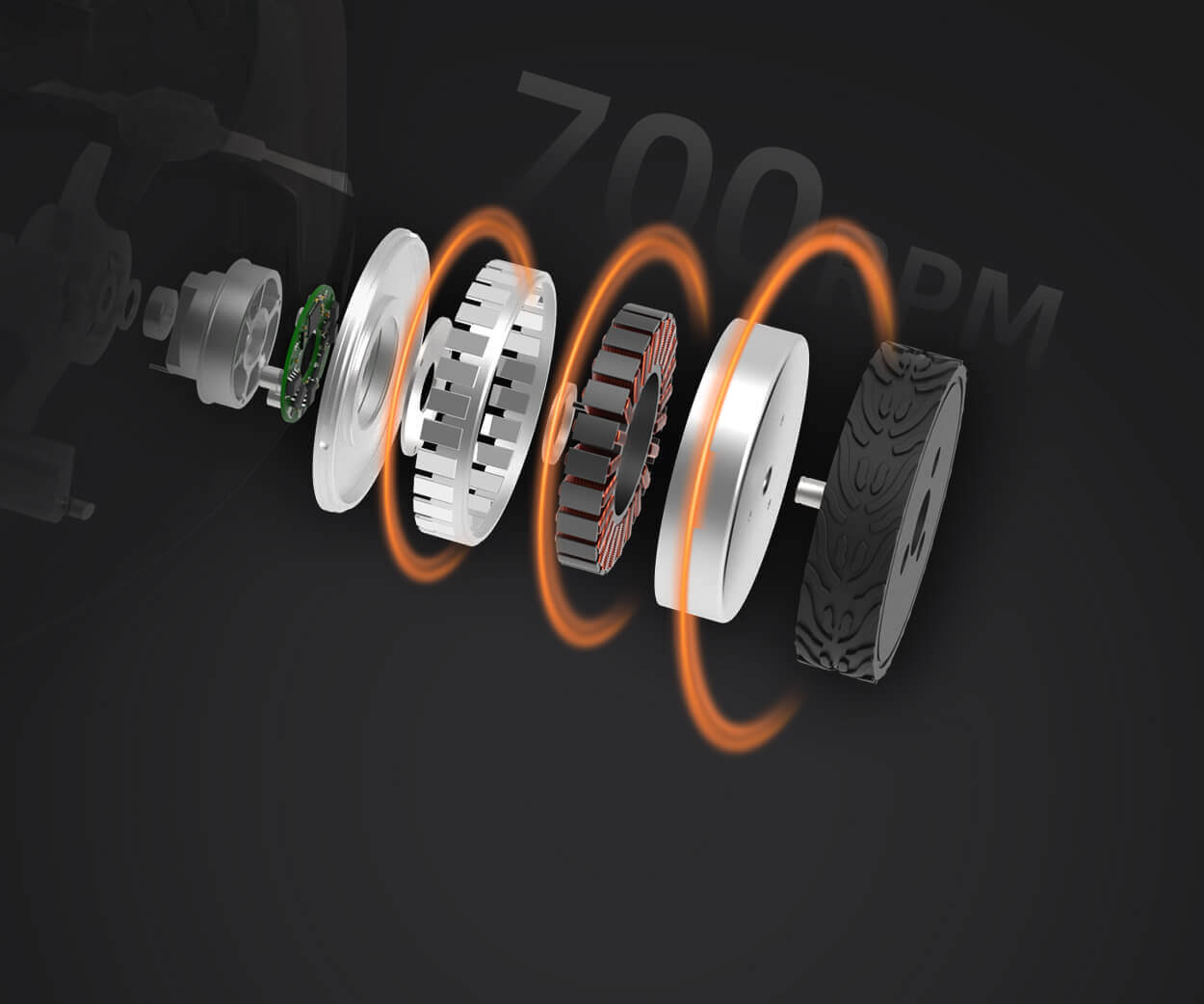
It’s a familiar friction point. The software issues commands, but the hardware’s feedback feels like it’s speaking a different, slower language. You might see jittery movement, delayed responses, or even missed steps entirely. It’s not just a hardware problem; it’s a communication gap at the system’s most critical handshake point.
Imagine your microservices as a team of expert dispatchers. They process orders, manage logistics, and optimize routes with incredible speed. But if the fleet of vehicles they command has sticky accelerators and vague steering, the whole operation stumbles. In the world of automation,servomotors and precision mechanical components are that fleet. The quality and intelligence of their drivers—the control systems—determine whether your software’s brilliant decisions translate into graceful, real-world action.
How do you bridge this? It starts with recognizing that a microservice isn’t just a data processor; it can be a motion coordinator. When a service responsible for package sorting sends a “move to position B” command, what happens next is everything. The signal must be clean, the power delivery immediate and stable, and the motor’s response must be faithful down to the smallest angle. Any noise, lag, or power dip in this chain turns precision into approximation.
Let’s pause and ask a few questions we often hear.
“My service calculates the perfect trajectory, but the actuator movement looks choppy. Why?” Often, it’s a mismatch. The software assumes instantaneous, perfect obedience. The hardware needs clear, robust signals and consistent power. If the driver electronics interpreting your commands are susceptible to electrical noise or can’t maintain torque, the movement will betray your calculations.
“I need several small movements to happen in tight sequence across different devices. They end up slightly out of sync.” This gets to the heart of distributed control. It’s not just about sending commands fast; it’s about each endpoint responding with identical, predictable timing. It requires components that value synchronized readiness as much as raw power.
“Everything works in the lab, but on the factory floor, performance degrades.” The real world is electrically noisy and physically demanding. Components that thrive here are built not just for spec-sheet performance, but for consistent character under stress—stable signals, heat management, and resilience against voltage swings.
This is where choices matter. Selecting the partners for your system’s physical expression isn’t a secondary procurement task; it’s a core architectural decision. The goal is seamlessness. You want the transition from a digital command to a physical motion to feel almost organic, as if the service itself is extending into the machine.
Think of it as giving your services a capable and trustworthy body. The motion is crisp because the control signals are unwavering. Sequences stay synchronized because each component adheres to the same strict timing discipline. The system runs cooler and quieter because energy is used efficiently, not wasted as heat or vibration.
There’s a tangible confidence that comes when the hardware keeps its promises. Your team stops worrying about “if” the arm will move correctly and starts focusing on “what” new tasks it can perform. Debugging shifts from chasing electrical gremlins and lag to refining logic and efficiency. The mechanical layer becomes a silent, reliable foundation, not a constant source of drama.
In the end, the best technology feels inevitable. The pieces fit. The software’s intent flows unimpeded into physical action. You stop noticing theservodrivers or the motor controllers; you simply see a machine behaving intelligently. The architecture—both digital and physical—fades into the background, allowing the purpose of the application to shine through.
It’s about creating that smooth, silent handoff where code becomes motion. When every microservice, from the one managing logistics to the one coordinating a delicate assembly, knows that its commands will be executed with fidelity, something clicks. The system isn’t just connected; it’s coherent.
For those building the future with C# and microservices, the journey doesn’t end at the API gateway. It continues all the way to the final, physical movement. Choosing partners who understand that full spectrum—who build components that speak the language of precise, reliable control—is how you turn a good system into a great one. That’s the partnershipkpowerbrings to the table, ensuring the intelligence in your architecture is fully realized in the world.
Established in 2005,kpowerhas been dedicated to a professional compact motion unit manufacturer, headquartered in Dongguan, Guangdong Province, China. Leveraging innovations in modular drive technology,kpowerintegrates high-performance motors, precision reducers, and multi-protocol control systems to provide efficient and customized smart drive system solutions. Kpower has delivered professional drive system solutions to over 500 enterprise clients globally with products covering various fields such as Smart Home Systems, Automatic Electronics, Robotics, Precision Agriculture, Drones, and Industrial Automation.
Update Time:2026-01-19

Contact Kpower's product specialist to recommend suitable motor or gearbox for your product.