







TECHNICAL SUPPORT


Published 2026-01-19
You know that feeling when you’re building something—maybe a robotic arm, maybe an automated stage—and you just can’t get the movement right? It’s either too jerky, too slow, or it doesn’t quite hit the mark. It’s frustrating, right? Like trying to dance in shoes that don’t fit.
That’s where the real conversation begins. Not with fancy jargon, but with a simple question: How do we make things move exactly the way we want them to?
Let’s be honest: most of the time, when we talk aboutservomotors or舵机, we focus on specs. Torque, speed, voltage… but what about the moments between the numbers? What about the transition from one position to another, or how the system handles a sudden change in load?
I remember working on a small automation project a while back. Every time the arm reached for an item, there was this tiny shudder—barely noticeable, but enough to misalign the grip. It wasn’t about the motor’s power; it was about how the commands were being processed, how the feedback was being read, and how every little signal was synchronized.
That’s when it hit me: movement isn’t just about hardware. It’s about architecture.
Now, you might wonder—what does a streaming service have to do with servo motors?
Think about it: Netflix doesn’t just deliver a movie. It breaks everything into tiny, independent services that talk to each other seamlessly. If the recommendation engine lags, the video keeps playing. If the billing system is busy, your screen doesn’t freeze. Every piece works alone, but together they create a smooth experience.
That’s what we need in motion control: a system where the command module, the feedback loop, the power output—all can work independently, yet stay perfectly in sync. You don’t want one slow signal holding back the entire operation. You want resilience. You want each function to own its role, like a well-rehearsed orchestra where every musician knows their part.
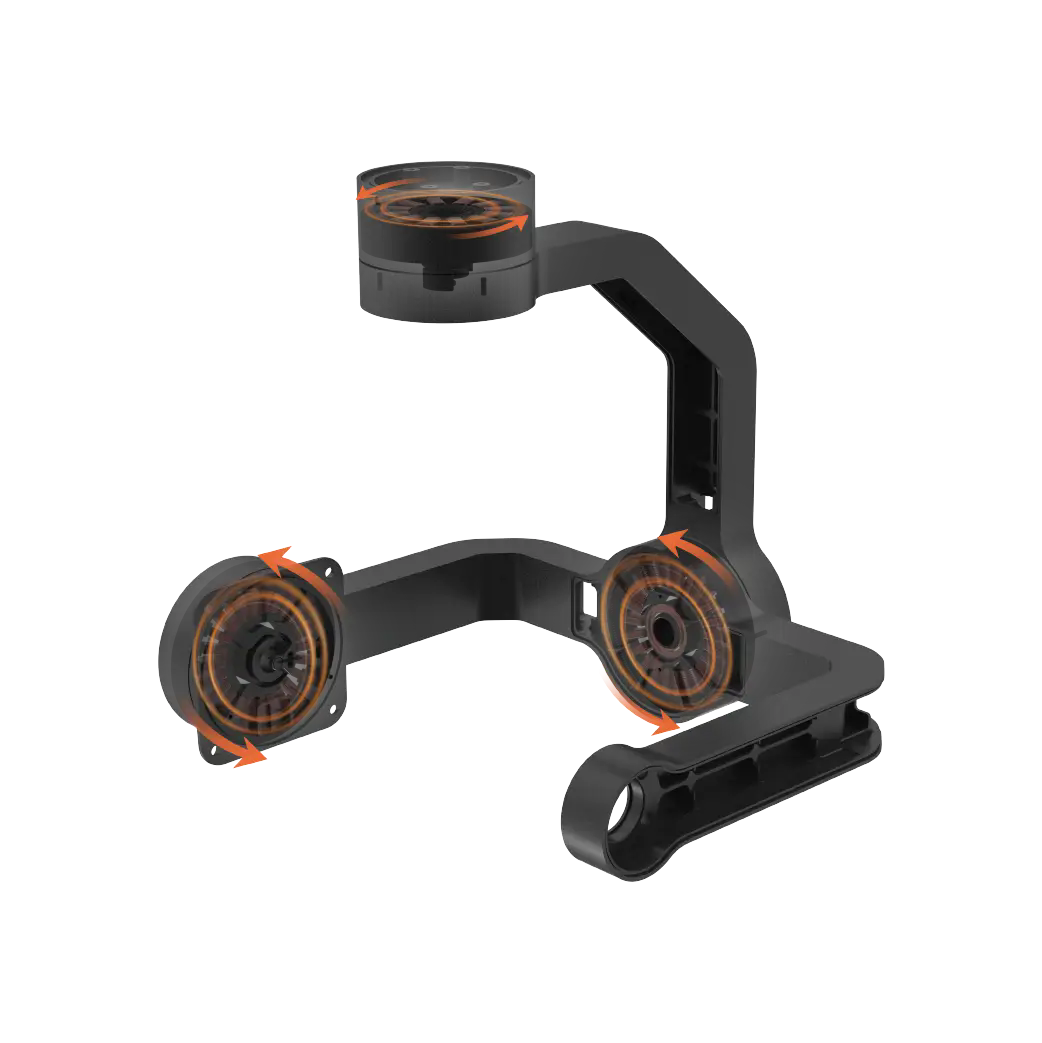
Say you’re designing a camera stabilizer. The motor needs to respond to tilt, pan, and vibration—all at once. If every adjustment has to go through a central “brain,” there’s going to be lag. But if each axis operates like its own microservice, with clear communication between them, the movement stays fluid.
It’s like having three specialists working together instead of one generalist trying to do everything. One handles horizontal sweep, another manages vertical lift, the third fine-tunes the resistance. They share just enough data to stay coordinated, but no one waits for anyone else.
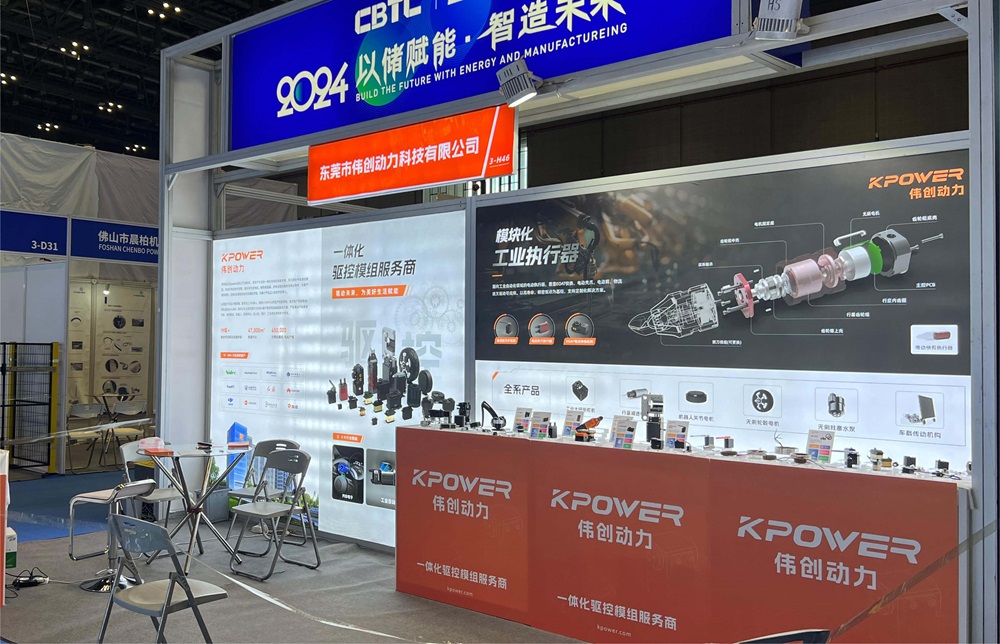
kpower’s approach to servo design often mirrors this philosophy. By decoupling control functions, their systems allow smoother transitions and quicker error recovery. If one feedback sensor acts up, the rest keep going—adjusting, compensating, keeping the motion stable.
Here’s a scenario: you’ve got a conveyor that needs to sort packages by weight. The servo that adjusts the rail angle must react instantly when a heavier item rolls in. If the control logic is monolithic—like an old-school program that runs step-by-step—you’ll see delays. But with a distributed approach, the weight sensor talks directly to the tilt motor, with just a nod to the central monitor. The result? No pauses, no jams.
This isn’t about complexity. It’s about clarity. Each piece does one job well, and the communication between them is lightweight, frequent, and reliable.
You don’t need to rebuild everything from scratch. Sometimes it’s about rethinking how your existing components communicate.
Start with one motion sequence—maybe the opening and closing of a gripper. Is the command signal direct? Is the feedback loop tight? Can it operate even if the logging module is busy? Try to isolate functions just enough that they can work alone, but not so much that the system becomes chaotic.
Balance is key. Like a good conversation: each person speaks when needed, listens when appropriate, and the dialogue moves forward without anyone dominating.
In the end, whether we’re talking about servo motors,舵机, or any motion system, it’s really about dialogue between parts. The more natural that conversation, the smoother the performance.
And maybe that’s the takeaway: good engineering feels invisible. You notice it only when it’s absent—when the motion stutters, when the sync is off, when the machine feels reluctant. But when it’s right, everything just… flows.
So next time you watch something move precisely, silently, reliably—think about the architecture behind it. Not just the gears and wires, but the way they talk to each other. And if you ever design such a system, remember: sometimes the best movement comes from letting each part have its own voice.
Established in 2005,kpowerhas been dedicated to a professional compact motion unit manufacturer, headquartered in Dongguan, Guangdong Province, China. Leveraging innovations in modular drive technology,kpowerintegrates high-performance motors, precision reducers, and multi-protocol control systems to provide efficient and customized smart drive system solutions. Kpower has delivered professional drive system solutions to over 500 enterprise clients globally with products covering various fields such as Smart Home Systems, Automatic Electronics, Robotics, Precision Agriculture, Drones, and Industrial Automation.
Update Time:2026-01-19

Contact Kpower's product specialist to recommend suitable motor or gearbox for your product.