







TECHNICAL SUPPORT


Published 2026-01-19
I recently had tea with some old friends and talked about the automation project in their factory. A brother who works on a packaging line was scratching his head: The new production line needs servo motors, and the performance parameters look good. However, there are always glitches in the system when running. Either the response is half a beat slow, or there is a problem with the coordination between several axes. They are adjusted back and forth, not only delaying the construction period, but also making people very tired. He asked me: "Do you who are engaged in technology have any ideas of 'once and for all'? Don't always let me find the needle in the haystack among dozens of motor models."
it reminds me of uskpowerA metaphor often discussed within the team. Choosing a server system is sometimes like choosing an infrastructure for your technology stack - should you use a "monolithic" that packages all functions together, or should you split it into multiple independent and collaborative "microservices"?
When many people encounter unsmooth motion control, their first reaction is to replace it with a higher-end motor or drastically adjust the parameters. This is a bit like a computer that freezes. You only want to upgrade the CPU, but you ignore that it may be caused by too many software background programs competing for resources.
In the traditional "big overall" thinking, you tend to choose an extremely powerful core servo driver and expect it to handle everything: from the lowest level current loop, speed loop, position loop control, to high-level trajectory planning, and even complex communication protocols with the host computer. It is like an almighty master in the factory who knows everything. But once the orders (tasks) become complex and changeable, the master's energy allocation may go wrong. The calculation delay in one link may affect the synchronization of the entire system. Moreover, upgrading or modifying any part of the functions may affect the whole system, requiring the entire system to be shut down for testing, which is high risk.
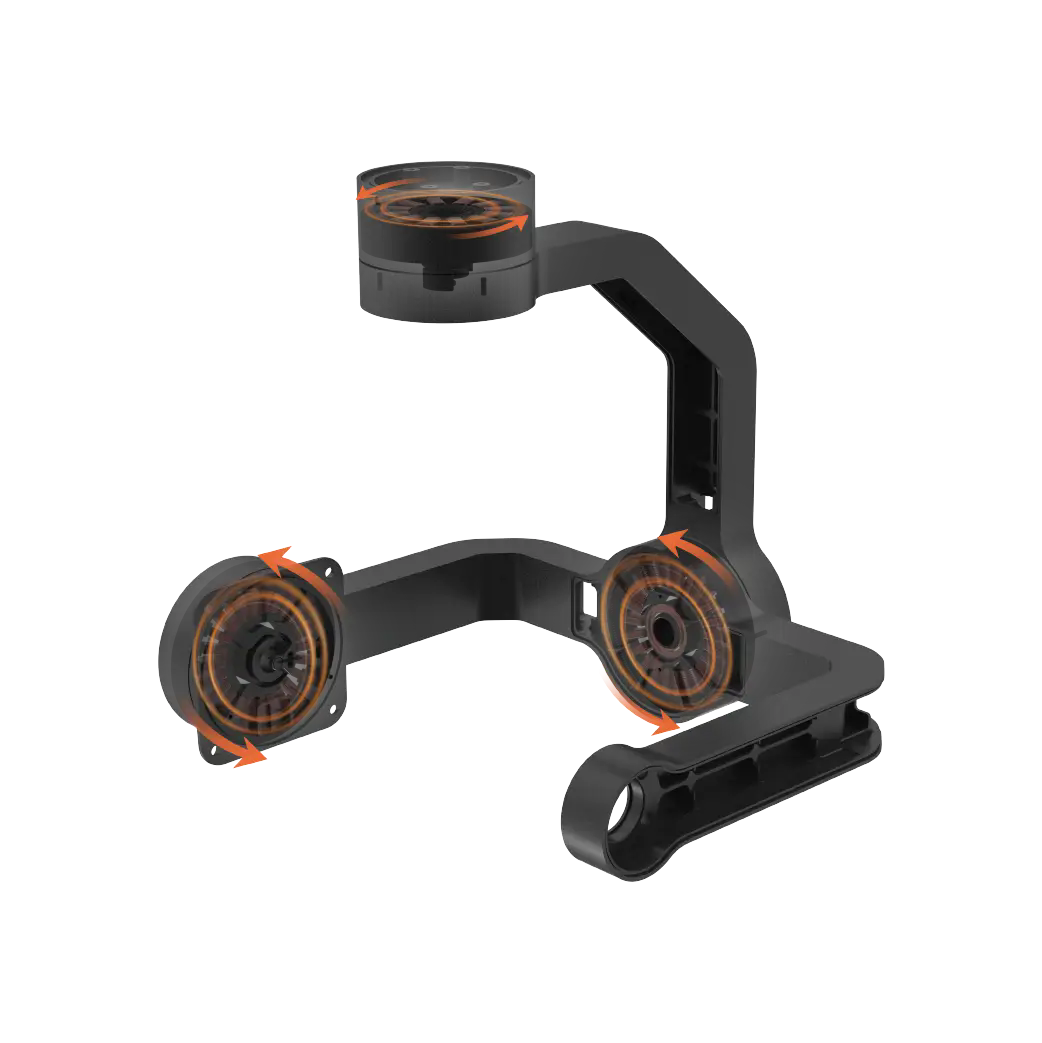
This is where the "microservice" architecture idea can inspire us. Rather than relying on a large, all-powerful control core, it is better to break down the tasks. Imagine that you break down a complex coordinated motion task: one is responsible for high-speed and high-precision positioning (such askpowerSome series) focus on making the position closed loop extremely robust; the other is responsible for quick response torque supplement, focusing on its dynamic torque performance. They each have an independent "brain" (controller), but they communicate and work together in real time through standard and efficient protocols (such as EtherCAT, CANopen).
By doing this, many questions suddenly became clear:
After talking about this, my friend asked: "I understand the principle, but back to the selection, how can I judge whether to use the 'integrated' solution or the 'distributed' solution?"
It really depends on where the "service boundary" of your project is. Here are a few questions you can ask yourself:
In the final analysis, whether it is software architecture or hardware selection, there is no absolute advantage or disadvantage, only suitability. When Kpower provides product support and solution suggestions, it is found that more and more customers are beginning to pay attention to the collaborative flexibility at the system level, not just the peak speed or rated torque of a single motor.
Just like a good team, each member does not need to be an all-around champion, but they need to have their own strengths and have smooth communication. Next time you are worried about servo system selection, maybe you can jump out of the list of single parameter comparisons and think about it from the perspective of "architecture": What kind of "team" are you building? Is this team's collaboration model centralized command or distributed collaboration?
Dismantling complex motion control problems and letting professional units handle professional tasks can often lead to more stable, flexible, and future-oriented solutions. After all, our goal is always to make the machine move smoothly and reliably, and to make the product good, rather than repeatedly wandering in the quagmire of debugging and maintenance. I hope this random thought can give you some different perspectives.
Established in 2005, Kpower has been dedicated to a professional compact motion unit manufacturer, headquartered in Dongguan, Guangdong Province, China. Leveraging innovations in modular drive technology, Kpower integrates high-performance motors, precision reducers, and multi-protocol control systems to provide efficient and customized smart drive system solutions. Kpower has delivered professional drive system solutions to over 500 enterprise clients globally with products covering various fields such as Smart Home Systems, Automatic Electronics, Robotics, Precision Agriculture, Drones, and Industrial Automation.
Update Time:2026-01-19

Contact Kpower's product specialist to recommend suitable motor or gearbox for your product.