







TECHNICAL SUPPORT


Published 2026-01-19
Imagine: on the production line in your factory, a servo motor suddenly slows down, and the entire line freezes. The engineers walked around it for a long time before discovering that there was a problem with a small parameter in the control program. But can you stop the entire line? Losses are no joke.
It's like controlling the whole body with one brain - efficient, but also concentrated in risk. Today, the "microservice architecture" we are talking about is to equip machines with this kind of "distributed intelligence".
In the past, we were used to packaging the entire control logic into a huge software. It has to manage the torque of the servo motor, the angle of the steering gear, and the feedback of the sensor...all squeezed together. It's like asking a general manager to handle a hundred calls at the same time. Sooner or later, everything will go wrong.
An equipment supervisor once talked to us about his troubles: "Every time I want to upgrade a function, I have to retest the entire system, fearing that the whole system will be affected." This exactly hits the pain points of traditional architecture: stiffness, difficulty in updating, and high risks.
Simply put, it breaks down a large system into many independent small services. Each service only deals with one thing, such as one that specifically processes servo motor position instructions, or one that only analyzes steering gear feedback signals. They "dialogue" through clear interfaces, just like several skilled workers in a workshop, each performing their duties and working together in a tacit understanding.
For example, your robotic arm needs to complete a grabbing action. Under the microservice architecture, the trajectory planning service calculates the path and tells the motor control service how to move, while the status monitoring service quietly watches behind the scenes to see if the data is normal. One of the service needs or repairs, you can adjust it individually without worrying that the servo control next to it will suddenly fail.

What does this bring?
flexibility. You can replace or upgrade a service at any time, like replacing a tool module on a production line, without having to shut down for an overhaul.
More resilient. If something goes wrong with a service, the affected area will usually be isolated and the entire production line will not be paralyzed. The system itself has a kind of "fault-tolerant" wisdom.
Also, it makes iterations lighter. The development team can focus on specific small functions, work in parallel, and quickly trial and error. This is particularly suitable for complex mechanical projects that require continuous improvement.
Good question. It's like managing a football team. When everyone's position is clear and communication is smooth, it is easier to direct than when everyone is huddled together. Microservice architecture requires clear communication protocols and monitoring tools to serve as "coaches" to ensure that each service (each team member) knows what it should do and how to cooperate with its teammates.kpowerWhen assisting customers to implement this type of architecture, special attention is paid to designing these "game rules" so that decentralization brings efficiency rather than chaos.
Let’s look at a simple scenario: a set of automated packaging machines. In traditional mode, a single program block might handle conveyor belt speed, robotic arm picking, and labeling control simultaneously. Once the labeling logic needs to be adjusted, programmers may have to carefully modify thousands of lines of code for fear of touching other parts.
In microservice design, these three functions may be three independent services. Has the labeling logic changed? You only change that labeling service, and testing it mainly revolves around the labeling action. After the modification, it is like replacing a new smart module, and other processes will run as usual. The psychological safety brought by this decoupling is real for the maintenance team.
Of course, it's not magic. Initial design requires more thought, and network communication between services will introduce new complexities. But in the long run, when the functions of your device become more and more complex and the need for updates becomes more and more frequent, this initial investment is often very worthwhile.
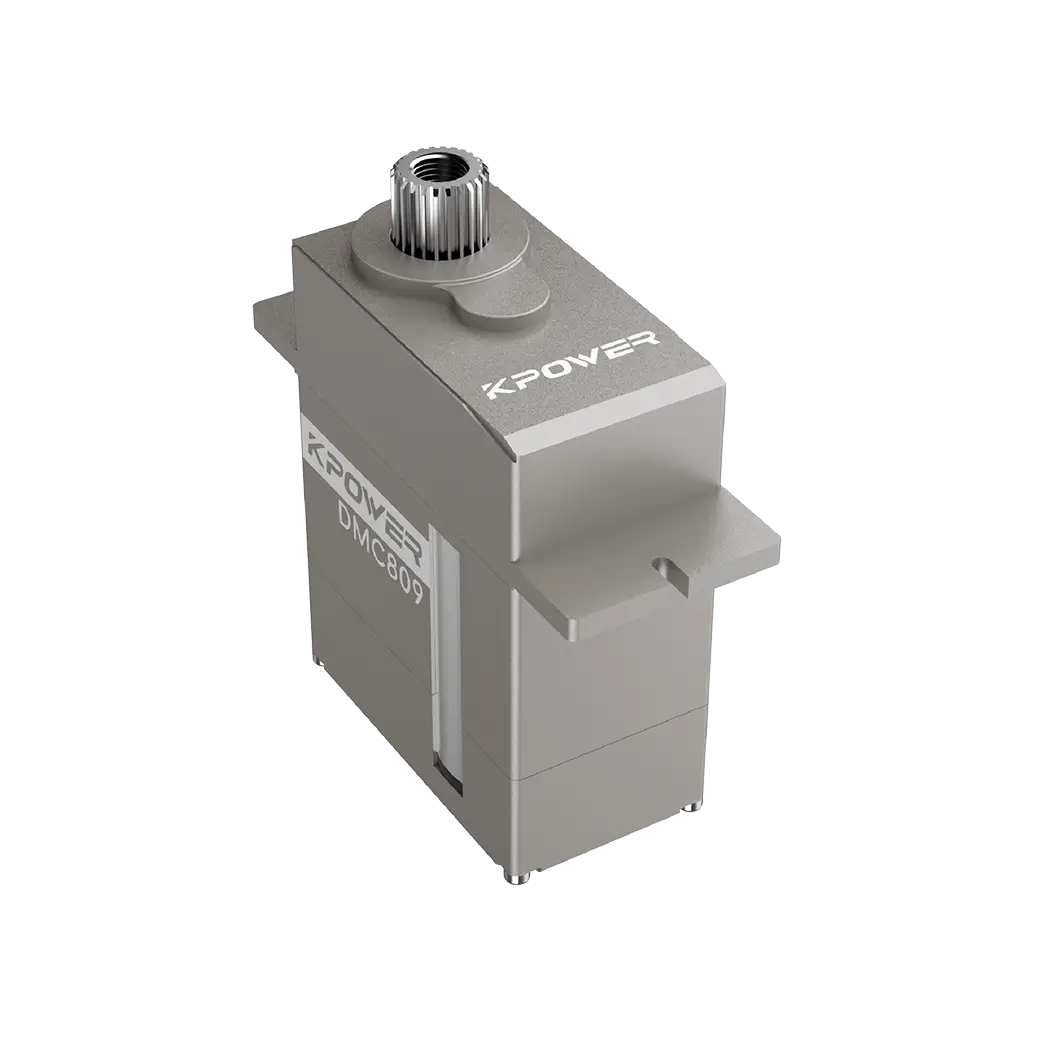
The relationship is huge. The "high cohesion, low coupling" idea advocated by the microservice architecture is actually connected with the reliable hardware design philosophy. Just like you choose for a machinekpowerWhen choosing a servo motor, what you look for is its precise response, stable operation, and easy integration. The clear and independent software architecture allows the performance of these high-quality hardware to be fully utilized and reduces performance losses or misjudgments caused by chaos at the system level.
Ultimately, whether it's a software service or a hardware unit, the goal is the same: to make every part of the system reliable, focused, and easy to collaborate with. When your machine has this inherent "dialogue" ability, stability and adaptability will naturally reach a new level.
A good architecture makes technology invisible and makes fluency the norm. When you are no longer distracted by the fragility of the system itself, you can truly focus on craftsmanship and innovation. This may be another layer of vitality given to machinery in the era of intelligence.
Established in 2005,kpowerhas been dedicated to a professional compact motion unit manufacturer, headquartered in Dongguan, Guangdong Province, China. Leveraging innovations in modular drive technology, Kpower integrates high-performance motors, precision reducers, and multi-protocol control systems to provide efficient and customized smart drive system solutions. Kpower has delivered professional drive system solutions to over 500 enterprise clients globally with products covering various fields such as Smart Home Systems, Automatic Electronics, Robotics, Precision Agriculture, Drones, and Industrial Automation.
Update Time:2026-01-19

Contact Kpower's product specialist to recommend suitable motor or gearbox for your product.