







TECHNICAL SUPPORT


Published 2026-01-19
Imagine this: your robotic arm is performing a precision assembly task, and suddenly a certain joint responds half a beat slower - it's not a malfunction, it's just a "stuck" moment. Or, in your automated production line, multiple servos should move synchronously, but there is a slight time difference, like the rhythm of the instruments in a band being slightly out of sync. Behind these problems, it is often not that a component is broken, but that the entire control system is saying: "I am too busy, and the information is a bit blocked."
The traditional large-scale centralized control system is like a command room with only one command station. All commands go out from here, and all sensor data floods back here. This is efficient when the system is simple. However, as equipment increases and tasks become more complex, this "brain" is easily overloaded and its response slows down. Once it needs to be upgraded or maintained, the entire line may have to stop.
At this time, it may be time to listen to another idea: microservice architecture.
Microservices is not some magic new word. You can think of it as splitting the large command room into multiple professional small studios. Each studio is independently responsible for a clear task - for example, specifically processing position feedback, specifically calculating motion trajectories, and specifically managing temperature protection. They each have independent "thinking" capabilities, talk to each other through clear protocols, and collaborate to complete complex actions.
What is the most direct benefit of doing this? flexibility. When you need to improve your trajectory, you only need to upgrade the corresponding "studio" without disturbing the entire system. A certain module needs to be restarted or debugged, while other parts can work as usual. System expansion also becomes easier – need to add new sensors or actuators? Just create a new service module for it and connect it.
existkpowerIn the fields it serves, this kind of architectural thinking is extending from the software level to the hardware control field. When we talk about smarter and more flexible electromechanical systems, whether the control system behind it can "modularly grow" often determines the future adaptability of the project.
What should you look for when considering introducing a control scheme into a microservices architecture?
See whether the "dialogue" between modules is clear and efficient. With a good microservice architecture, communication between services is lightweight, fast and reliable. It's like a team that works well together, passing the ball accurately, instead of constantly shouting and causing confusion. In motion control, this means real-time data streaming with extremely low latency and clear priority.
Look at the "robustness" of individual services. A problem with one service should not knock down the whole situation like dominoes. The system needs to have isolation and fault tolerance mechanisms. Imagine that the module responsible for cooling fan control is temporarily offline. The spindle drive service should be able to enter a safe operating mode based on reasonable instructions received, rather than shutting down directly.
Furthermore, look at the convenience of deployment and updates. Ideally, you can seamlessly upgrade a control service just like updating a mobile app. This reduces downtime windows for system maintenance and enables continuous improvements.
Someone may ask: "Will this make the system more complex?" Indeed, distributed systems will bring new challenges, such as network communication management and data consistency guarantee. But its core concept is: exchanging architectural complexity for business flexibility and reliability. This trade-off is often worthwhile when your application needs to adapt quickly to changes, frequently iterate, or be highly available.
After all, microservice architecture is not just a technology choice, but a design philosophy. It encourages us to think of complex systems as consisting of a group of focused, collaborative individuals. It requires us to define clear boundaries and interfaces.
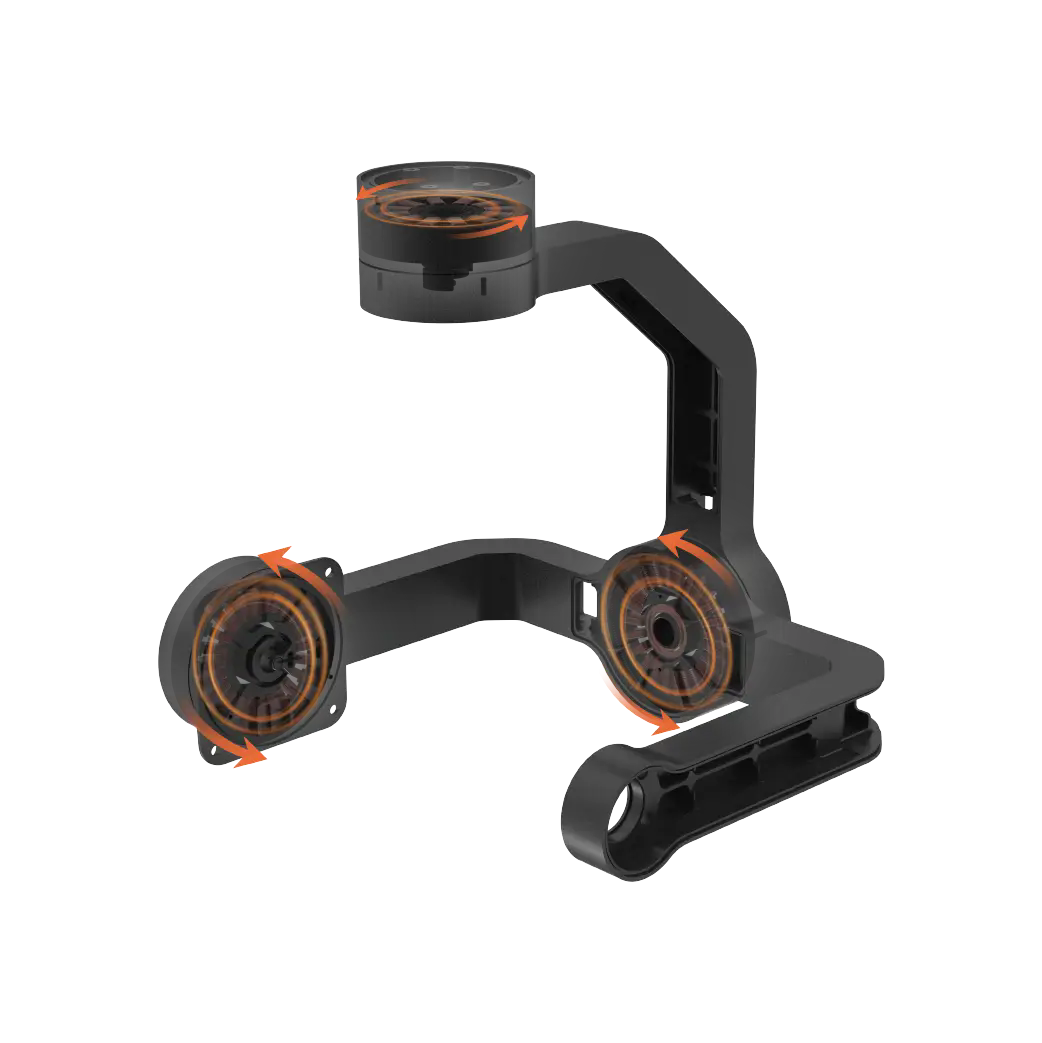
existkpowerIn our engineering practice, we see how this kind of thinking helps customers build future-proof systems. A platform that only controls three servo motors today may easily be connected to a visual inspection or material tracking module tomorrow without having to reinvent the wheel. The vitality of the system lies in its inherent expansion flexibility.
When you start your next mechatronics project, maybe you can break out of the inertial thinking of "choose a more powerful central controller." Think about it: Can it be designed as a group of intelligent units that perform their own duties and can communicate smoothly? A system constructed in this way may be more able to cope with unknown and exciting challenges.
Ultimately, good technical architecture is invisible. It silently supports everything running smoothly, allowing you to focus on creation itself. When your device dances flexibly, you won't think about how the service modules behind it work together gracefully - and this is where they succeed.
Established in 2005,kpowerhas been dedicated to a professional compact motion unit manufacturer, headquartered in Dongguan, Guangdong Province, China. Leveraging innovations in modular drive technology, Kpower integrates high-performance motors, precision reducers, and multi-protocol control systems to provide efficient and customized smart drive system solutions. Kpower has delivered professional drive system solutions to over 500 enterprise clients globally with products covering various fields such as Smart Home Systems, Automatic Electronics, Robotics, Precision Agriculture, Drones, and Industrial Automation.
Update Time:2026-01-19

Contact Kpower's product specialist to recommend suitable motor or gearbox for your product.