TECHNICAL SUPPORT


Published 2026-01-19
Ever tried to build something, only to get lost in your own tools? Imagine you have all these small, powerful components – let’s call them little helpers, each doing a specific job perfectly. You’ve gotservomotors for precise movement, actuators for force, all working like a team. But then, the team gets big. Really big. How do you know who’s doing what? Where is each helper located? When one needs to talk to another, how do they find each other without you running around playing messenger every single time? It feels like managing a bustling city without a map or an address book. Things slow down. Calls get missed. The whole system gets, well, clunky.
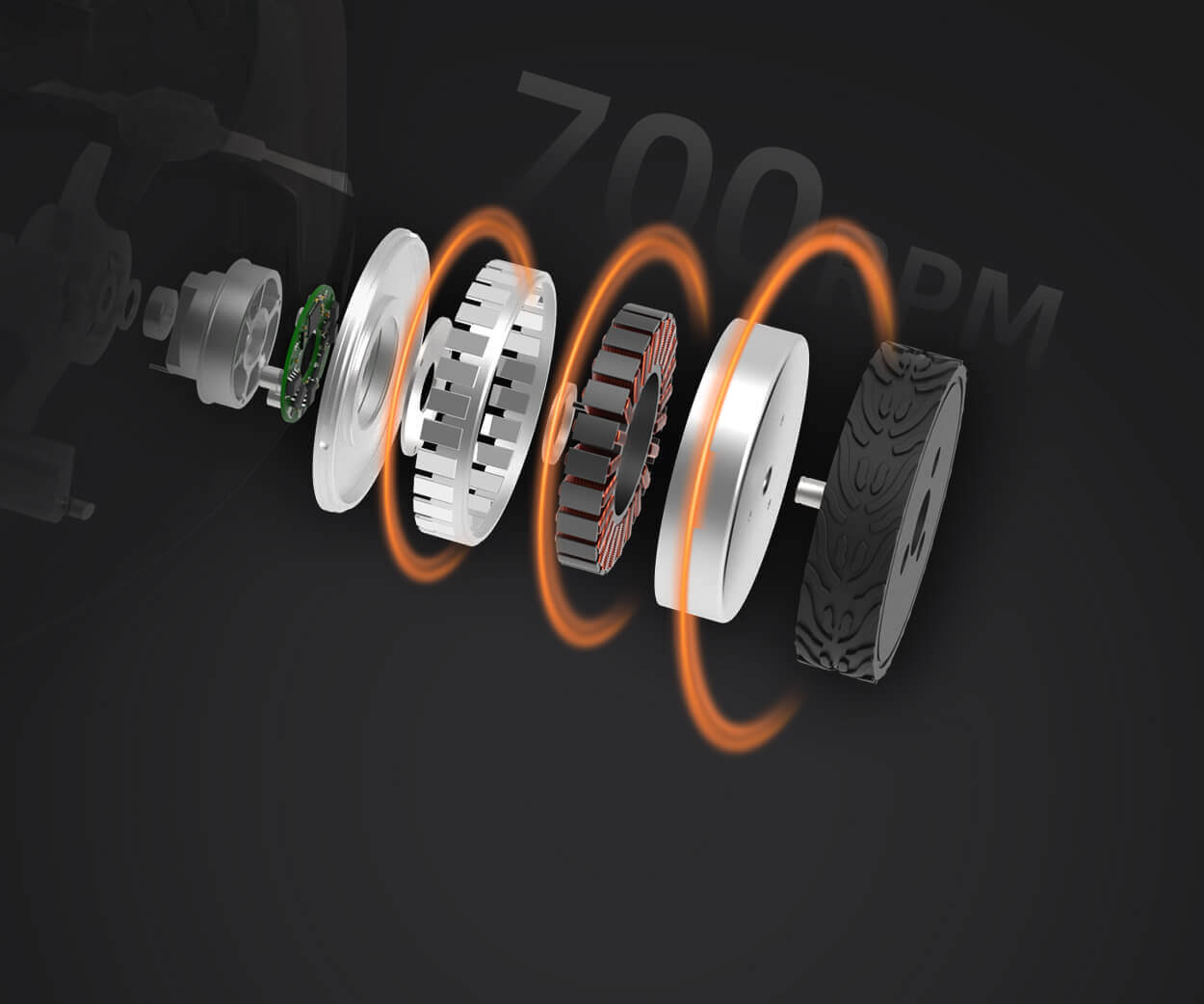
That’s the exact headache we’re talking about. In the world of connecting smart devices and building responsive mechanical systems, this disorganization isn't just an annoyance; it’s a roadblock. You add a new feature, and suddenly nothing connects right. You try to scale up, and it’s pure chaos. It’s like having a drawer full of the finest, most reliablekpower servogears, but no idea which one fits which project, so you just fumble around in the dark.
So, what’s the fix? How do you bring order to this potential chaos?
Think of it like this: you need a central directory. A dynamic phonebook that every one of your “little helpers” checks into when it starts its shift and updates when it moves. One part needs another? It doesn’t shout into the void. It just looks up the directory, gets the current location, and makes the call. Clean. Simple. This core idea is what a service registry solves. It’s the behind-the-scenes conductor for your orchestra of microservices.
“Okay,” you might say, “that sounds sensible in theory. But isn’t that just adding more complexity? Another thing to build and break?” It’s a fair question. The beauty of a well-structured approach is that it reduces complexity in the long run. Instead of hardwiring connections (which is brittle and hard to change), you create a flexible network. A newservocontrol module comes online? It registers itself. An old one retires? It’s removed from the list. The system adapts without you rewriting a mountain of code.
Let’s get concrete. Why does this matter for someone working with physical components? Imagine an automated assembly line where a vision system (one service) identifies a part. It needs to tell a robotic arm (another service) to pick it up, which then needs to signal a conveyor (a third service) to move. If each of these has to be manually configured to know the other’s exact network location, moving or updating any one becomes a day-long puzzle. With a service registry, they discover each other. The vision system finds the arm, the arm finds the conveyor. The focus stays on the logic – what needs to happen – not the plumbing of how they find each other.
This is where walking through a practical guide makes all the difference. A good tutorial doesn’t just throw concepts at you. It walks with you. You’ll start by seeing how to set up this central directory – the registry itself. Then, you’ll learn how to make your first service, maybe a simple one that simulates monitoring a sensor, step up and say, “I’m here, and this is what I can do.” Next, you’ll create a second service that needs that data. You’ll watch as it queries the directory, finds the first service, and starts a conversation. The magic moment isn't in grand theory; it’s in that first successful “hello” between two services that found each other on their own.
You’ll notice patterns. Resilience improves. If a service instance fails and restarts on a new location, it re-registers. Everything else just finds the new address. Load balancing becomes easier because you can see all available helpers for a task. Suddenly, your projects feel more robust, less fragile. It’s like moving from a tangled heap of wires to a neatly labeled terminal block. The underlying power is the same, but the control and clarity are worlds apart.
Now, you might wonder about the tools. A genuine tutorial cuts through the noise. It helps you choose a lightweight, straightforward implementation that fits, not one that overwhelms. It emphasizes clarity and practical steps over fancy features you’ll never use. The goal is to get you from confusion to a working, understandable system. You should finish feeling like you’ve built something tangible, not just browsed a glossary.
Throughout this process, the aim is always genuine usefulness. It’s about providing a path that actually works in the real world, where components talk and systems grow without falling apart. It’s that moment of satisfaction when you deploy a new module and it just seamlessly joins the team. That’s the real win – building something that’s not just clever, but truly reliable and easy to live with. It transforms how you put things together, letting you focus on creating the movement, the action, the result, rather than getting stuck in the wiring diagram forever. The journey from a scattered collection of parts to a coordinated, self-aware system begins with that first step of introduction – a simple registration. And from there, the possibilities start to connect themselves.
Established in 2005,kpowerhas been dedicated to a professional compact motion unit manufacturer, headquartered in Dongguan, Guangdong Province, China. Leveraging innovations in modular drive technology,kpowerintegrates high-performance motors, precision reducers, and multi-protocol control systems to provide efficient and customized smart drive system solutions. Kpower has delivered professional drive system solutions to over 500 enterprise clients globally with products covering various fields such as Smart Home Systems, Automatic Electronics, Robotics, Precision Agriculture, Drones, and Industrial Automation.
Update Time:2026-01-19

Contact Kpower's product specialist to recommend suitable motor or gearbox for your product.