



























TECHNICAL SUPPORT


Published 2026-01-19
Picture this: In a workshop, several pieces of equipment are busy. A servo motor is rotating accurately, the servo next to it is performing a grabbing action, and the robotic arm draws an arc smoothly. Everything looks perfect, right? But suddenly, a certain link was slowed down by half a beat - it was not that the hardware was broken, but that the "dialogue" between them was delayed and confused. If the information is not aligned, the action will be stuck. The result? The entire line had to be stopped, waiting for someone to investigate which link was "lost".
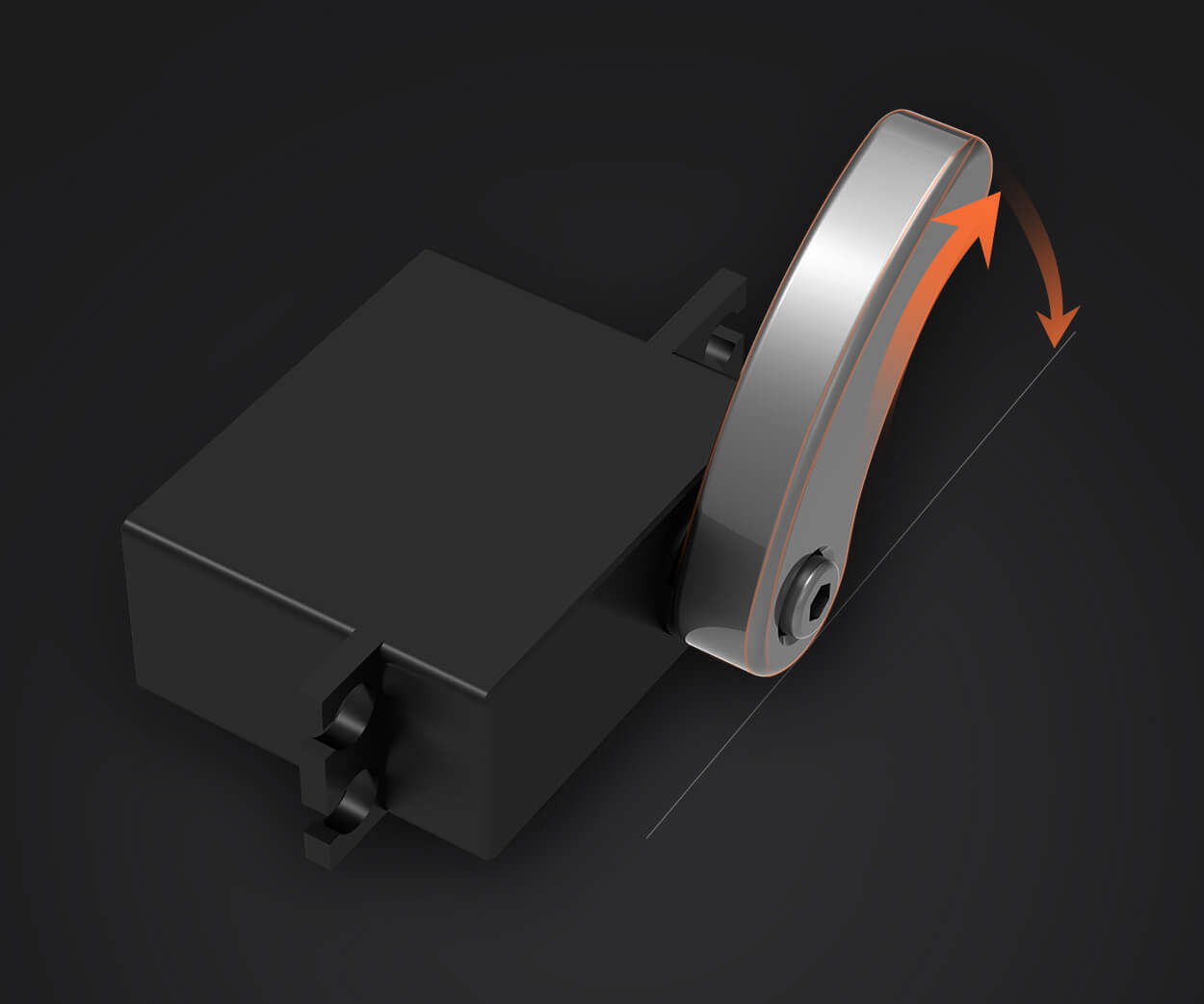
Does this situation sound familiar? We've all been there. There are more and more devices and systems are becoming more and more complex, but the way to manage and coordinate them is still stuck in the past. Each part is working, but each other seems to be busy in its own room, separated by a wall.
What's the problem? This is often due to the lack of a central hub that allows all components to "register" and communicate in real time. This brings us to what we want to talk about: Service Registry, a core design that can make the microservice architecture truly come alive. Especially in the field of machinery and automation, it is more than a technical concept, it is more like having an invisible scheduler for all your equipment.
A simple analogy. It's like a constantly updated smart phone book, or a dynamic taskbar. In your system, when each independent functional unit (such as a service that controls the speed of a motor or a service that processes sensor data) starts, it will automatically report to this "registry" and say: "I am here, I can do this, and this is the way to find me." Other services that require collaboration do not need to hard-code in advance to know where the other party is. They only need to query this registry to discover and call it in real time.
What is the most direct benefit of doing this? Flexibility and resilience. When a service needs to be updated or expanded, a new instance will be automatically registered and the old one will be offline. The caller can always get the latest available address from the registry. Service interruption? Doesn't exist. The entire system seems to have the ability to sense and heal itself.
Someone may ask: "Our current system can also run, why do we need this?" Yes, manual management seems feasible on a small scale. But when you face dozens or hundreds of service nodes, when your production line needs frequent adjustments and equipment needs to be hot-swapped, the traditional method becomes a tightrope. A configuration update may mean downtime and manual adjustments across the entire line. What Service Registry brings is exactly the kind of "changeable at any time, always online" calmness.
We know that in a real industrial environment, stability and reliability are paramount. A theoretically beautiful architecture can withstand the test of workshop vibration, network fluctuations and 7x24 hours of continuous operation. , when building related ones, we focus on a few simple points:
This is not only about technical implementation, but also about a work philosophy: let the systems perform their respective duties and work closely together; let maintenance change from passive firefighting to active management.
Let's paint a scenario. One of your assembly lines needs to introduce a new piece of equipment. In traditional mode, this may involve reconfiguring the network, modifying the main control program, and arranging a full-line test shutdown. In a microservice architecture using Service Registry, after the service on the new device goes online, it will automatically announce its existence to the registration center. The next time the coordination service on the line is queried, it will automatically discover this new partner and start assigning tasks to it. Expansion becomes as easy as plugging in.
For another example, a key temperature monitoring service needs to be upgraded. You can start the new version instance first and let it register. After it is ready, the traffic will be gradually switched from the old instance and the old version will be taken offline smoothly. Throughout the process, the online service is uninterrupted and the operator can easily complete it through the dashboard.
This feeling is like injecting some "life" into your machine cluster. They know who they are, where their companions are, and how to complete tasks together. And you, from a "wiretaker" busy connecting pipelines, to a "conductor" observing and formulating strategies.
existkpower, we believe that the value of technology lies in hiding complexity and presenting simplicity and reliability. A good architecture should not be a drawing shelved on the shelf, but should be the force that silently supports the smooth operation of each production line. When every servo unit and every execution action is clearly "seen" and "connected", efficiency and flexibility will naturally arise. This may be another simple starting point for intelligent manufacturing: let the machines "speak" properly first.
Established in 2005,kpowerhas been dedicated to a professional compact motion unit manufacturer, headquartered in Dongguan, Guangdong Province, China. Leveraging innovations in modular drive technology, Kpower integrates high-performance motors, precision reducers, and multi-protocol control systems to provide efficient and customized smart drive system solutions. Kpower has delivered professional drive system solutions to over 500 enterprise clients globally with products covering various fields such as Smart Home Systems, Automatic Electronics, Robotics, Precision Agriculture, Drones, and Industrial Automation.
Update Time:2026-01-19

Contact Kpower's product specialist to recommend suitable motor or gearbox for your product.








